What matters when choosing?
Decide whether staff will type labels at the cupboard or prepare reusable layouts elsewhere. Then check that the tape width accommodates the intended wording and that the tape suits the shelf surface.
| Concern |
What to check |
Who this matters to |
| Quick, direct labelling |
Look for an on-device keyboard and display; check that the available tape width fits short shelf names. |
If I am labelling a few ordinary shelves, I want to type and print without setting up another device. Around 36% of consumers put quick standalone labelling first. |
| Consistent layouts |
Check the connection method, design-device compatibility and whether wider tape is needed. |
When several staff use the same cupboard names, I want layouts we can prepare consistently and reuse. Consistent digital labelling comes first for around 29% of consumers. |
| Portability with a computer option |
Check the power arrangement, computer compatibility and supported tape widths. |
I need to make labels in different rooms but would still like to prepare some at a computer. For around 21% of consumers, that combination is the primary need. |
| Tape and surface suitability |
Confirm the tape family and adhesive suitability; test one label on a clean shelf area. |
My shelves are handled or cleaned often, so I care most about whether the chosen label stays usable on that surface. Around 14% of consumers put durability and adhesion first. |
Joybuy product choices
These choices include portable label makers for app-prepared labels and a desk-based printer for labels prepared at a computer. Compare the setup and compatible labels with the way your school office will work.
 No image available
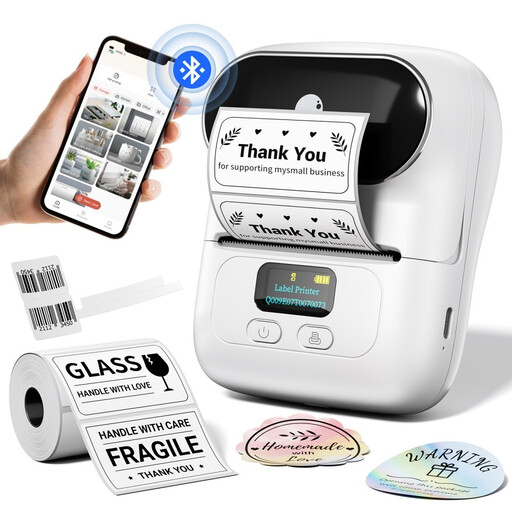
Phomemo M110 label maker with 1 label roll
If you want to prepare several shelf names in an app and carry the machine between cupboards, consider whether this workflow suits your staff.
Includes 1 label roll.
Confirm the compatible replacement roll and test its adhesive on the intended shelf before making a full set.
View on Joybuy
 No image available
Phomemo D30 label maker, 0.59 inch label width
For occasional shelf labels prepared on a phone, consider this portable option if app-based design fits your routine.
Label width: 0.59 inch.
Check the compatible label media and whether its adhesive suits the cupboard surface before buying.
View on Joybuy
 No image available
Brother QL-600B label and address printer
For shelf identifiers prepared at an office computer, consider whether a desk-based workflow is more useful than typing at each cupboard.
Check which DK roll fits the printer and the intended shelf surface, then test adhesion before printing a batch.
View on Joybuy
Common questions
Is 12 mm tape wide enough for cupboard shelves?
It can be if your planned shelf names remain readable at that width. Brother UK lists the PT-D210VP at up to 12 mm, while its PT-D460BTVP supports up to 18 mm; decide on the wording and lettering before choosing between them.
When is a connected label maker worth choosing?
Choose connectivity when staff will prepare or reuse matching layouts on another device, rather than type each label at the machine. Brother UK lists USB and Bluetooth for the PT-D460BTVP; DYMO UK lists optional PC or Mac connection for the LabelManager 280.
Will label tape stick to cupboard shelves?
Check the chosen tape against the shelf surface and test one label before printing a batch. DYMO UK says its D1 labels adhere to most clean, flat surfaces, but a particular shelf’s texture, condition and cleaning routine still matter.
Do these label makers need ink or toner?
DYMO UK says its D1 Standard Labels use thermal-transfer printing without ink or toner. Tape cassettes are still consumables, so check the compatible family for the exact machine you choose.
Can a shelf label replace hazard information on stored chemicals?
No: if hazardous chemicals are stored in the cupboard, an organisational shelf label must not cover or replace hazard information on their containers. The Health and Safety Executive describes hazard labels as carrying pictograms and written warnings; follow the school’s procedures for managing hazardous substances.


