Cleaning-cupboard organisers
Staff responsible for keeping frequently handled bottles identifiable and aligning local labels with the centre's chemical-safety controls.


Choose the tape system before the machine. For bottles exposed to repeated wiping or cleaning-product splashes, look for tape with a manufacturer-stated chemical-resistance claim, such as Brother's laminated TZe tape; for lower-exposure bottle-name labels, DYMO describes its D1 permanent plastic tape as suitable for plastic and water resistant. Check that the printer accepts the chosen tape and that the label can carry readable wording; a printed label does not replace hazardous-product information or workplace controls.
Staff responsible for keeping frequently handled bottles identifiable and aligning local labels with the centre's chemical-safety controls.
Staff or volunteers who need several people to produce consistent, readable labels using a shared machine.
Consumers labelling a modest number of lower-exposure bottles, where adhesion to plastic and water resistance are the main tape considerations.
Start with what the bottles and labels will be exposed to, then plan the wording before deciding how staff will print and repeat it.
| Concern | What to check | Who this matters to |
|---|---|---|
| Lasting legibility | Check the chosen tape's stated resistance to water, chemicals and abrasion, plus its compatibility with the printer. | If bottles are wiped often or may be splashed, I need their names to remain readable. Around 44% of consumers put lasting legibility first. |
| Consistent shared printing | Check whether a standalone keyboard or a compatible computer-based template workflow suits the staff who will print labels. | When several people take turns labelling bottles, I want them to use the same clear format. For around 33% of consumers, consistent shared printing is the primary need. |
| Simple bottle identification | Check adhesion to plastic, water resistance and whether the available tape width holds the intended wording legibly. | For a small set of bottles with less exposure to splashes, I mainly need names that stay attached and easy to read. Simple identification comes first for around 23% of consumers. |
DYMO describes its D1 permanent plastic tape as water resistant, while Brother makes a separate chemical-resistance claim for its laminated TZe tape. Neither statement establishes how every tape will withstand the cleaning products used at the centre.
Match the selected tape's stated properties to the bottle's likely exposure, and check that the printer accepts that tape.
If a label becomes illegible, staff will need time to replace it.
A strip that fits a bottle name may not leave room for the information needed under the centre's chemical-safety controls. The Health and Safety Executive explains that hazard labels use pictograms and written warnings where applicable.
Use the product's safety data sheet and the centre's COSHH assessment to plan the wording, then choose a printer and tape width that keep it readable.
The Health and Safety Executive notes that some cleaning products can cause skin burns and eye damage. Identifying a bottle does not replace assessing the task or controlling exposure.
Keep the product's safety data sheet, workplace assessment, storage arrangements and task-appropriate controls in view alongside the label.
P-touch is relevant when the centre is considering laminated labels and a choice of standalone or computer-connected workflows.
LabelManager and D1 permanent plastic tape are relevant to straightforward bottle identification where plastic adhesion and water resistance matter.
LabelWorks is another system to consider when comparing tape widths for general bottle identification.
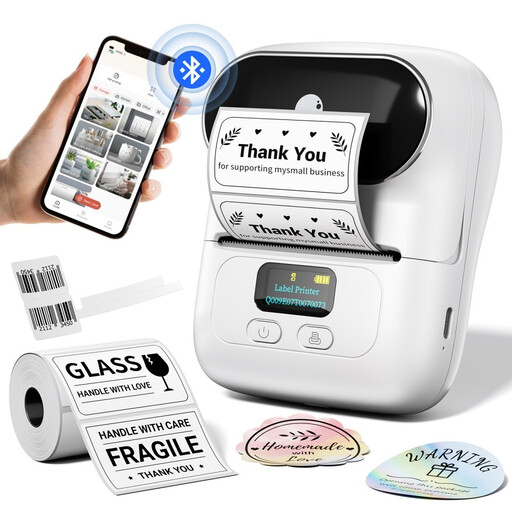
These options suit different ways of preparing repeat bottle labels: one uses a phone-led workflow, while the other is intended for printing at a computer. For either printer, choose a compatible label roll suited to the bottle surface and expected exposure before using it for cleaning bottles.
 No image available
Consider this model for repeated bottle-name labels if a phone-led printing workflow suits the staff who will use it.
Check compatibility with the intended phone or tablet and Print Master app. Before labelling cleaning bottles, confirm that the selected roll adheres to their surfaces and suits the water, wiping or cleaning-product exposure it may face.
 No image available
Consider this model if staff will prepare repeat labels at a computer using a shared format.
Plan for a compatible computer and USB connection for the stated P-touch Editor workflow. Check that the selected DK roll suits the bottle surface and expected exposure; Brother's claim for laminated TZe tape should not be assumed to apply to DK rolls.
No. A printed label can help staff identify a bottle, but it should not replace the supplier's hazard information or the centre's workplace controls. The Health and Safety Executive explains that hazard labels can include pictograms and written warnings, while safety data sheets provide information on hazards, handling, storage and emergencies.
Check the product's current safety data sheet and the centre's COSHH assessment before settling on local wording. The Health and Safety Executive says a safety data sheet provides information to support the assessment; it is not itself the workplace risk assessment.
Choose the width after drafting the wording that must remain readable on the bottle. Brother lists 3.5 mm to 18 mm labels for its PT-D400, while DYMO lists 12 mm and 19 mm options for the cited D1 permanent plastic tape; the available width depends on the exact printer and tape, and extra width alone does not make safety wording adequate.
Not necessarily. Where labels may meet water, abrasion or cleaning-product splashes, Brother states that its laminated TZe tape resists those conditions. For lower-exposure identification, DYMO describes its D1 permanent plastic tape as adhering to plastic and resisting water; check suitability for any chemicals the label may encounter.