Frequent numerical-entry users
If you repeatedly enter readings and sample numbers, compare compact layouts that retain a physical number pad. Keychron UK lists a 96% UK-ISO option, but check its exact key arrangement against the way you enter data.


A compact 96% mechanical keyboard with a number pad is worth considering if you repeatedly enter measurements but have limited desk space. If desk area matters more than one-piece numerical entry, consider a 75% or tenkeyless layout; if the workstation requires routine wet or chemical cleaning, check the local procedure before choosing an ordinary mechanical keyboard and consider a sealed laboratory keyboard instead.
If you repeatedly enter readings and sample numbers, compare compact layouts that retain a physical number pad. Keychron UK lists a 96% UK-ISO option, but check its exact key arrangement against the way you enter data.
If paperwork, a mouse or a laptop competes for space, a keyboard without an attached number pad may leave more room. Corsair UK describes tenkeyless layouts as removing the number pad; decide whether occasional numerical entry would justify a separate keypad.
If colleagues work nearby, check the selected switch variant rather than assuming a mechanical keyboard will be quiet. If the desk has a cleaning or contamination-control procedure, establish what it requires before deciding whether an ordinary keyboard belongs there.
For laboratory measurement logging, establish the workstation’s cleaning requirements first. Then choose between permanent number-pad access and more free desk space, checking the exact layout and switch variant before purchase.
| Concern | What to check | Who this matters to |
|---|---|---|
| Numerical entry | Check for a physical number pad and inspect decimal, Enter and navigation-key placement on the exact layout. | If I enter readings repeatedly, I want the keys I use to be ready without changing layers or moving to another device. Around 36% of consumers put numerical entry first. |
| Desk space | Compare the keyboard’s dimensions and retained keys; tenkeyless removes the number pad, while a 75% layout keeps arrows and an F-row in a tighter arrangement. | When paperwork and a mouse need room beside the keyboard, I can accept a separate keypad if necessary. For around 29% of consumers, usable desk area is the primary need. |
| Cleaning requirements | Confirm the local cleaning procedure and the exact keyboard maker’s approved method, including any required disinfectant. | If my workstation needs routine wet cleaning, I need a keyboard that can be used under that procedure. Around 21% of consumers prioritise cleaning compatibility. |
| Shared-room use | Check the selected switch version and, if you move between devices, the available connection modes and workplace wireless policy. | If I work near colleagues or alternate between workstations, I care most about switch noise and practical connections. Around 14% of consumers make those their first consideration. |
A tenkeyless keyboard has no attached number pad, and smaller layouts can change how you reach navigation keys. That trade-off matters when entering measurements repeatedly.
List the keys used during a typical logging session and compare the exact 96%, tenkeyless and 75% layouts before choosing.
If you later need a separate number pad, it becomes another device to position and manage on the desk.
Man & Machine describes sealed keyboards for laboratory cleaning, while Derbyshire Healthcare NHS Foundation Trust’s workstation guidance cautions against liquid entering ordinary equipment. The appropriate method depends on the product and the workplace procedure.
Check the required cleaning agent and method against the keyboard maker’s instructions. Consider a sealed laboratory device if an ordinary mechanical board cannot meet the local requirement.
A compact keyboard family may be sold in different regional configurations, affecting familiar punctuation and key positions.
If you rely on UK key placement, confirm that the selected variant is explicitly identified as UK-ISO or UK layout; do not rely on the family name alone.
Logitech UK lists Tactile Quiet, Clicky and Linear options for the MX Mechanical Mini. The model name alone does not identify the switch version being purchased.
Check the selected variant when the keyboard will be used near colleagues, and assess whether its sound and feel suit the shared space.
Keychron UK lists compact UK-ISO keyboards, including the 96% K4 Pro for users comparing a smaller board with an attached number pad.
Logitech UK distinguishes the space-saving MX Mechanical Mini from the full-size MX Mechanical with an integrated number pad.
Corsair UK documents wired compact options such as the UK-layout K63 tenkeyless keyboard.
These 96% mechanical keyboards are options to examine if you want a compact layout for measurement logging. Check each model’s exact keys, desk dimensions and cleaning suitability against your workstation requirements.
 No image available
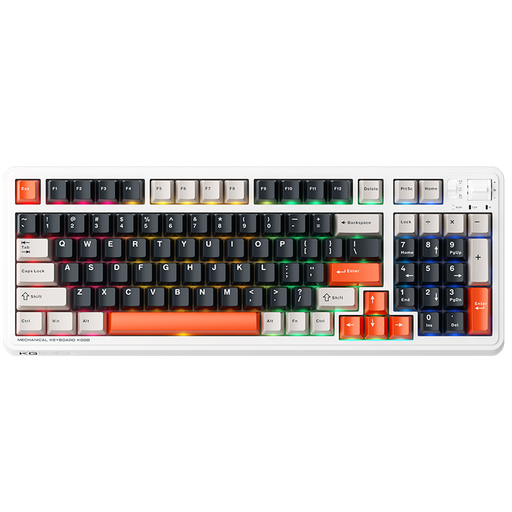
Consider this 96% layout if you frequently enter figures and want a keyboard identified as UK Layout. Check the physical number pad and navigation-key arrangement against your logging workflow.
The selected switch variant, exact dimensions and manufacturer-approved cleaning method should be confirmed before use in a shared room or laboratory area.
 No image available
This 96% mechanical keyboard is worth comparing if you want a compact format and can work with its stated US QWERTY layout rather than UK key placement.
The product name specifies tri-mode connectivity and hot-swappable switches. Check its dimensions, supplied switch variant and approved cleaning method for your desk and workplace.
Choose a UK-layout variant if you rely on familiar UK key and symbol positions when recording measurements. Check the exact variant, since a keyboard family’s name does not establish the layout of every configuration.
Only if the local procedure and the keyboard maker’s cleaning instructions allow its intended use and cleaning method. Where routine wet disinfection or fluid exposure is required, consider a sealed laboratory keyboard designed for the specified procedure.
Follow the equipment maker’s instructions and your workplace procedure. Derbyshire Healthcare NHS Foundation Trust’s workstation guidance says to power down and unplug equipment before cleaning, avoid spraying it directly or letting liquid enter keys and openings, and allow it to dry before use; check whether that guidance fits the particular device and cleaning requirement.
A mechanical keyboard is not specified as a requirement in the Health and Safety Executive’s display-screen equipment guidance. For regular display-screen work, the relevant consideration is assessing the workstation and individual needs, including posture, rather than selecting a particular switch type.
No: product marking does not determine whether a keyboard meets a particular laboratory’s cleaning or workstation requirements. Department for Business and Trade guidance explains recognition of CE and UKCA marking for relevant products placed on the market in Great Britain; processes can differ in Northern Ireland. Check the requirements that apply to the product and your workplace separately.