What should you check first?
Start with the child’s age and reason for avoiding lactose, then check the type of milk and the pack label.
| Priority |
What to check |
Your needs |
| Main milk feed |
For a baby under 12 months, distinguish first infant formula from a supermarket dairy drink. NHS guidance says to continue breast milk or first infant formula until at least age one. |
My baby is starting solids, and I need to know which milk should remain the main drink. |
| Lactose restriction |
Ask the baby’s clinician whether a lactose-free diet is appropriate and which age-appropriate formula to use. Check the formula’s preparation instructions. |
If lactose intolerance is suspected, I want feeding changes to fit the advice given for my baby. |
| Milk allergy |
Read the ingredients and allergen declaration for milk. Lactose-free describes milk sugar, not the removal of cow’s-milk protein; the British Dietetic Association advises professional assessment of suspected allergy. |
I need to know whether avoiding lactose addresses a suspected milk-protein reaction. A lactose-free dairy label alone does not answer that question. |
| Milk after 12 months |
For a child who tolerates cow’s-milk protein, check whether a lactose-free dairy drink is labelled whole or semi-skimmed. The NHS identifies pasteurised whole or semi-skimmed cow’s milk as options from 12 months. |
After the first birthday, I want to choose the intended type of dairy milk rather than assume all lactose-free cartons are the same. |
| Weaning foods |
If the baby has been advised to follow a lactose-free diet, confirm which milk or formula to use in cooking with the clinician or dietitian managing that diet. |
I need an ingredient for food preparation without accidentally changing my baby’s main milk feeds. |
| Flavour |
Check the particular product’s description and ingredients; a lactose-free claim does not establish that it has a mild flavour. |
Flavour matters for foods I am preparing, but I do not want to choose the wrong type of milk on that basis. |
Brand and retailer references
These references describe particular lactose-free dairy listings, not infant-formula alternatives or products for cow’s-milk allergy.
Arla Lactofree
The reviewed Arla Lactofree listings are for whole lactose-free dairy drinks, a type to consider after 12 months when a child tolerates cow’s-milk protein.
- Sainsbury’s describes its listed whole milk drink as containing less than 0.03% lactose.
- The Waitrose product information lists whole milk and lactase enzyme and states that the drink is not suitable for people with milk allergy.
Sainsbury’s
Sainsbury’s lists its own-label Everyday Lactose Free Whole Dairy Drink as a whole dairy option.
- The listed ingredients include cows’ milk and lactase enzyme.
- It contains milk; check the current pack’s ingredients and allergen declaration before use.
M&S
The reviewed M&S Made Without listing is for semi-skimmed lactose-free milk, rather than a whole-milk option.
- Its semi-skimmed description makes the milk type clear when comparing cartons.
- The Ocado listing carries M&S’s warning that the product is not suitable for dairy allergy or galactosaemia.
Waitrose
Waitrose is a retailer reference for the reviewed Arla Lactofree whole milk drink, not a separate own-label option here.
- Its Arla listing identifies whole milk and lactase enzyme as ingredients.
- The listing warns that the drink is not suitable for people with milk allergy; check the pack when purchasing.
Lactose-free infant formula on Joybuy
This option is an infant formula for the medically supervised lactose-free feeding route during weaning. It is not a supermarket lactose-free dairy drink for use as a toddler’s main drink.
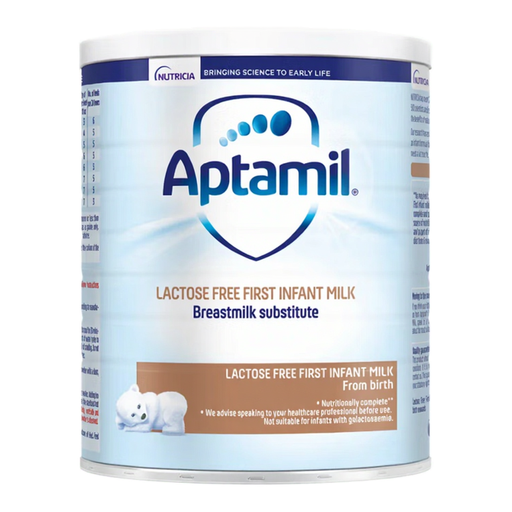 No image available
Aptamil Lactose Free Baby Milk Formula Powder From Birth 400g
This lactose-free infant formula is a product to discuss with the baby’s clinician when lactose-free feeding has been advised during weaning. The pack is 400g and the product name states that it is for use from birth. Its listing says to use it only under medical supervision and identifies milk-derived calcium caseinate and fish oil; check the current pack’s allergen information with the clinician.
View on Joybuy
Questions about weaning and lactose-free milk
Can supermarket lactose-free milk be my baby’s main drink?
No, not before 12 months. NHS guidance says to continue breast milk or first infant formula until at least age one; a supermarket lactose-free cow’s-milk drink is not infant formula.
What milk can I use in weaning foods if my baby has been advised to avoid lactose?
Ask the clinician or dietitian managing the lactose restriction which ingredient to use. The supplied NHS hospital dietetic guidance identifies lactose-free infant formula as an option for cooking when a baby is having that formula; preparing food does not change the need for age-appropriate main milk feeds.
Is lactose-free cow’s milk suitable for a child with milk allergy?
No. Lactose-free cow’s-milk products can still contain the milk proteins involved in cow’s-milk allergy. Arla Lactofree and M&S warn that their reviewed lactose-free dairy products are not suitable for milk or dairy allergy; seek a feeding plan from a qualified healthcare professional instead.
How do I distinguish lactose intolerance from cow’s-milk allergy?
A lactose-free label or a single symptom cannot establish the cause. NHS hospital guidance describes infant lactose intolerance as sometimes occurring after gastroenteritis, while British Dietetic Association guidance identifies cow’s-milk allergy as a reaction to milk proteins and advises professional diagnosis. Seek urgent medical help for breathing difficulty, facial swelling or other severe allergic symptoms.
Should I choose whole or semi-skimmed lactose-free milk after 12 months?
Check which milk type fits the child’s feeding advice and the carton you intend to buy. For a child aged 12 months or over who tolerates dairy, NHS guidance allows pasteurised whole or semi-skimmed cow’s milk as a main drink. The reviewed Arla Lactofree and Sainsbury’s lactose-free drinks are whole, whereas the reviewed M&S drink is semi-skimmed.


