For a baby under 1, lactose-free cow’s milk can be used in food from around 6 months where appropriate, but not as the main drink; NHS guidance keeps breast milk or appropriate infant formula as the main milk feed. If a lactose-free main feed is needed, ask a health professional about infant formula, and do not use lactose-free dairy milk as a workaround for cow’s milk protein allergy. After 12 months, whole lactose-free cow’s milk is a relevant option for a child who needs less lactose and tolerates dairy; the NHS recommends full-fat dairy products up to age 2.
Who needs to make this choice?
Carers of babies under 1
The distinction is between milk used in food and a baby’s main milk feed. NHS guidance allows cow’s milk in cooking or mixed with food from around 6 months, but not as a drink before 12 months. If a lactose-free main feed is being considered, seek advice on an appropriate infant formula.
Families choosing milk after 12 months
For a child who tolerates cow’s milk protein but needs to avoid lactose, the choice includes whole and semi-skimmed lactose-free dairy drinks. The NHS recommends full-fat dairy products up to age 2, so the fat level matters as well as the lactose-free label.
Carers checking for a milk allergy
Lactose-free does not mean milk-free. Arla Lactofree whole milk lists milk as an ingredient and allergen, while University Hospitals Sussex NHS Foundation Trust warns that lactose-free formula can also contain cow’s milk protein. A suspected or diagnosed allergy calls for a different feeding decision.
What should you check first?
Start with the child’s age and the reason for avoiding lactose. Those answers determine whether you are choosing an ingredient for food, a main milk feed or a drink for a toddler.
| Priority |
What to check |
Your needs |
| Main milk feed |
Check whether the product is infant formula or a supermarket dairy drink. Black Country 0-18 NHS says a baby under 1 needs breast milk and/or appropriate lactose-free formula as their main drink, not lactose-free cow’s milk. |
My baby is under 1 and needs a main milk feed, rather than just milk mixed into a meal. I need professional advice if a lactose-free formula is being considered. |
| Milk allergy |
Read the ingredients and milk allergen declaration, including on formula. University Hospitals Sussex NHS Foundation Trust says lactose-free formula can still contain cow’s milk protein and is not suitable for babies with cow’s milk protein allergy. |
If cow’s milk protein allergy is suspected or diagnosed, I need advice on a milk-free feeding plan; removing lactose alone does not address the milk protein. |
| Milk after 12 months |
For a child who tolerates dairy, compare whole and semi-skimmed lactose-free cow’s milk and confirm the current pack’s fat content. The NHS recommends full-fat dairy products up to age 2. |
The household may use semi-skimmed milk, but I’m choosing a lactose-free dairy drink for a child between 1 and 2. |
| First tastes of milk |
The NHS advises introducing foods that can trigger allergic reactions one at a time and in very small amounts, so a reaction can be spotted. Check the food’s milk allergen declaration rather than relying on its front-of-pack wording. |
I’m introducing a milk-containing food during weaning and want to identify what my baby has eaten. If an allergy is already suspected, I need individual advice before offering it. |
Mistakes to avoid
-
Reading ‘lactose-free’ as ‘dairy-free’
Removing or breaking down lactose does not remove cow’s milk protein. Arla Lactofree and Tesco lactose-free dairy products list milk in their ingredients; University Hospitals Sussex NHS Foundation Trust says lactose-free formula is not suitable for babies with cow’s milk protein allergy.
For a suspected or diagnosed milk allergy, ask a health professional about an appropriate feeding plan. Check the milk allergen statement on every product you consider.
-
Using a supermarket carton as an infant’s main feed
A dairy drink and infant formula serve different roles before a baby turns 1. NHS guidance permits cow’s milk in cooking or mixed with food from around 6 months, but not as a drink until 12 months.
Keep breast milk or appropriate infant formula as the main feed before age 1. Discuss the need for lactose-free formula with a health professional rather than substituting a supermarket milk.
-
Choosing by the household’s usual fat level
A semi-skimmed lactose-free drink is still semi-skimmed. The NHS recommends full-fat dairy products up to age 2, a consideration separate from whether a product contains lactose.
For a child over 1 who tolerates dairy and needs lactose-free cow’s milk, check the pack for a whole or full-fat format rather than assuming the household carton is the right choice.
-
Relying on an older product description
Ingredients and allergen information on a current carton are what matter when preparing a child’s food. Tesco and M&S advise shoppers to check the pack because product information or recipes may change.
Read the carton you have bought for its milk allergen declaration, storage instructions and use-after-opening period before serving it.
Brand and retailer references
These references help distinguish lactose-free dairy formats and labels; they do not make a milk product suitable for a baby’s main feed or for cow’s milk protein allergy.
Arla Lactofree
Arla lists a LactoFREE Whole Milk Drink 1L, a whole-milk format to compare for a dairy-tolerant child after 12 months.
- Its listed ingredients are whole milk and lactase enzyme.
- The product declares milk as an allergen; lactose-free does not mean suitable for cow’s milk protein allergy.
Tesco
Tesco lists a Lactose Free Semi Skimmed Dairy Drink 1L, which differs in fat format from whole-milk options.
- The listed ingredients include milk and lactase enzyme, making its dairy basis clear.
- The NHS recommends full-fat dairy products up to age 2; check the current pack before choosing a milk for a young child.
M&S
M&S Made Without Lactose Whole Milk is another whole-milk format to compare after 12 months.
- The product name identifies it as whole milk without lactose.
- M&S states that its lactose-free products are not suitable for people with a dairy allergy or galactosaemia.
Sainsbury’s
Sainsbury’s Whole Lactose Free Milk 1L is a named whole-milk option to assess by its current carton.
- Its product name identifies a whole lactose-free milk format.
- Check the carton’s ingredients, milk allergen statement and nutrition panel before deciding whether it fits the child’s needs.
Waitrose
Waitrose lists Arla Lactofree whole and semi-skimmed milk alongside dairy-free alternatives in its dairy and lactose-free category.
- The category offers both whole and semi-skimmed Arla Lactofree formats to distinguish.
- A category containing dairy-free alternatives does not make every product in it milk-free; read each product’s ingredients.
A Joybuy infant-formula option
This option is an infant formula for the under-1 feeding decision, not a supermarket lactose-free cow’s-milk drink for use in cooking or a toddler’s cup.
 No image available
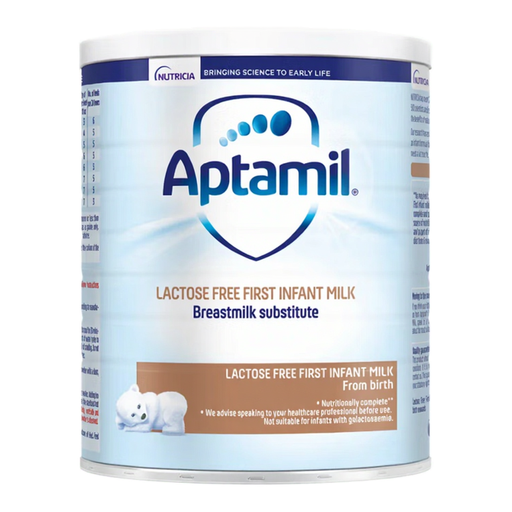
Aptamil Lactose Free Baby Milk Formula Powder From Birth 400g
This from-birth formula is an option to discuss with a health professional when a baby needs a lactose-free main milk feed. It is a 400g powder; check the current pack’s allergen information and preparation instructions. Lactose-free formula must not be assumed suitable for cow’s milk protein allergy.
View on Joybuy
Questions about weaning and lactose-free milk
Can supermarket lactose-free milk be my baby’s main drink?
Not before 12 months. The NHS says cow’s milk can be used in cooking or mixed with food from around 6 months, but not as a drink until age 1. Black Country 0-18 NHS says a baby under 1 who needs lactose-free feeding should have breast milk and/or appropriate lactose-free formula as their main drink.
Is lactose-free milk suitable for cow’s milk protein allergy?
No: lactose-free cow’s milk still contains milk protein. University Hospitals Sussex NHS Foundation Trust also says lactose-free formulas can contain cow’s milk protein and are not suitable for babies with cow’s milk protein allergy. Seek professional advice on an appropriate feeding plan rather than choosing by the lactose-free label.
Which lactose-free cow’s milk format should I consider after age 1?
For a child who needs to avoid lactose but tolerates dairy, consider a whole lactose-free cow’s milk and check its current label. The NHS recommends full-fat dairy products up to age 2; Arla LactoFREE Whole Milk Drink and M&S Made Without Lactose Whole Milk are examples of whole-milk formats.
How should I introduce a milk-containing food during weaning?
The NHS advises introducing foods that can trigger allergic reactions one at a time and in very small amounts so that you can spot a reaction. If a milk allergy is suspected or diagnosed, seek advice before offering a milk-containing food; a lactose-free label does not remove milk protein.
Do I still need to read the ingredients on lactose-free milk?
Yes. Arla Lactofree and Tesco lactose-free dairy products list milk in their ingredients, and M&S states that its lactose-free products are unsuitable for dairy allergy. Check the current pack’s ingredients and allergen declaration rather than treating ‘lactose-free’ as ‘milk-free’.


