What should you check?
Start with the baby’s age and the reason for avoiding milk, then check whether a product is an infant formula, a dairy milk drink or a plant-based drink.
| Priority | What to check | Your needs |
|---|
| Main milk before 12 months |
Check whether the product is first infant formula or an ordinary drinking milk. NHS guidance says breast milk or first infant formula remains the main drink until 12 months. |
My baby has started solids, but still needs an age-appropriate main milk drink. |
| Milk-protein allergy |
Read the ingredients and allergen declaration for cow’s milk. Allergy UK says removing lactose does not remove the milk protein relevant to milk allergy; agree a feeding plan with the baby’s healthcare team. |
If CMPA is suspected or diagnosed, I need to avoid cow’s-milk protein, not just lactose. |
| Lactose intolerance |
Check that any proposed substitute is an infant formula intended for the baby’s age, rather than a grocery milk drink. Discuss whether a change is needed with a healthcare professional; Healthier Together NHS notes that infant lactose intolerance may be temporary. |
I want to know whether my baby needs a different formula before changing feeds. |
| Plant-based drinks |
Do not use a plant-based drink as the main milk before 12 months. For a drink from 12 months, check that it is unsweetened and calcium-fortified; NHS guidance says to avoid rice drinks until at least age 5. |
When dairy is excluded, I need to distinguish an ingredient used in weaning food from a replacement main drink. |
Brand and retailer references
Retail lactose-free milk drinks and lactose-free infant formula are different products, even when they appear in the same retailer’s range.
Arla LactoFREE
A range of lactose-free cow’s-milk drinks, including whole and semi-skimmed products listed by UK retailers.
- Tesco describes the whole drink as filtered, pasteurised cow’s milk.
- It is dairy milk, not a milk-protein-free choice for CMPA or a substitute main drink for a baby under 12 months.
Tesco
Its listings include lactose-free dairy drinks and separately labelled lactose-free infant formulas.
- Product names help distinguish infant formula from filtered drinking milk.
- A lactose-free label alone does not establish suitability for milk allergy; check the individual product.
Sainsbury’s
Its own-label lactose-free skimmed dairy drink lists cow’s milk and lactase enzyme among its ingredients.
- The ingredients make clear that this lactose-free drink remains a cow’s-milk product.
- It is not a milk-protein-free option for a baby with CMPA.
Waitrose
Its listings place lactose-free dairy products and plant-based drinks within a broader browsing category.
- Individual product listings identify drinks such as Arla LactoFREE filtered milk.
- A shared shelf or category name does not establish that a product is dairy-free or suitable as an infant’s main drink.
A Joybuy infant formula option
This lactose-free infant formula relates to the route where a healthcare professional has assessed a baby’s feeding needs. It is not a dairy-free option for cow’s-milk protein allergy.
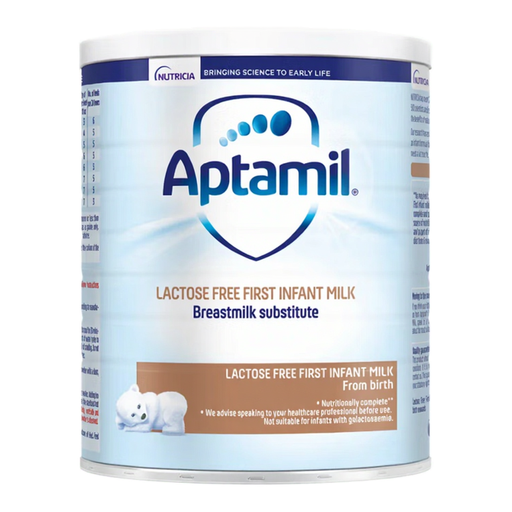 No image available
Aptamil Lactose Free Infant Formula Powder, 400g
For a baby whose lactose intolerance has been professionally assessed, this is an infant formula rather than an ordinary lactose-free drinking milk. The product is labelled from birth. Aptamil’s product information at Tesco says it is not suitable for cow’s-milk protein allergy and should be used on the advice of a healthcare professional.
View on Joybuy
Common questions
Is lactose-free milk dairy-free?
No. Lactose-free cow’s milk is still dairy milk and contains milk protein. Allergy UK says it is not suitable for milk allergy, so check the ingredients rather than relying on “lactose-free” for a baby with CMPA.
Can lactose-free cow’s milk be a baby’s main drink during weaning?
Not before 12 months. NHS guidance says breast milk or first infant formula should remain the main drink during the first year. Pasteurised whole cow’s milk can be used in cooking or mixed with food from around 6 months, but that does not make it a replacement main drink.
What if my baby may be lactose intolerant?
Discuss symptoms and feeding with a healthcare professional before changing milk. Healthier Together NHS notes that lactose intolerance in babies may be temporary; if a lactose-free infant formula is advised, check the specific product’s instructions and allergy information.
Can oat, soya or almond drinks be used during weaning?
They should not replace breast milk or formula as the main drink before 12 months. NHS dietetic guidance says suitable plant-based alternatives can be used in cooking and weaning foods from 6 months; NHS guidance discusses unsweetened, calcium-fortified drinks from 12 months and says to avoid rice drinks until at least age 5.
Are goat’s or sheep’s milk alternatives for a baby with CMPA?
No. Healthier Together NHS guidance says other mammalian milks, including goat’s and sheep’s milk, have similar proteins and are not suitable substitutes for a baby on a cow’s-milk-free diet. Follow the baby’s advised feeding plan.


