Families baking for someone with lactose intolerance
Lactose-free cow’s milk is an option when the person eating the bake can have milk protein. Arla says its LactoFREE semi-skimmed milk can be used in baking and cooking.


For baking with someone who avoids lactose but can have cow’s-milk protein, choose lactose-free dairy milk and select whole, semi-skimmed or skimmed to suit the recipe. If a child needs to avoid cow’s-milk protein, lactose-free dairy milk is not a substitute: Allergy UK distinguishes milk allergy from lactose intolerance, and the lactose-free dairy products discussed here still contain milk. Check the current carton when choosing a dairy-free alternative for the bake.
Lactose-free cow’s milk is an option when the person eating the bake can have milk protein. Arla says its LactoFREE semi-skimmed milk can be used in baking and cooking.
Allergy UK explains that cow’s-milk allergy concerns milk proteins, not lactose. A lactose-free dairy milk that still lists milk is therefore not the right substitute for a child who needs a cow’s-milk-free bake.
Whole, semi-skimmed and skimmed lactose-free dairy milks offer different fat levels. Check what the recipe calls for and compare the nutrition information on the cartons you are considering.
Establish whether the bake needs to be lactose-free or cow’s-milk-free before choosing a milk type; then check its stated use, fat level and current label.
| Priority | What to check | Your needs |
|---|---|---|
| Milk allergens | Check whether the ingredient and allergen declaration lists milk. A lactose-free dairy drink still contains milk protein; a cow’s-milk-free bake calls for a suitable alternative. | I’m baking for someone who must avoid cow’s-milk protein, not just lactose. I need to check the exact carton before using it. |
| Baking use | Look for a stated baking or cooking use and check that the drink suits the recipe. Arla states that its LactoFREE semi-skimmed milk can be used for baking and cooking. | I want to use the milk in a cake, pancake batter or sauce, rather than choose it solely from its name. |
| Fat level | Compare whole, semi-skimmed and skimmed variants on the same per 100 g or per 100 ml basis. M&S lists 3.8 g fat per 100 g for its lactose-free whole milk; Sainsbury’s lists less than 0.5 g per 100 g for its lactose-free skimmed drink. | The recipe calls for a particular milk type, or I have a household preference about fat level. I don’t want to assume the variants are interchangeable. |
| Current label | Read the pack used for the bake, including its ingredients and allergen declaration. Tesco and M&S advise checking labels because product information can change. | When baking for someone with an allergy, I need the details on this carton rather than an older online listing. |
| Regular milk replacement | If a dairy-free drink will regularly replace a child’s milk, check its ingredients, fortification and age suitability with an appropriate clinician or dietitian. University Hospitals of Leicester NHS Trust notes that plant-based alternatives vary and that rice milk is unsuitable for children under 4½ years. | I need a drink for everyday use as well as an occasional bake, so its suitability for my child matters beyond how it works in the recipe. |
Lactose-free cow’s milk still contains milk protein. Allergy UK distinguishes cow’s-milk allergy from lactose intolerance, while Arla and M&S warn that their lactose-free dairy products are not suitable for milk allergy.
Check whether the bake requires less lactose or no cow’s-milk protein. For the latter, choose a suitable cow’s-milk-free alternative rather than lactose-free dairy milk.
Whole, semi-skimmed and skimmed lactose-free dairy products have different fat contents, so choosing a variant changes the ingredient specified by the recipe.
Start with the recipe’s milk type, then compare the fat information on the exact cartons available to you.
Ingredients and allergen information can change. An earlier listing cannot confirm what is in the carton being used for an allergy-managed bake.
Read the current pack before baking and keep it available if you need to check the ingredients again.
A change of milk may not address the reason for ongoing symptoms. University Hospitals of Leicester NHS Trust advises seeking medical or dietetic advice if reducing lactose does not ease a child’s symptoms.
Speak to an appropriate health professional if symptoms persist or cow’s-milk allergy is suspected, rather than relying on further household substitutions.
Arla offers lactose-free dairy milk in several fat levels. Its semi-skimmed product is explicitly described by Arla as suitable for baking and cooking.
Tesco’s lactose-free semi-skimmed dairy drink is a cow’s-milk option for shoppers seeking an own-label product.
Sainsbury’s Everyday lactose-free skimmed dairy drink is a skimmed cow’s-milk option.
M&S has lactose-free whole and semi-skimmed cow’s-milk products, allowing a choice of fat level.
Waitrose is a retailer reference point for comparing lactose-free dairy milk with dairy-free drinks, rather than a milk manufacturer in this selection.
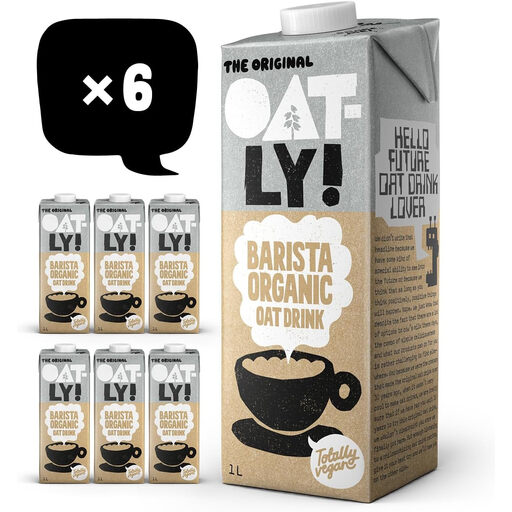
This oat drink is an option to consider when a bake calls for a drink other than cow’s milk. It is not lactose-free dairy milk; check the current carton against the ingredients the child needs to avoid.
 No image available
An oat drink to consider for a bake that does not use cow’s milk, supplied as six 1 L cartons. Check the current carton for milk and oat allergen information and whether it suits the recipe; if it will regularly replace a child’s milk, check its nutritional suitability with an appropriate clinician or dietitian.
Lactose-free cow’s milk is an option if the child can have cow’s-milk protein; Arla states that its semi-skimmed LactoFREE product is suitable for baking and cooking. If symptoms persist despite reducing lactose, University Hospitals of Leicester NHS Trust advises speaking to a doctor or dietitian.
No: removing lactose does not remove the milk proteins relevant to cow’s-milk allergy. Allergy UK explains the distinction, and Arla and M&S warn that their lactose-free dairy products are not suitable for milk allergy. Check a suitable cow’s-milk-free alternative against the child’s requirements.
Start with the milk type specified by the recipe, then choose a lactose-free variant that fits it. The products differ: M&S lists 3.8 g fat per 100 g for its whole milk, while Sainsbury’s lists less than 0.5 g per 100 g for its skimmed drink. Check the unit as well as the value when comparing cartons.
Yes. Tesco and M&S advise checking the current pack because ingredients and allergen information can change. The carton being used is especially important when the bake must avoid milk or another ingredient.
Do not decide that from its baking use alone. University Hospitals of Leicester NHS Trust notes that plant-based alternatives may have added vitamins; check the particular drink’s ingredients, fortification and suitability with an appropriate clinician or dietitian if it will be a regular replacement.