People avoiding lactose, but not dairy
If you want dairy milk for cereal or coffee and need to avoid lactose, a lactose-free dairy product may fit. Check the ingredients and your individual requirements; lactose-free does not mean milk-free.


For a continental breakfast, choose lactose-free cow’s milk if lactose is the issue and you still want dairy milk on cereal or in coffee. Choose a suitable dairy-free drink instead if you need to avoid milk protein or dairy altogether: lactose-free dairy products can still contain milk. For occasional use, consider whether an unopened long-life carton fits your routine better than fresh milk, and follow the storage instructions once it is open.
If you want dairy milk for cereal or coffee and need to avoid lactose, a lactose-free dairy product may fit. Check the ingredients and your individual requirements; lactose-free does not mean milk-free.
If breakfast must exclude cow’s milk protein or all dairy, choose an appropriate dairy-free product and check its current allergen label. Gloucestershire Hospitals NHS Foundation Trust distinguishes lactose intolerance from cow’s-milk allergy; lactose-free cow’s milk is not a substitute for avoiding milk protein.
An unopened long-life carton may suit a cupboard backup. Arla UK says its long-life LactoFREE milk can be stored in a cool, dry place before opening, but must be refrigerated afterwards.
Decide whether dairy itself is suitable first, then compare the drink’s intended use, label and storage instructions.
| Priority | What to check | Your needs |
|---|---|---|
| Dairy or dairy-free | Read the ingredients and allergen declaration for milk. Do not use “lactose-free” as a synonym for “dairy-free”; check a plant drink’s other allergens too. | If I need to avoid cow’s milk protein, I need a suitable dairy-free drink, not lactose-free cow’s milk. Gloucestershire Hospitals NHS Foundation Trust makes this distinction, and Arla UK lists milk in its LactoFREE semi-skimmed product. |
| Breakfast use and label | Check the exact carton for its intended use, ingredients and per-100 ml nutrition information. If choosing a plant drink as a dairy alternative, compare calcium fortification, protein and sugars; the NHS identifies unsweetened calcium-fortified plant drinks as dairy alternatives. | I may want one drink for cereal and another for coffee. If milk protein is suitable for me, Arla UK describes its LactoFREE semi-skimmed milk for both cereal and coffee; otherwise I’ll compare dairy-free cartons for the uses I have in mind. |
| Storage and use | Compare unopened storage instructions, refrigeration after opening and the stated period for using an opened carton. Check whether the pack size matches how often you have milk at breakfast. | For infrequent breakfasts, I’d rather consider an unopened long-life carton than keep an extra fresh one chilled. Arla UK says its long-life LactoFREE milk needs refrigeration after opening and is best consumed within three days. |
Lactose-free cow’s milk can still contain milk protein. Arla UK lists milk as an allergen in its semi-skimmed LactoFREE drink, while M&S states that its lactose-free products are not suitable for dairy allergy.
Work from the reason dairy is being avoided: if milk protein must be excluded, select a suitable dairy-free product and read its current allergen label.
Long-life storage applies before opening. Arla UK instructs buyers to refrigerate its long-life LactoFREE milk after opening and says it is best consumed within three days.
Match the carton to your breakfast routine and follow its own storage instructions once opened.
An opened carton that goes unused beyond its stated period may mean wasted milk.
A dairy-free label alone does not tell you a drink’s calcium fortification, protein or sugar content. The NHS identifies unsweetened calcium-fortified plant drinks as dairy alternatives.
Compare the nutrition and allergen information on the particular cartons you are considering.
Ingredients can change. Sainsbury’s advises customers to read the label on the product they buy.
Check the current carton’s ingredients and allergen statement, particularly when avoiding milk or another allergen.
These ranges help distinguish lactose-free dairy from dairy-free alternatives; check the individual product rather than relying on a category name.
Arla UK describes a lactose-free dairy range with fresh and long-life milk in different fat varieties.
Tesco’s lactose-free milk category lists its own-label skimmed and semi-skimmed dairy drinks alongside Arla products.
Sainsbury’s lists own-label lactose-free dairy drinks as well as dairy-free plant drinks.
M&S describes semi-skimmed and whole lactose-free cow’s-milk varieties for uses including tea and cereal.
Waitrose’s dairy-and-lactose-free category displays lactose-free dairy milk alongside plant drinks, including oat, almond and soya options.
These long-life plant drinks represent the dairy-free route for breakfast cereal or coffee. They are not lactose-free cow’s-milk options; choose between them using the intended use and the allergens on the carton.
 No image available
A dairy-free soya option described for breakfast cereal. The pack contains eight long-life 1L cartons; check the current label if soya is an allergen you need to avoid.
 No image available
A dairy-free oat option described for cereal, supplied as eight long-life 1L cartons. Check the carton’s oat and gluten allergen information against your requirements.
 No image available
A dairy-free almond option described for pouring over cereal, in a pack of eight long-life 1L cartons. Check the current label if almond is an allergen you need to avoid.
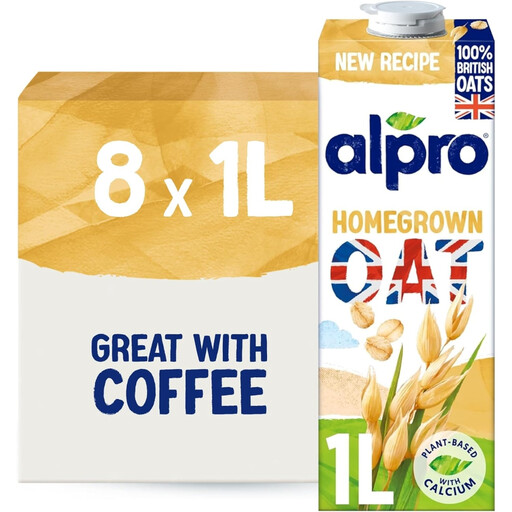 No image available
A dairy-free oat drink described for cereal and hot drinks, supplied as eight long-life 1L cartons. Check the current carton for oat and gluten allergen information and its sugar content.
 No image available
A dairy-free oat drink described for coffee and frothing, supplied as eight long-life 1L cartons. Check the current carton for oat and gluten allergen information and its sugar content.
No. Lactose-free cow’s milk remains a dairy product and can contain milk protein: Arla UK lists milk as an allergen in its LactoFREE semi-skimmed drink. If cow’s milk protein must be avoided, choose a suitable dairy-free alternative and check its allergen label.
An unopened long-life carton is worth considering if you want a cupboard backup. Arla UK says its long-life LactoFREE milk can be stored cool and dry before opening, then needs refrigeration and is best consumed within three days; follow the instructions on the carton you buy.
Compare allergens, calcium fortification, protein and sugars on the exact products. The NHS identifies unsweetened calcium-fortified plant drinks as dairy alternatives, but the label is needed to assess an individual carton.
Read the current ingredients and allergen information for both the drink and the food. For food packed on site before sale, check its ingredients list and emphasised allergens; for a sealed drink carton, use its own label rather than relying solely on an online listing.