Families managing lactose intolerance
If a child can have milk but needs to avoid lactose, lactose-free dairy milk remains an option for cereal, drinks or cooking. Check the carton for its ingredients and storage instructions.


Choose lactose-free cow’s milk when lactose is the issue and the child can have milk; it is still dairy and does not meet a milk-free requirement. If milk must be avoided, check that an alternative is milk-free and compare its fortification, protein and energy for regular use, as NHS and Kingston and Richmond NHS Foundation Trust guidance distinguishes dairy alternatives by their nutritional content. For holiday lunches, also match the carton size and storage instructions to how quickly it will be used.
If a child can have milk but needs to avoid lactose, lactose-free dairy milk remains an option for cereal, drinks or cooking. Check the carton for its ingredients and storage instructions.
A milk-free requirement calls for more than a lactose-free label. Check the ingredients and allergen statement, then compare the nutrition information if the alternative will be a regular drink.
Fresh and long-life cartons fit different storage routines. Consider fridge space, unopened storage, pack size and how much will be used after opening.
Decide first whether milk itself must be avoided. That determines which cartons are relevant before you compare nutrition and storage.
Choose when: Lactose is the concern and the person can have cow’s milk.
Keep in mind: It still contains milk; the checked Arla LactoFREE whole milk lists whole milk as an ingredient.
Choose when: Cow’s milk must be avoided and the product’s label meets that requirement.
Keep in mind: Alternatives differ in fortification, protein and energy, so a regular substitute needs a closer label check.
| Priority | What to check | Your needs |
|---|---|---|
| Milk ingredients | Read the ingredients and allergen statement, not just the lactose-free wording. The Food Standards Agency distinguishes products labelled free from milk from lactose-free dairy products. | Milk itself needs to be avoided, so I need a product that meets that requirement rather than a lactose-free cow’s-milk drink. |
| Nutrition | For a regular milk-free substitute, compare calcium and iodine fortification, protein and energy on the carton. Kingston and Richmond NHS Foundation Trust highlights calcium and iodine fortification for children who cannot consume dairy. | This drink may be part of everyday meals, so I want to compare what it provides rather than choose by plant base alone. |
| Storage | Check whether the carton needs chilling before opening, its size and its after-opening instructions. Long-life describes unopened storage, not how long an opened carton can stay out of the fridge. | Fridge space is limited during the school break, and I need a carton size we can use within its labelled opened-life period. |
| Dairy milk type | If lactose-free dairy milk is suitable, compare whole, semi-skimmed and skimmed labels alongside the nutrition panel and the child’s circumstances. | We can use cow’s milk, but I still need to choose the type that fits our usual meals and drinks. |
Lactose-free cow’s milk still contains milk ingredients. The checked Sainsbury’s lactose-free dairy drink lists cow’s milk, while Waitrose carries Arla’s warning that its LactoFREE semi-skimmed product is not suitable for people with a milk allergy.
Where milk must be avoided, check the ingredients and allergen statement and choose a product labelled for that requirement.
Plant alternatives vary by formulation. A drink used regularly in place of dairy deserves a closer look than one used occasionally in a recipe.
Compare calcium and iodine fortification, protein and energy on the current carton. Kingston and Richmond NHS Foundation Trust advises calcium- and iodine-fortified substitutes for children who cannot consume dairy.
Unopened long-life storage does not remove the need to follow the carton’s instructions once it has been opened.
Match the pack size to likely use over the holidays, and check where and how long the opened drink should be stored.
An opened carton left unused beyond its labelled period may go to waste.
The carton is the practical place to check the product being served, particularly when an ingredient or allergen matters.
Before use, read its ingredients, allergen statement, nutrition panel, date and storage instructions.
These references help distinguish lactose-free dairy ranges from milk-free alternatives; they do not indicate which products a retailer currently has in stock.
Lactose-free cow’s-milk products in different milk types and formats.
A retailer with own-brand lactose-free dairy drinks alongside other lactose-free milk listings.
A retailer with an own-brand lactose-free semi-skimmed dairy drink.
A lactose-free cow’s-milk range with whole and semi-skimmed varieties, as described by Marks & Spencer.
A retailer reference for Arla LactoFREE semi-skimmed milk.
These long-life Alpro plant drinks are options to examine when a milk-free alternative is needed for the school holidays. The barista varieties are described primarily for coffee-style drinks, so check the individual carton against the use you have in mind.
 No image available
A dairy-free oat drink described for cereal or smoothies. For use as a child’s regular milk substitute, check the current carton’s calcium and iodine amounts alongside its protein and energy information. Consider whether eight cartons suit expected use; refrigerate after opening and follow the labelled five-day use period.
 No image available
A dairy-free soya drink described for cereal and cooking. It contains soya, so check the allergen statement; if it will be a regular substitute for a child, compare the carton’s fortification, protein and energy information. Refrigerate after opening and follow the labelled five-day use period.
 No image available
A dairy-free almond drink described for cereal or smoothies. Check the almond allergen declaration and compare fortification, protein and energy on the carton before choosing it as a regular substitute. The eight-carton pack needs to fit expected use; refrigerate after opening and follow the labelled five-day use period.
 No image available
This dairy-free oat drink is described for hot or cold coffee-style drinks rather than specifically for school lunches. Check whether its intended use, oat allergen information and nutrition panel fit your household’s needs. Refrigerate after opening and follow the labelled five-day use period.
 No image available
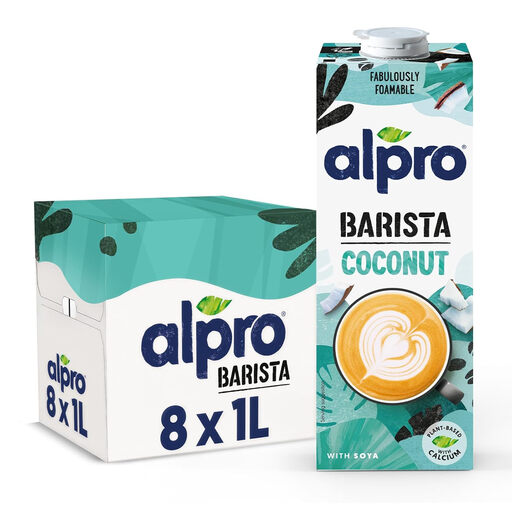
This dairy-free coconut and soya drink is described for coffee-style use, so check its fit for other meals before choosing it for holiday lunches. It contains soya and lists sugar as an ingredient; read the allergen and nutrition information on the carton. Refrigerate after opening and follow the labelled five-day use period.
No. Lactose-free cow’s milk still contains milk: Arla UK lists whole milk in its LactoFREE whole milk drink, and Sainsbury’s lists cow’s milk in its Everyday lactose-free semi-skimmed drink. If milk must be avoided, check for a product labelled to meet that requirement rather than relying on “lactose-free”.
Do not substitute lactose-free cow’s milk for a milk-free product. Check the ingredients and allergen statement against your child’s requirements and follow their clinician’s or dietitian’s individual advice; the Waitrose & Partners listing warns that Arla LactoFREE semi-skimmed is not suitable for people with a milk allergy.
Check that the drink meets the milk-free requirement, then compare its fortification, protein and energy with other options. Kingston and Richmond NHS Foundation Trust highlights calcium- and iodine-fortified substitutes for children who cannot consume dairy; plant drinks should not be treated as nutritionally interchangeable.
Follow the individual carton’s after-opening instructions. Long-life storage applies before opening; the listed Joybuy Alpro cartons instruct refrigeration after opening and use within five days.