Households using lactose-free milk daily
If milk goes into several drinks, bowls of cereal and recipes each day, match carton size to how quickly your household finishes an opened pack.


Choose 1L chilled cartons if household use varies; consider a 2L carton when you can finish it within the opening instructions on its pack. Long-life cartons offer a reserve option, but check storage directions and availability before relying on them. For milk, choose by fat level and format: “mature” describes cheese in the cited Sainsbury’s range, not a milk variety.
If milk goes into several drinks, bowls of cereal and recipes each day, match carton size to how quickly your household finishes an opened pack.
Lactose-free cow’s milk remains a dairy product. Check that the person who needs it can consume milk protein, as well as checking the milk style the household normally uses.
Lactose-free dairy milk is not a milk-free alternative. Cambridge University Hospitals NHS Foundation Trust explains that specialised lactose-free products still contain dairy protein and are unsuitable for someone with cow’s milk protein allergy.
Establish whether the household needs lactose-free dairy milk or a plant-based drink, then choose a carton format that fits its routine and storage space.
| Priority | What to check | Your needs |
|---|---|---|
| Milk or plant-based drink | Read the ingredients and allergen statement. Lactose-free cow’s milk can still contain milk protein; plant-based drinks have their own ingredients to check. | If someone in my household has a cow’s milk protein allergy, I cannot treat lactose-free dairy milk as a milk-free choice. Cambridge University Hospitals NHS Foundation Trust makes this distinction explicit. |
| Carton size | Compare 1L and 2L formats with expected use after opening. Check the chosen pack’s refrigeration and opening-life instructions. | Our milk use changes through the week, so smaller chilled cartons may be easier to finish. If we use it steadily, a 2L carton means fewer cartons to handle. |
| Fresh or long-life | Check storage directions before and after opening, fridge space and availability for the shop. Follow the specific carton’s instructions. | I’d like a reserve carton for weeks when fresh-milk shopping is less predictable, without assuming a long-life option will always be available. |
| Milk style | Choose whole, semi-skimmed or skimmed where offered, then check whether the format suits the household’s usual drinks and recipes. | We use milk in tea, cereal and cooking, so I want the familiar milk style rather than choosing on the lactose-free label alone. |
| “Mature” on the list | Check which product the word describes. The cited Sainsbury’s range uses “Mature” for Arla Lactofree cheddar cheese, not for milk. | If we also need mature cheese, I’ll add it separately; for milk, I’ll choose the fat level and carton format. |
According to Cambridge University Hospitals NHS Foundation Trust, lactose-free dairy products still contain the protein relevant to cow’s milk protein allergy.
Check why milk is being avoided and read each product’s allergen statement. If cow’s milk protein allergy is the concern, do not substitute lactose-free cow’s milk for a suitable milk-free option.
An opened carton has its own storage and consumption instructions. Arla Foods UK says its cited 1L fresh semi-skimmed product should be kept at 0–5°C and is best consumed within three days of opening; check the directions on any 2L carton separately.
Think about how much the household will use after opening before choosing between smaller and larger cartons.
An unfinished carton may need to be discarded under its opening-life instructions.
The cited Sainsbury’s range applies “Mature” to lactose-free cheddar cheese. It distinguishes milk by descriptions such as whole and semi-skimmed.
Choose milk by its fat level and fresh or long-life format, and treat mature cheese as a separate shopping decision.
These references help distinguish the milk formats discussed above; a retailer’s wider range is separate from the Joybuy products shown below.
Arla LactoFREE appears in fresh dairy-milk formats and a long-life semi-skimmed format in the cited UK listings.
Tesco lists an own-label 1L lactose-free semi-skimmed dairy drink alongside branded options.
The cited Sainsbury’s range includes own-label lactose-free dairy drinks and branded Arla milk.
M&S describes semi-skimmed and whole lactose-free cow’s milk in its range.
Waitrose lists Arla LactoFREE milk, including a long-life semi-skimmed format.
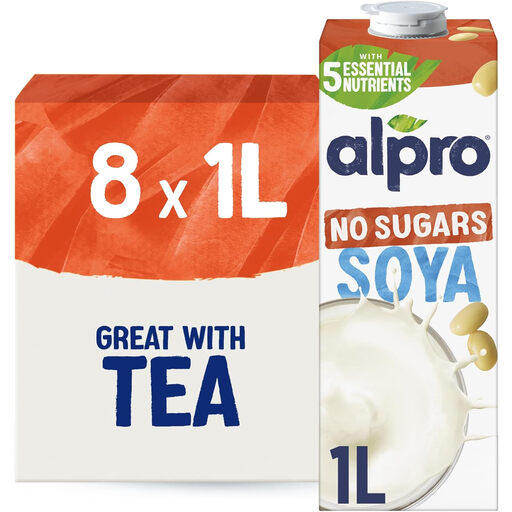
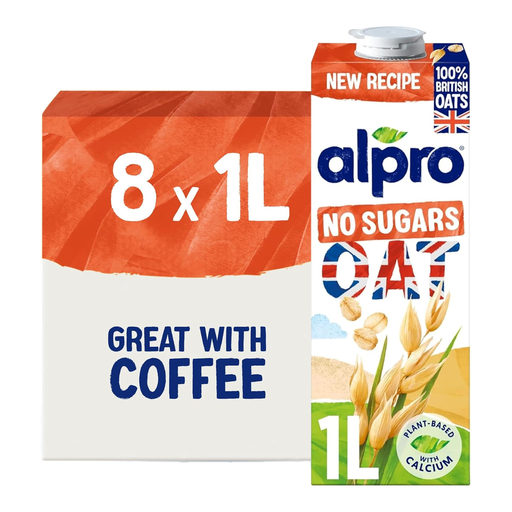
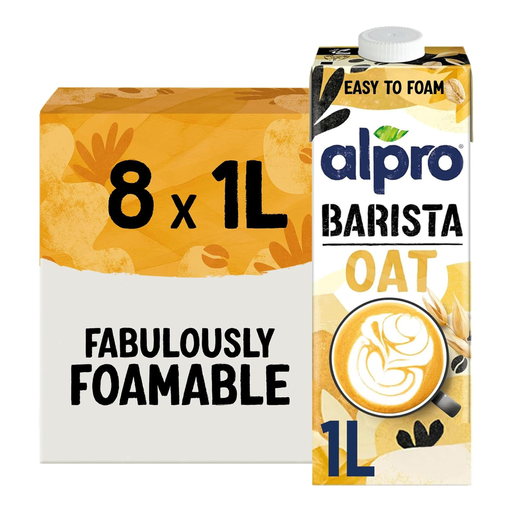
These Alpro multipacks are plant-based drinks for households considering a long-life alternative. They are not the lactose-free cow’s milk options discussed above; check each drink’s ingredients and allergens for the people who will use it.
 No image available
An 8 × 1L long-life soya drink for a household choosing a plant-based option rather than cow’s milk. Check the ingredients and allergen statement before adding it to a shared shop.
 No image available
This 8 × 1L long-life oat drink is a plant-based choice for a larger shop, not lactose-free cow’s milk. Check the pack’s ingredients, allergens and instructions after opening.
 No image available
Consider this 8 × 1L long-life almond drink only if an almond-based, plant-based option fits the household. Read the allergen statement, particularly if anyone needs to avoid almonds.
 No image available
An 8 × 1L long-life oat drink labelled for barista use. Consider it for a household seeking a plant-based coffee option, rather than assuming it replaces the cow’s milk used throughout the family shop; check its ingredients and allergens.
No. Cambridge University Hospitals NHS Foundation Trust states that specialised lactose-free dairy products still contain milk protein and are unsuitable for someone with cow’s milk protein allergy. Check the allergen statement on the specific product.
Choose a carton size the household can finish within that product’s instructions after opening. Arla Foods UK says its cited 1L fresh semi-skimmed milk is best consumed within three days of opening; check the 2L pack’s own directions rather than assuming they are identical.
A long-life carton can be a reserve if its storage instructions suit your plans, but check the current listing before depending on a particular product. The cited Waitrose listing for Arla’s 1L long-life semi-skimmed milk marked that item unavailable when reviewed.
“Mature” describes cheddar cheese in the cited Sainsbury’s lactose-free range, not its milk. For milk, look instead at distinctions such as whole or semi-skimmed and fresh or long-life; put cheese on the shopping list separately if needed.