For a baby under 12 months, ordinary lactose-free cow’s milk should not replace breast milk or first infant formula for a night feed, in line with NHS feeding guidance. If lactose intolerance is suspected, seek advice about an age-appropriate feed; from 12 months, lactose-free cow’s milk may be an option when dairy is tolerated, but it is not a substitute for milk that avoids cow’s-milk proteins.
Who is the milk for?
The drinker’s age and the reason for avoiding lactose determine whether ordinary lactose-free cow’s milk belongs on the shopping list.
Parents preparing a baby’s night feed
The NHS advises continuing breast milk or first infant formula until at least 1 year old. If lactose intolerance is suspected before then, ask a health professional about an appropriate feed rather than switching to a supermarket lactose-free dairy drink.
Parents of children aged 12 months or over
For a child who can have cow’s-milk proteins but needs to avoid lactose, consider the milk’s fat level as well as its ingredients. NHS guidance recommends full-fat dairy products up to age 2.
Adults choosing a night-time drink
Whole, semi-skimmed and skimmed lactose-free dairy drinks offer different fat levels. Check that the product is milk rather than a plant drink, and do not use lactose-free cow’s milk as an alternative for cow’s-milk allergy.
What should you check before buying?
Start with age and ingredients; compare fat level and storage format only once the type of feed is appropriate.
| Priority |
What to check |
Your needs |
| Age and feeding stage |
Check whether the drink is ordinary cow’s milk or infant formula. The NHS advises breast milk or first infant formula until at least 1 year old; a specialised lactose-free formula calls for advice about the individual baby. |
If I’m preparing a feed for a baby under 12 months, I need an age-appropriate feed, not supermarket lactose-free milk. |
| Milk ingredients |
Read the ingredients and allergen statement. Healthier Together NHS distinguishes lactose intolerance from milk allergy, and M&S states that its lactose-free dairy products are unsuitable for dairy allergy or galactosaemia. |
If milk allergy is suspected, I need to check the type of milk ingredient rather than relying on the words ‘lactose free’. |
| Fat level |
Compare whole, semi-skimmed and skimmed variants of the exact product. For children up to age 2, NHS guidance recommends full-fat dairy products. |
For a child aged 12 months or over who tolerates dairy, I want to consider the full-fat option; for an older drinker, I may prefer a different fat level. |
| Storage format |
Check whether the carton is chilled or long-life, then follow its own storage and after-opening instructions. M&S specifies refrigeration at 0°C to +5°C and use within 3 days of opening for its semi-skimmed lactose-free milk. |
A carton for night-time use needs storage instructions I can follow, whether I buy it chilled or keep an unopened long-life variant in the cupboard. |
Mistakes to avoid
-
Replacing an infant feed with ordinary lactose-free milk
Removing lactose does not make a supermarket cow’s-milk drink equivalent to infant formula. NHS guidance says to continue breast milk or first infant formula until at least 1 year old.
For a baby under 12 months, discuss suspected lactose intolerance with a health professional before changing feeds; ask whether a specialised formula is appropriate.
-
Confusing lactose intolerance with milk allergy
Healthier Together NHS identifies these as different conditions. Lactose-free dairy can still contain milk ingredients; M&S explicitly warns that its lactose-free milk is unsuitable for dairy allergy or galactosaemia.
Check the ingredient and allergen information on the exact pack, and seek medical advice if an allergy is suspected.
-
Overlooking fat level for a young child
Whole, semi-skimmed and skimmed milk are not the same choice for a toddler. The NHS recommends full-fat dairy products up to age 2.
For a child aged 12 months or over who tolerates dairy but needs lactose-free milk, consider a whole-milk variant unless a health professional has advised otherwise.
-
Assuming every lactose-free listing is milk
A lactose-free shopping category can contain other foods. Sainsbury’s, for example, lists Arla Lactofree Mature Cheddar Cheese alongside dairy drinks; ‘mature’ describes the cheese, not a night-feed milk.
Read the full product name and ingredients before selecting a drink, particularly when browsing a mixed lactose-free category.
Brand and retailer references
These examples help distinguish lactose-free dairy drinks from other items in retailer categories; check the current product label for the variant you choose.
Arla Lactofree
A branded lactose-free dairy range appearing in UK supermarket listings.
- Tesco Groceries lists an Arla Lactofree whole-milk drink, while Waitrose & Partners lists whole and semi-skimmed variants.
- Check the exact item: a Lactofree cheese listing is not a milk drink, and lactose-free dairy is not an allergy substitute.
Tesco
An own-label route for comparing a lactose-free dairy drink with branded products in the same shop.
- Tesco Groceries lists a lactose-free semi-skimmed dairy drink.
- Check the pack’s fat level, milk ingredients and storage instructions rather than treating all lactose-free listings as interchangeable.
Sainsbury’s
An own-label lactose-free dairy-drink option within a broader lactose-free food category.
- Sainsbury’s lists an Everyday lactose-free semi-skimmed dairy drink in a 1L carton.
- The category also contains cheese, so confirm that the selected item is a milk drink.
M&S Made Without
M&S lists lactose-free whole and semi-skimmed dairy milk for shoppers comparing fat levels.
- The two fat-level options are identified in the M&S Food lactose-free milk range.
- M&S states that its lactose-free dairy products are unsuitable for people with a dairy allergy or galactosaemia.
Waitrose
A retailer listing Arla Lactofree dairy drinks within a wider dairy and lactose-free category.
- Waitrose & Partners lists Arla Lactofree whole and semi-skimmed milk drinks.
- Read the individual product name and ingredients to distinguish lactose-free dairy from other drinks in the category.
A formula option for the infant route
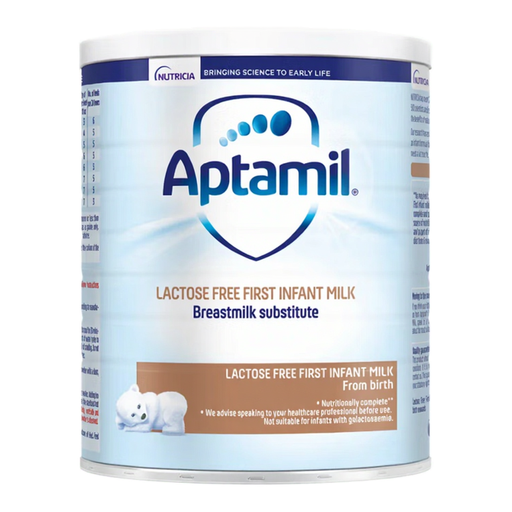
This Joybuy product is a specialised lactose-free infant formula option for a baby whose clinician has advised its use. It is not an ordinary lactose-free cow’s-milk drink for an older child or adult.
 No image available
Aptamil Lactose Free Baby Milk Formula Powder From Birth 400g
For an infant whose clinician has advised lactose-free formula: this 400g powder is described as suitable from birth and for use under medical supervision. Its product description lists milk-derived calcium caseinate and fish oil; check these ingredients against any allergy concerns, and confirm the pack’s preparation instructions before use.
View on Joybuy
Frequently asked questions
Can I use supermarket lactose-free milk for a baby’s night feed?
Not as the main milk feed before 12 months. The NHS advises continuing breast milk or first infant formula until at least 1 year old; if lactose intolerance is suspected, ask a health professional about an age-appropriate feed instead of substituting ordinary lactose-free cow’s milk.
When can lactose-free cow’s milk be a child’s main drink?
Cow’s milk can be a main drink from 12 months, provided the child can have its milk proteins. If lactose-free dairy is needed, compare fat levels too: NHS guidance recommends full-fat dairy products up to age 2.
Is lactose-free dairy milk suitable for a cow’s-milk allergy?
No. Lactose intolerance and milk allergy are different, as Healthier Together NHS explains, and lactose-free dairy can still contain cow’s-milk ingredients. M&S states that its lactose-free milk is unsuitable for dairy allergy or galactosaemia; check the exact pack and seek medical advice about suspected allergy.
How should I store lactose-free milk after opening?
Follow the instructions on the particular carton. For its lactose-free semi-skimmed milk, M&S specifies refrigeration at 0°C to +5°C and consumption within 3 days of opening; do not apply those timings to a different product without checking its label.
Does ‘mature’ identify a type of lactose-free milk?
Not in the Sainsbury’s listing: ‘mature’ describes an Arla Lactofree cheddar cheese. For a milk drink, check the full product name for the dairy type and fat level rather than selecting a cheese from the same lactose-free category.


