Lactose-free dairy milk is not vegan: Tesco and Arla product labels identify cow’s milk in their lactose-free drinks, so this route is for a child who needs to reduce lactose and can consume milk protein. For a vegan child aged 1 or over, compare suitable dairy-free plant drinks, their fortification and protein information, and the nursery’s rules for drinks from home. If the child has a diagnosed milk allergy, follow their healthcare and nursery allergy plan rather than relying on a vegan label alone; UK government labelling guidance says that label does not guarantee allergen safety.
Who is choosing the drink?
Parents of vegan nursery children aged 1 or over
A lactose-free dairy drink will not meet a vegan requirement. Compare the plant drink’s ingredients, fortification and protein information, then ask whether the nursery will accept and serve that particular drink. Norfolk and Waveney Integrated Care Board’s guidance on plant alternatives for children aged 1 or over with cow’s-milk-protein allergy discusses unsweetened, fortified options; individual dietary needs still matter.
Parents managing lactose intolerance without milk allergy
Lactose-free dairy may be an option when the child can consume cow’s-milk protein. Tesco, Sainsbury’s and Arla product information identifies milk in their lactose-free drinks, so check the ingredients of the exact carton rather than treating “lactose-free” as “dairy-free”.
Parents of children with diagnosed milk allergy
Lactose-free cow’s milk still presents a milk-protein issue. University Hospitals Sussex NHS Foundation Trust explains that cow’s-milk allergy involves a reaction to milk proteins, while UK government guidance warns that a vegan label alone does not establish allergy safety. Follow the child’s healthcare plan and agree the drink arrangements with the nursery.
What should you check before buying?
Start with the reason for choosing a different drink: reducing lactose, avoiding dairy for a vegan diet, or managing a diagnosed milk allergy. Then check whether the drink suits the child’s age and can be brought into the nursery.
| Priority | What to check | Your needs |
|---|
| Dietary route |
Read the ingredients for cow’s milk. If the drink must be vegan, check the specific product’s dairy-free and vegan wording; “lactose-free” does not establish either. |
I need a drink that matches the child’s diet, not just a carton with a lactose-free claim. Tesco and Arla identify milk in their lactose-free dairy products. |
| Milk allergy |
For a diagnosed allergy, check the exact product’s allergen declaration, relevant free-from information and precautionary wording. Follow the child’s healthcare and nursery plans; a vegan label is not an allergen-safety guarantee under UK government guidance. |
If my child has a milk allergy, I need the nursery to have the correct allergy information and an agreed plan for the drink being served. |
| Age and nutrition |
For a child aged 1 or over considering a plant drink, compare whether it is unsweetened and fortified, and read its protein and energy values per 100ml. Check calcium and iodine information; NHS-linked guidance discusses these nutrients when dairy is excluded. |
I want to compare the whole label rather than choose by plant ingredient alone. Norfolk and Waveney Integrated Care Board’s guidance for children aged 1 or over with cow’s-milk-protein allergy places unsweetened, fortified soya or pea alternatives ahead of oat alternatives. |
| Nursery arrangements |
Ask whether drinks from home are permitted, which allergens need particular handling, and how the drink must be labelled, stored and served. |
Before I buy several cartons, I need to know whether the nursery can use this product and its packaging at lunch. The Department for Education’s guidance for early-years providers in England addresses managing food allergies and intolerances. |
Mistakes to avoid
-
Treating “lactose-free” as “dairy-free”
Lactose-free dairy drinks can still contain cow’s milk. The Tesco, Sainsbury’s and Arla product information identifies milk ingredients, so those drinks do not meet a vegan requirement or a need to avoid milk protein.
Read the ingredients and allergen declaration on the exact product, not only the wording on the front.
-
Using a vegan label as an allergy check
UK government food-labelling guidance says a vegan label does not guarantee that a product is safe for someone with a milk allergy.
Check the product’s allergen and precautionary statements, and follow the child’s healthcare and nursery allergy arrangements.
-
Choosing a plant drink by flavour alone
Plant drinks differ in their ingredients and nutrition information. Guidance from Norfolk and Waveney Integrated Care Board addresses unsweetened, fortified alternatives from age 1 for children with cow’s-milk-protein allergy; Kingston and Richmond NHS Foundation Trust also advises against rice drinks for children under 5.
Check the child’s age, fortification and protein information per 100ml. For a child under 1 or a child with a diagnosed allergy, use individual clinical advice rather than substituting an ordinary lunch drink.
-
Assuming the nursery can serve any carton
A drink that otherwise fits the child’s diet still needs to work with the nursery’s arrangements for drinks from home, storage and allergens.
Ask the nursery what it accepts and how to label and provide the drink before buying a multipack.
Relevant brand references
A brand may sell more than one type of drink. These examples identify specific product routes, not a dietary or allergy claim for every product bearing the brand name.
Arla LactoFREE
Waitrose & Partners lists an Arla LactoFREE whole milk drink made with whole milk and lactase enzyme.
- A lactose-free dairy route for a child who can consume milk protein.
- The listed drink is not suitable for people with milk allergy and is not vegan.
Tesco
Tesco describes its lactose-free semi-skimmed dairy drink as made with cow’s milk.
- An example of a lactose-free dairy drink to consider when dairy remains suitable.
- Its ingredients include milk, so it does not meet a vegan or milk-allergy requirement.
Sainsbury's
The ingredients listed for Sainsbury’s Everyday Lactose Free Skimmed Dairy Drink include skimmed cow’s milk and lactase enzyme.
- A skimmed dairy example for comparing lactose-free milk products.
- Lactose-free wording does not make this drink vegan or milk-free.
M&S
The M&S Made Without Lactose semi-skimmed milk lists milk among its ingredients.
- The product name identifies the lactose-free dairy route.
- M&S states that this lactose-free product is unsuitable for people with a dairy allergy or galactosaemia; “Made Without Lactose” does not mean vegan.
Waitrose
Waitrose & Partners lists both Arla LactoFREE whole milk drink and a separate Alpro oat drink described as dairy-free and suitable for vegans.
- The two listings illustrate why the ingredients and dietary wording must be checked product by product.
- The Alpro oat listing advises speaking to a healthcare professional before introducing it into children’s diets; vegan wording alone does not answer an allergy question.
Plant-based drink options on Joybuy
These plant-based drinks are options to examine for a nursery lunch, rather than substitutes for an individual age or allergy plan. Check each current carton and ask whether the nursery accepts its ingredients and packaging; the Growing Up drink also needs an explicit vegan-label check if the child follows a vegan diet.
 No image available
Alpro Soya No Sugars Long Life Drink 8 x 1L
A soya option to examine for a vegan nursery lunch when the child is aged 1 or over and the nursery accepts soya. Check the current carton’s ingredients, fortification, nutrition and allergen statements, and whether the nursery can store and serve a 1L carton.
View on Joybuy
 No image available
Alpro Almond No Sugars Long Life Drink 8 x 1L
An almond option to consider if soya is unsuitable and almond fits the child’s allergy and nursery arrangements. Compare its protein information with other plant drinks, check the current allergen statement, and confirm how a 1L carton would be served.
View on Joybuy
 No image available
Alpro Oat Original Long Life Drink 8 x 1L
An oat-based option for a vegan diet, subject to the child’s age, the current allergen information and nursery acceptance. Read protein and sugars per 100ml on the carton rather than treating “no added sugars” as “sugar-free”; also check arrangements for serving a 1L carton.
View on Joybuy
 No image available
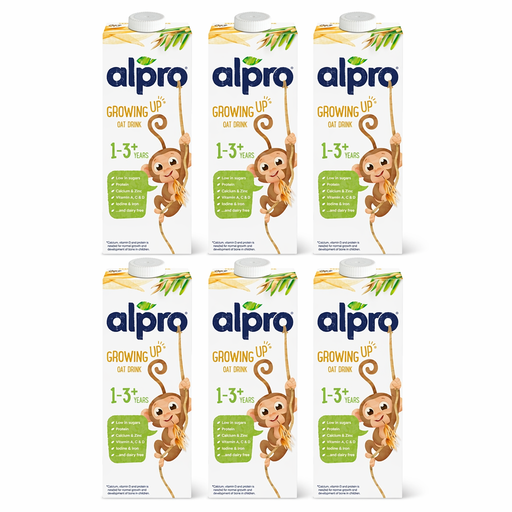
6 Alpro Oat Growing Up Drink
For a nursery child in the product’s stated age range, check the current carton for its age guidance and nutrition information. If the child’s diet is vegan, confirm that this specific drink is labelled suitable for vegans; check its allergen wording and the nursery’s serving arrangements too.
View on Joybuy
 No image available
Alpro Oat No Sugars Long Life Drink 8 x 1L
An oat-based option to compare with other plant drinks for an age-appropriate vegan nursery lunch. Check the current carton’s sugars declaration, protein information and allergen wording, as well as whether the nursery can serve a 1L carton.
View on Joybuy
Nursery drink questions
Is lactose-free dairy milk vegan?
No. Tesco and Arla product information identifies cow’s milk in their lactose-free dairy drinks. For a vegan diet, check a plant drink’s ingredients and specific dairy-free and vegan labelling instead.
Can a child with cow’s-milk-protein allergy have lactose-free dairy milk?
Lactose-free cow’s milk is not an alternative for avoiding milk protein. University Hospitals Sussex NHS Foundation Trust explains that cow’s-milk allergy involves milk proteins, and the cited lactose-free dairy products still contain milk. Follow the child’s healthcare plan and tell the nursery about the allergy.
Does a vegan label make a drink safe for milk allergy?
No. UK government food-labelling guidance warns against assuming a vegan-labelled product is safe for someone with a milk allergy. Check the product’s allergen and precautionary wording and follow the child’s individual allergy plan.
What should I compare in a plant drink for a nursery child?
For a child aged 1 or over, compare the ingredients, whether the drink is unsweetened and fortified, and its protein and energy information per 100ml. Norfolk and Waveney Integrated Care Board’s guidance for children with cow’s-milk-protein allergy discusses fortified soya or pea alternatives before oat alternatives; Kingston and Richmond NHS Foundation Trust advises checking calcium and iodine when dairy is excluded. Confirm that the particular drink also fits the child’s needs and nursery arrangements.
Can a baby under 1 have a plant drink as their main milk?
An ordinary plant drink should not replace a baby’s main milk in the first 12 months. NHS guidance identifies first infant formula as the suitable alternative to breast milk during that period. Seek individual clinical advice for an infant with a suspected allergy, intolerance or vegan feeding plan rather than making a nursery-lunch substitution.


