Choose ordinary lactose-free cow’s milk if you want milk for everyday use, selecting its fat level and format separately from its protein content. If protein per drink is your main consideration, compare protein-enriched options on the same per-100g or per-100ml basis, and confirm that the exact product is lactose-free. Lactose-free cow’s milk still contains milk and is not suitable as a substitute for someone with a milk allergy.
Who is this choice for?
Shoppers using lactose-free milk in everyday meals
If you want milk for cereal, hot drinks or cooking while avoiding lactose, ordinary lactose-free cow’s milk is an option to compare. Check how much protein the amount you normally use contributes, rather than treating one splash and a full glass as equivalent.
Shoppers comparing protein per drink
If a drink is intended to contribute a larger amount of protein, compare its labelled protein per 100g or 100ml and per serving. A protein-enriched drink also calls for a check of its lactose-free statement, ingredients and allergens.
Shoppers choosing a milk fat level
If cow’s milk suits you but lactose does not, skimmed, semi-skimmed and whole lactose-free varieties offer different fat levels. The labelled protein values of the Arla and M&S examples are relatively close, so whole milk should not be chosen on the assumption that it provides substantially more protein.
What should you compare?
Start with lactose suitability, then compare protein on a like-for-like label basis before deciding which fat level, ingredients and format fit the way you use milk.
| Priority |
What to check |
Your needs |
| Protein |
Compare protein per 100g with per 100g, or per 100ml with per 100ml; then check the amount in your serving. Arla lists 3.4g per 100g for its semi-skimmed LactoFREE milk, while M&S lists 8.8g per 100g for its strawberry protein milkshake. |
I use milk regularly, but I may want a separate drink when protein per serving matters more. I would check that any enriched drink I choose is explicitly labelled lactose-free. |
| Lactose and allergens |
Confirm the exact product says lactose-free and read its allergen information. The NHS distinguishes lactose intolerance from food allergy; lactose-free cow’s milk remains a milk-containing product. |
I need to avoid lactose, or I need to check whether a drink meets a separate allergy requirement. I would not treat those as the same label check. |
| Fat level |
Compare fat on the same label basis: Arla lists 0.5g per 100g for skimmed and 1.5g per 100g for semi-skimmed LactoFREE milk. M&S lists 3.8g per 100g for its lactose-free whole milk. |
For everyday milk, I would choose a fat level that fits how I use it rather than assuming whole milk has substantially more protein. |
| Ingredients |
Read the full ingredients and nutrition panel of a flavoured or enriched drink. M&S lists added milk protein and sweetener, alongside 0.40g salt per 100g, for its strawberry protein milkshake. |
If I plan to drink a protein milkshake regularly, I want to know what else is in the specific product, not just its protein figure. |
| Storage format |
Choose between fresh and long-life products according to the exact pack’s unopened and after-opening instructions. Arla lists both fresh and long-life LactoFREE milk formats. |
Long-life milk could suit my cupboard space before opening; I would still follow the pack’s instructions once it is open. |
Mistakes to avoid
-
Assuming lactose-free means protein-enriched
Lactose status and protein content describe different things. Arla lists 3.4g protein per 100g for its semi-skimmed LactoFREE milk; M&S lists 8.8g per 100g for its strawberry protein milkshake.
Compare the exact products per 100g or per 100ml, then check the amount in the serving you intend to drink. Confirm lactose-free labelling separately on an enriched drink.
-
Picking a high-protein milk without checking lactose
Waitrose lists SuperNutrio High Protein Fresh Whole Cow’s Milk at 7g protein per 100ml. That protein figure does not establish that the product is lactose-free.
If avoiding lactose is essential to your choice, check for a lactose-free statement on the exact product rather than relying on its protein content.
-
Treating lactose-free cow’s milk as an allergy substitute
Lactose-free cow’s milk still contains milk. The NHS distinguishes lactose intolerance from food allergy, and the Arla and M&S lactose-free milk product information warns against use for people with a milk allergy.
For a diagnosed milk allergy, choose only a product appropriate to that allergy and follow the advice you have been given by a healthcare professional.
Brand and retailer references
These ranges illustrate different products to check; a retailer’s lactose-free milk range and its higher-protein drinks need not contain the same products.
Arla LactoFREE
Arla lists fresh and long-life lactose-free milk across skimmed, semi-skimmed and full-fat formats.
- Arla’s skimmed and semi-skimmed product information lists 3.5g and 3.4g protein per 100g respectively.
- Its lactose-free cow’s milk is not suitable for a milk allergy; choose the fat level and storage format on their own merits.
Tesco
Tesco lists own-label lactose-free skimmed and semi-skimmed dairy drinks alongside Arla products.
- The own-label range offers two fat-level options to consider for everyday use.
- Check the exact pack’s protein, ingredients and allergen information before comparing it with another milk.
Sainsbury’s
Sainsbury’s lists Everyday lactose-free skimmed, semi-skimmed and whole dairy drinks, as well as Arla options.
- Its own-label range lets shoppers compare three stated fat levels.
- Use the individual product’s nutrition panel when comparing protein or fat, rather than the range name alone.
M&S
M&S lists lactose-free cow’s milk and a separate strawberry protein milkshake.
- M&S lists 3.2g protein and 3.8g fat per 100g for its Made Without lactose-free whole milk; its strawberry protein milkshake lists 8.8g protein per 100g.
- The milkshake has a different ingredients list from plain milk. Confirm lactose-free status and allergens on the exact drink before choosing it for lactose avoidance.
Waitrose
Waitrose lists Arla LactoFREE milk and separate higher-protein cow’s milk products.
- Its Arla LactoFREE whole milk listing states 3.3g protein per 100ml.
- Waitrose lists SuperNutrio high-protein cow’s milk at 7g protein per 100ml, but that figure does not establish lactose-free suitability.
Plant-based option on Joybuy
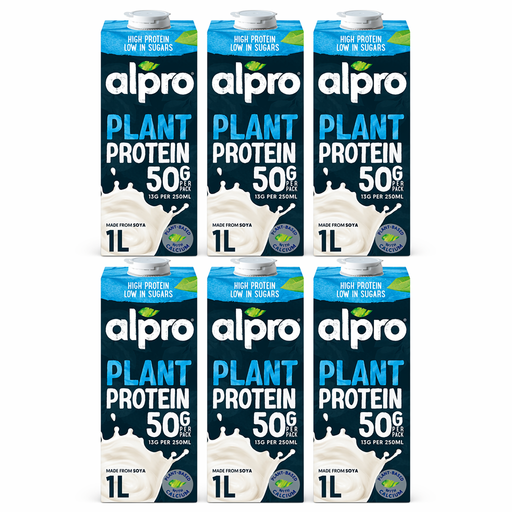
The Joybuy option here is an Alpro plant-based drink, rather than lactose-free cow’s milk. Consider it as a different type of drink and check its exact label against your protein, ingredient and allergen requirements.
 No image available
Alpro Plant Protein 1L × 6
A plant-based drink to consider if you want an alternative to cow’s milk. Check the exact pack’s protein per 100ml, lactose-free statement, ingredients and allergens before deciding whether it fits your intended use.
Joybuy
Common questions
How does ordinary lactose-free milk compare with a protein drink?
Compare the exact labels on the same per-100g or per-100ml basis. Arla’s semi-skimmed LactoFREE milk lists 3.4g protein per 100g, while the M&S strawberry protein milkshake lists 8.8g per 100g. If you need to avoid lactose, confirm that the particular protein drink is labelled lactose-free.
Should I choose skimmed, semi-skimmed or whole lactose-free milk?
Choose the fat level for your intended use, then check protein separately. Arla lists 0.5g fat and 3.5g protein per 100g for its skimmed LactoFREE milk, and 1.5g fat and 3.4g protein per 100g for its semi-skimmed version. M&S lists 3.8g fat and 3.2g protein per 100g for its lactose-free whole milk.
Is lactose-free cow’s milk suitable for a milk allergy?
No. Lactose-free cow’s milk still contains milk. The NHS distinguishes lactose intolerance from food allergy, while Arla and M&S warn that their lactose-free milk products are not suitable for people with a milk allergy.
Can a protein milkshake replace plain milk in everyday use?
Compare its ingredients and nutrition before using it in place of plain milk. The M&S strawberry protein milkshake lists added milk protein, sweetener and 0.40g salt per 100g; Arla’s semi-skimmed LactoFREE milk lists semi-skimmed milk and lactase enzyme as its ingredients. Check the milkshake’s lactose-free statement if that is a requirement for you.


