If lactose is the concern and cow’s milk is otherwise suitable, compare lactose-free semi-skimmed cartons by their lactose statement, nutrition and storage instructions. Use the milk with carbohydrate-containing food rather than treating it as complete marathon fuel, and try a new product during ordinary training before a key run. Lactose-free dairy milk is not suitable for someone with a milk allergy.
Who is this choice for?
Runners concerned about lactose
If you suspect lactose is linked to discomfort, a lactose-free dairy milk may be an option for cereal or porridge. Check the ingredients and try a new carton during ordinary training; lactose intolerance and milk allergy are different conditions, as the NHS explains.
Runners planning post-run food
Milk can be one ingredient in a meal or snack that also contains carbohydrate, such as porridge or cereal. A 2015 review in Current Sports Medicine Reports discusses the roles of both carbohydrate and protein in recovery from endurance exercise; milk alone is not a complete fuelling plan.
Shoppers comparing dairy cartons
Branded and supermarket-own lactose-free semi-skimmed products have different label details. Compare the serving size used for nutrition figures, the lactose statement and how soon the carton must be used after opening.
What should you check?
Start with whether dairy milk is appropriate for you, then compare the exact carton and how you plan to use it around training.
| Priority | What to check | Your needs |
|---|
| Lactose and allergens |
Read the carton’s lactose statement, ingredients and milk-allergen declaration. Arla’s LactoFREE semi-skimmed product states less than 0.03% lactose, according to its listing at Tesco Groceries; that figure does not describe other cartons. |
If lactose appears to be the issue, I want to check the exact product before trying it in training. If I have a milk allergy, lactose-free dairy milk is not an alternative to milk-free products. |
| Food after a run |
Compare protein and carbohydrate using the same serving size. Tesco Groceries lists 6.9g protein per 200ml for Arla LactoFREE and 6.5g per 200ml for Tesco’s own-label drink; neither figure describes an entire meal. |
I want milk as part of porridge, cereal or another meal that contains carbohydrate, rather than relying on a glass of milk for all my post-run food. |
| Storage |
Check whether the carton is chilled or long-life and follow its own opening instructions. Tesco Groceries says to refrigerate its 1L own-label drink and use it within three days of opening. |
Will I use the carton within its stated opening period, particularly if I only add a little to each meal? |
| Flavour and routine |
Use the product’s actual flavour and format description; “mild” does not identify a particular carton here. Try a new drink with a familiar training meal before relying on it around a key session. |
I’d like a flavour that works in my usual porridge or cereal, without making race day the first time I try it. |
Common buying mistakes
-
Confusing lactose-free with milk-free
Lactose-free dairy milk can still contain milk proteins. The NHS distinguishes food allergy from intolerance, and M&S states that its lactose-free products are unsuitable for people with a dairy allergy.
Read the ingredients and allergen declaration. Seek medical advice if you suspect a milk allergy rather than using a lactose-free dairy carton as a substitute.
-
Treating milk as complete marathon fuel
A serving of lactose-free milk supplies only part of a meal. A 2015 Current Sports Medicine Reports review describes roles for both carbohydrate and protein in endurance recovery.
Have it with carbohydrate-containing food, such as porridge or cereal, and plan other food and drink around the session rather than relying on milk alone.
-
Overlooking the opening instructions
A 1L chilled carton may be impractical if you use only small amounts. Tesco Groceries instructs shoppers to refrigerate its own-label product and consume it within three days of opening.
Check the current carton’s storage instructions and choose a size you expect to finish in time.
An unfinished carton may have to be discarded once its stated opening period has passed.
Brands and retail options
These references concern particular UK product lines or retail listings, not every milk sold under each name.
Arla LactoFREE
A branded lactose-free dairy range with semi-skimmed options.
- Tesco Groceries lists 6.9g protein per 200ml for the 1L semi-skimmed drink and reports Arla’s statement of less than 0.03% lactose.
- It remains a milk product and is unsuitable for people with a milk allergy.
Tesco
An own-label lactose-free semi-skimmed dairy drink available through Tesco.
- Tesco Groceries lists 6.5g protein and 6.6g carbohydrate per 200ml for its 1L drink.
- Tesco says to keep this product refrigerated and consume it within three days of opening.
Sainsbury’s
Its Everyday range includes a lactose-free semi-skimmed dairy drink.
- Sainsbury’s lists 3.2g protein and 3.3g carbohydrate per 100ml for its 1L product.
- The listed ingredients include cow’s milk; check the current carton and local availability.
M&S
Made Without Lactose Semi-Skimmed Milk is an own-label dairy option.
- Its product information gives nutrition per 100g; check the unit before comparing it with figures stated per 100ml.
- M&S explicitly says its lactose-free products are unsuitable for people with a dairy allergy or galactosaemia.
Waitrose
A retailer listing for Arla LactoFREE, rather than a separate own-label milk in this comparison.
- Waitrose & Partners lists Arla LactoFREE semi-skimmed milk and its nutrition information.
- Compare the Arla product’s label, not an assumed Waitrose formulation.
A plant-based Joybuy option
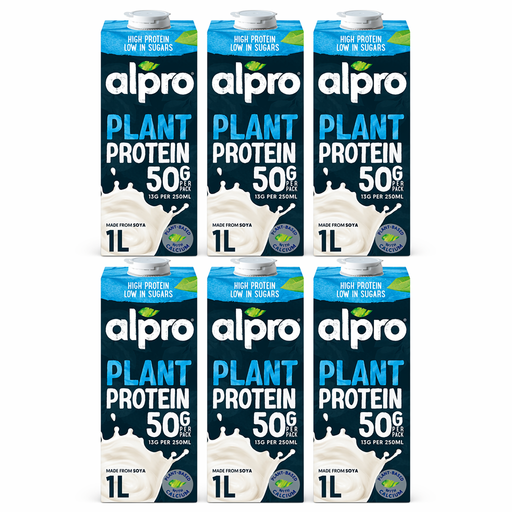
The option shown here is a soya-based drink for cereal or porridge, rather than one of the lactose-free semi-skimmed dairy milks discussed above.
 No image available
6 Alpro Plant Protein 1L
Described as a lactose-free, soya-based drink for cereal or porridge, this is a plant-based choice rather than dairy milk. Check its ingredients and flavour against your preferences, and try it in an ordinary training meal before a key run.
View on Joybuy
Questions about milk and training
Can I drink lactose-free dairy milk if I have a milk allergy?
No: removing lactose does not remove milk proteins. The NHS distinguishes allergy from intolerance, and M&S explicitly warns that its lactose-free products are unsuitable for people with a dairy allergy. Seek medical advice if you suspect an allergy.
Is a glass of lactose-free milk enough after a long run?
Do not treat it as a complete post-run meal. A 2015 Current Sports Medicine Reports review describes roles for both carbohydrate and protein in endurance recovery, so milk can be one ingredient alongside carbohydrate-containing food such as porridge or cereal.
When should I try a new milk before a race?
Try it with ordinary training meals before using it around a key long run or race. Food timing and personal tolerance vary, so a familiar routine is more informative than trying a new drink for the first time on race day.
How long does chilled lactose-free milk last after opening?
Follow the instructions on the particular carton. Tesco Groceries says to refrigerate its 1L own-label drink and consume it within three days of opening; M&S also specifies use within three days for its semi-skimmed product.


