Vegan shoppers planning a budget shop
Choose a drink labelled plant-based or suitable for vegans rather than lactose-free cow’s milk. Check the carton size alongside its ingredients, allergens and fortification.


Choose a plant-based drink labelled suitable for vegans if you need to avoid animal products: lactose-free cow’s milk still contains dairy. If the drink will regularly replace dairy milk, NHS guidance points to an unsweetened, calcium-fortified plant alternative; check each carton’s ingredients and nutrition label, as recipes differ. Lactose-free cow’s milk remains an option if you avoid lactose but still consume dairy.
The distinction is whether you need to avoid dairy itself or only lactose.
Choose a drink labelled plant-based or suitable for vegans rather than lactose-free cow’s milk. Check the carton size alongside its ingredients, allergens and fortification.
Lactose-free cow’s milk can serve familiar dairy uses, such as drinks, cereal and cooking. Check the ingredient and allergen label: the Sainsbury’s Everyday and Arla LactoFREE examples contain milk.
Check each plant drink’s ingredients and allergens, particularly if you need to avoid soya. For a regular dairy replacement, the NHS identifies unsweetened, calcium-fortified plant alternatives as part of its dairy-and-alternatives guidance.
Establish whether the drink must be vegan before comparing individual plant-drink labels and pack sizes.
| Priority | What to check | Your needs |
|---|---|---|
| Vegan suitability | Look for an explicit vegan or plant-based statement. Read the ingredients and allergens: lactose-free cow’s milk can still contain milk. | I need an animal-free drink, not simply one labelled lactose-free. |
| Calcium fortification | Check the individual plant drink’s calcium information and whether it is unsweetened. The NHS identifies unsweetened, calcium-fortified plant alternatives in its dairy-and-alternatives guidance. | If this regularly replaces dairy milk, I want to know what the particular carton contains rather than relying on the type of plant drink. |
| Ingredients and nutrition | Compare the stated sugars and protein per 100ml, and check for added iodine or vitamins if those details matter to you. Read the allergen statement for the exact variant. | I may prefer soya, oat or almond, but I need a recipe that fits my ingredient and allergen requirements. |
| Pack size and storage | Check how many cartons you are buying, where unopened cartons should be kept and the instructions after opening. | An 8 x 1L pack needs to fit my planned shop, storage space and likely use. |
Removing or breaking down lactose does not remove the milk from cow’s-milk products. Arla LactoFREE and Sainsbury’s Everyday lactose-free dairy drinks list milk ingredients.
For vegan use, choose a drink labelled suitable for vegans or plant-based, then check its ingredients and allergens.
Plant drinks differ by recipe. An oat, almond or soya label alone does not tell you its calcium fortification, sugars or protein.
Use the individual nutrition and ingredient labels; the NHS identifies unsweetened, calcium-fortified plant alternatives in its dairy-and-alternatives guidance.
A long-life carton’s unopened storage directions do not tell you how to keep it once opened.
Follow the refrigeration and use-after-opening instructions on the exact carton.
These ranges illustrate the difference between lactose-free dairy milk and plant drinks; a brand name alone does not establish the ingredients of every variant.
A lactose-free dairy range for people who still consume milk.
Plant drinks include soya and oat variants; check the exact carton rather than treating the range as one recipe.
Its Lactose Free Skimmed Dairy Drink is a dairy option for shoppers avoiding lactose while still consuming milk.
A plant-drink range that includes a soya alternative described by Marks & Spencer as vegan-friendly.
These 8 x 1L Alpro plant-drink packs are options for the vegan side of this decision. Check each exact carton’s vegan statement, allergens, nutrition information and storage directions before choosing a multipack.
 No image available
A soya option to consider when choosing a plant drink for regular use. Check the carton’s vegan statement, calcium information and soya allergen label; the pack contains eight 1L long-life cartons.
 No image available
An oat option in an eight-carton long-life pack. Check the current carton’s vegan statement, calcium information and allergen label; this variant is described as containing gluten.
 No image available
An almond drink in an 8 x 1L long-life pack. If it will replace dairy milk regularly, check its calcium and protein information as well as its vegan statement and almond allergen label.
 No image available
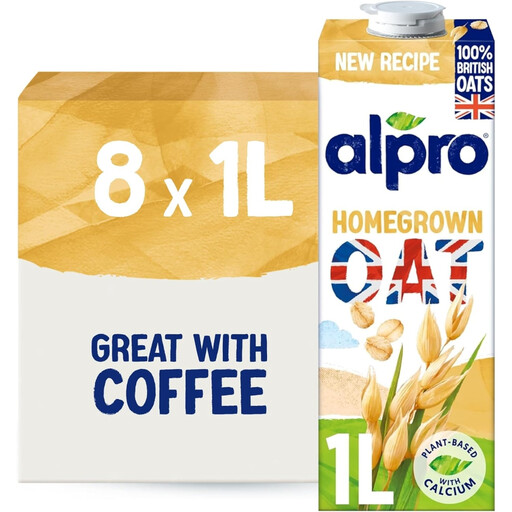
An oat drink for uses such as cereal and hot drinks, supplied as eight 1L long-life cartons. Check its vegan and gluten labelling and read the sugars figure: a no-added-sugars statement is not the same as a zero-sugars nutrition value.
 No image available
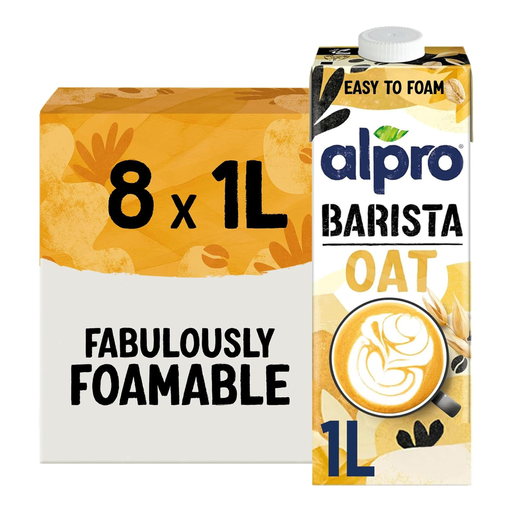
A coffee-focused oat variant supplied as eight 1L long-life cartons. Check whether its intended uses suit your shop, and read the current vegan statement, sugars information and gluten allergen label.
No. Lactose-free cow’s milk still contains dairy: both the Sainsbury’s Everyday and Arla LactoFREE examples list milk ingredients. The Vegan Society’s dietary definition excludes products derived from animals, so choose a plant drink labelled suitable for vegans instead.
Start with the exact drink’s vegan statement, ingredients and allergens. If it regularly replaces dairy milk, check whether it is unsweetened and calcium-fortified, in line with NHS dairy-and-alternatives guidance; compare other nutrition details on the individual carton.
No. The listed ingredients for Sainsbury’s Everyday lactose-free dairy drink include cow’s milk, and Arla states that its LactoFREE semi-skimmed drink contains milk. Read the exact product’s ingredient and allergen information if you need to avoid dairy.