What should you check before buying?
Start with whether the drink can contain milk, then compare organic certification and nutrition on the pack size and serving you expect to use.
| Priority | What to check | Your needs |
|---|
| Milk and allergens |
Read the ingredients and highlighted allergens. Lactose-free cow’s milk can still contain milk; a soya drink contains soya. |
“I need to avoid lactose, but can I have milk?” If milk itself must be avoided, I’ll look for a dairy-free drink and check its allergen declaration. The NHS distinguishes lactose intolerance from food allergy. |
| Protein |
Compare protein using the same unit on each nutrition panel, then consider the amount you will use. Arla’s organic semi-skimmed and Sainsbury’s skimmed lactose-free dairy drinks each list 3.4g per 100g; Waitrose lists 3.3g per 100ml for Alpro’s organic soya drink. |
“Milk is one part of my protein intake.” I want to know what my usual portion contributes rather than treating an organic or lactose-free label as a protein claim. |
| Organic status |
Check that the specific product is labelled organic and inspect its certification information. UK government guidance from the Department for Environment, Food & Rural Affairs describes organic production and certification requirements. |
“Organic production matters to me.” I’ll check the particular carton rather than assume every lactose-free product from the same brand is organic. |
| Fat and energy |
Compare like-for-like per-100g figures. Sainsbury’s lactose-free skimmed drink lists less than 0.5g fat and 29kcal; M&S lactose-free whole milk lists 3.8g fat and 61kcal. |
“I’m choosing between skimmed and whole milk.” If lower fat is my priority, I’ll compare the nutrition panels alongside protein instead of assuming whole milk provides more protein. |
| Storage |
Check refrigeration and use-after-opening instructions on the current pack. M&S says its Made Without Lactose Whole Milk should be consumed within three days of opening. |
“Will I finish an opened carton in time?” I’ll choose a quantity that fits how I use milk in drinks, cereal or cooking. |
Brand and retailer references
These product and range examples show what to compare; a retailer’s listing does not make every product in its range organic or dairy-free.
Arla LactoFREE
Its Organic Semi Skimmed Milk Drink is a lactose-free cow’s-milk product listed by Sainsbury’s with Soil Association Organic certification.
- Arla lists 3.4g protein and 1.5g fat per 100g, and less than 0.03% lactose, for this product.
- It contains milk; the organic claim applies to this product, not automatically to the wider LactoFREE range.
Tesco
Tesco’s lactose-free milk category lists Arla LactoFREE alongside Tesco own-label skimmed and semi-skimmed dairy drinks.
- The listing offers different dairy fat levels to compare.
- Check organic status on the individual product rather than assuming it from the lactose-free category.
Sainsbury’s
Sainsbury’s lists both Arla’s organic lactose-free semi-skimmed drink and its own Everyday Lactose Free Skimmed Dairy Drink.
- The own-label skimmed drink lists 3.4g protein, less than 0.5g fat and 112mg calcium per 100g.
- That own-label skimmed drink contains cow’s milk and is not described as organic in its listing.
M&S
M&S lists Made Without Lactose whole and semi-skimmed cow’s-milk products.
- Its whole-milk product lists 3.2g protein and 3.8g fat per 100g.
- M&S states that this whole-milk product is unsuitable for dairy allergy or galactosaemia.
Waitrose
Waitrose lists both Arla lactose-free semi-skimmed dairy milk and an Alpro organic, dairy-free soya drink.
- The listings give shoppers dairy and dairy-free products to assess against their own requirements.
- The Arla dairy listing contains milk, while the Alpro drink is made from soya; check the relevant allergen declaration.
Joybuy product options
This soya-drink option is relevant if you are considering an organic, dairy-free alternative to lactose-free cow’s milk.
 No image available
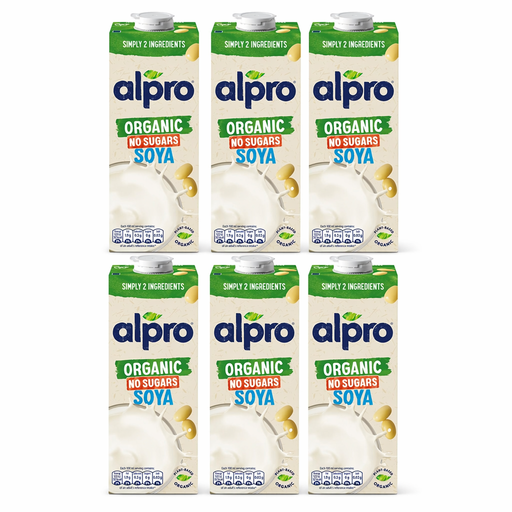
6 Alpro Soya Drink OG
A soya drink to consider when cow’s milk is not the right choice. It contains soya; check the current pack for its nutrition, ingredients and allergen information, particularly if you are using it in place of dairy milk.
View on Joybuy
Common questions
Is organic lactose-free dairy milk suitable for a milk allergy?
No. Lactose-free cow’s milk can still contain milk proteins; Arla’s organic lactose-free product contains milk. The NHS distinguishes lactose intolerance from food allergy. If you need to avoid milk, choose a dairy-free product and check its allergen declaration.
How can I check an organic claim on a milk carton?
Check the organic certification information for that specific product. The Department for Environment, Food & Rural Affairs’ UK guidance sets out organic production and certification requirements; a lactose-free label alone does not establish organic status.
Does lactose-free mean a milk drink has more protein?
No protein advantage follows from the lactose-free label alone. Arla’s organic semi-skimmed and Sainsbury’s skimmed lactose-free dairy drinks each list 3.4g protein per 100g. Compare the current nutrition panels and the quantity you intend to use.
Should I choose skimmed, semi-skimmed or whole lactose-free milk?
Compare protein, fat and energy against what you want from the drink. Sainsbury’s lactose-free skimmed drink lists 3.4g protein and less than 0.5g fat per 100g; M&S lactose-free whole milk lists 3.2g protein and 3.8g fat per 100g. If you have an individual protein target from a clinician or dietitian, use that advice when planning your overall intake.
How long can I keep lactose-free milk after opening?
Follow the instructions on the particular carton. M&S says its Made Without Lactose Whole Milk should be refrigerated and consumed within three days of opening; do not assume the same period applies to every drink.


