Choose ordinary lactose-free milk for cereal, drinks and cooking when you want protein in an everyday milk format: Tesco Groceries lists 5.9 g per 200 ml for its skimmed drink and 6.5 g per 200 ml for its semi-skimmed drink. If the priority is more protein in one portable serving, Sainsbury's lists 35 g per 330 ml for For Goodness Shakes Chocolate Flavour Protein, though a flavoured shake serves a different purpose from household milk. Lactose-free cow's milk still contains milk proteins, so it is not a dairy-free alternative for someone avoiding them.
Who is each option for?
People avoiding lactose who use milk every day
For tea, cereal or cooking, an ordinary lactose-free cow's milk may fit better than a flavoured shake. Compare protein for the amount you normally pour, then check the fat and energy values if those matter to your choice.
Shoppers seeking protein in one portable drink
A labelled lactose-free protein milkshake is worth comparing when the protein in a single ready-to-drink pack matters more than having milk for household use. Check the whole pack's nutrition and allergen information, not just its protein figure.
People who need to avoid milk proteins
Lactose-free cow's milk is still dairy milk. The NHS distinguishes lactose intolerance from food allergy; if milk proteins must be avoided, check the ingredients and allergens of a suitable dairy-free alternative instead.
What should you compare?
Start with the reason you are avoiding lactose, then compare protein in the amount you will actually drink and the format you need.
| Priority |
What to check |
Your needs |
| Protein per drink |
Compare grams per serving or full pack, as well as the stated serving size. Tesco Groceries lists 5.9 g per 200 ml for its lactose-free skimmed drink and 6.5 g per 200 ml for its semi-skimmed drink; Sainsbury's lists 35 g per 330 ml for the For Goodness Shakes chocolate protein drink. |
I use milk throughout the day, or I want a larger declared protein amount in one ready-to-drink bottle. |
| Fat and energy |
Read fat and energy values alongside protein, using the same measurement basis when comparing products. For its lactose-free semi-skimmed drink, Tesco Groceries lists 1.7 g fat and 41 kcal per 100 ml; flavoured shakes need their own full nutrition-panel check. |
Increasing protein without increasing overall calories to the same extent matters to me, so I want to compare more than the protein figure. |
| Lactose and allergens |
Check whether the product is lactose-free dairy or a dairy-free drink, then read the exact allergen statement. Marks & Spencer states that its reviewed lactose-free milks are unsuitable for people with dairy allergy or galactosaemia. |
I need to distinguish avoiding lactose from avoiding milk proteins; if I choose a plant-based drink, I also need to check its other allergens. |
| Format and storage |
Check carton or bottle size, whether the product is chilled or long-life, and its after-opening instructions. Tesco Groceries says its reviewed chilled lactose-free milks should be refrigerated and consumed within three days of opening. |
Will I pour it at home over several days, store it unopened in a cupboard, or take a single drink with me? |
What is easy to overlook?
-
Taking “lactose-free” to mean dairy-free
Removing lactose does not remove the milk proteins relevant to cow's-milk allergy. Marks & Spencer explicitly marks its reviewed lactose-free milks as unsuitable for people with dairy allergy.
Read the milk-allergen declaration. If you suspect an allergy, seek medical advice rather than choosing lactose-free dairy as a substitute.
-
Comparing protein claims instead of servings
An everyday milk serving and a full protein-shake bottle deliver different amounts. Tesco Groceries lists 5.9–6.5 g protein per 200 ml across its reviewed lactose-free milks, while Sainsbury's lists 35 g in the reviewed 330 ml For Goodness Shakes bottle.
Compare the grams of protein in the quantity you expect to drink, then decide whether you need household milk or a ready-to-drink shake.
-
Skipping a shake's allergen and storage label
A lactose-free label does not cover other allergens. Marks & Spencer marks its reviewed chocolate protein milkshake as unsuitable for people with nut or peanut allergy.
Check the exact pack's allergen declaration and storage instructions, particularly if you plan to keep several bottles.
Relevant brands and ranges
Arla LactoFREE
A lactose-free dairy range that includes fresh and long-life milk formats.
- Sainsbury's lists a semi-skimmed long-life Arla LactoFREE drink for shoppers who want a UHT format.
- Sainsbury's displays the brand's claim of less than 0.03% lactose for that product; it remains dairy milk, not a milk-allergy alternative.
Tesco
Its reviewed own-label lactose-free skimmed and semi-skimmed drinks are everyday dairy-milk options.
- Tesco Groceries lists protein per 200 ml serving: 5.9 g for the skimmed drink and 6.5 g for the semi-skimmed drink.
- Check the current pack's nutrition and storage instructions for the variant you choose.
Sainsbury's
Its listed lactose-free range includes own-label everyday milk and Arla LactoFREE dairy drinks.
- The Sainsbury's range listing includes 1 L own-label drinks and a 2 L Arla LactoFREE semi-skimmed milk drink, giving shoppers pack sizes to compare.
- Check the exact product and pack size rather than assuming every format is available where you shop.
M&S Made Without / Eat Well High Protein
Marks & Spencer lists lactose-free dairy milk and a separate lactose-free chocolate protein milkshake.
- Marks & Spencer declares 3.2 g protein per 100 g for its reviewed semi-skimmed milk and 8.8 g per 100 g for its reviewed chocolate protein milkshake.
- Its reviewed lactose-free milks are marked unsuitable for dairy allergy or galactosaemia; the reviewed shake is also marked unsuitable for nut or peanut allergy.
For Goodness Shakes
The reviewed chocolate flavour product is a lactose-free, ready-to-drink milk-based protein shake rather than an everyday milk carton.
- Sainsbury's lists 35 g protein in its 330 ml bottle.
- The listed drink contains a sweetener; check the full ingredients and nutrition panel if comparing it with ordinary milk.
Plant-based options on Joybuy
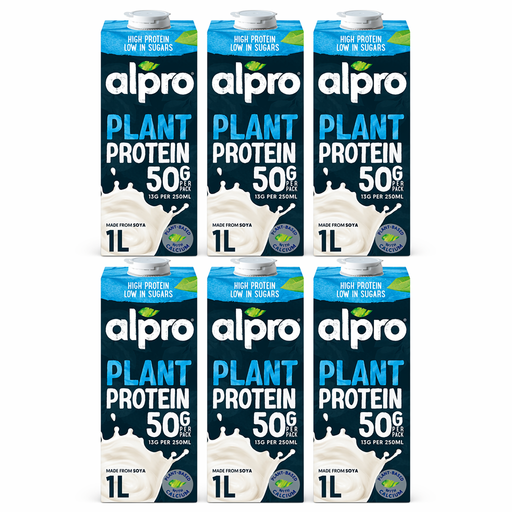
These Alpro drinks are plant-based options to consider when comparing lactose-free drinks. Check each product's ingredients and protein per serving for your needs; they are not the lactose-free cow's milks or ready-to-drink protein shakes discussed above.
 No image available
6 Alpro Plant Protein 1L
For a plant-based option, compare the pack's protein per serving and check its soya allergen statement. The title includes “6” and “1L”; confirm the number and size of cartons before ordering.
Joybuy
 No image available
Alpro Soya No Sugars Long Life Drink 8 x 1L
For an everyday plant-based drink, compare its declared protein per serving with the milk or shake you would otherwise use. The listing specifies the No Sugars variant and 8 x 1L; check the soya allergen statement before buying.
Joybuy
Common questions
Can I use lactose-free cow's milk if I have a milk allergy?
No. Lactose-free cow's milk can still contain milk proteins. The NHS distinguishes lactose intolerance from food allergy, and Marks & Spencer marks its reviewed lactose-free dairy milks as unsuitable for dairy allergy; seek medical advice if you suspect an allergy.
Does lactose-free milk contain as much protein per drink as a protein shake?
Not in the reviewed serving examples. Tesco Groceries lists 5.9 g protein per 200 ml of its lactose-free skimmed drink and 6.5 g per 200 ml of its semi-skimmed drink; Sainsbury's lists 35 g in a 330 ml For Goodness Shakes chocolate protein drink. Compare the quantity you will actually drink.
Should I choose skimmed, semi-skimmed or whole lactose-free milk?
Compare protein, fat and energy on the same measurement basis rather than choosing by milk type alone. Tesco Groceries lists 3.2 g protein, 1.7 g fat and 41 kcal per 100 ml for its reviewed semi-skimmed drink; Marks & Spencer lists 3.2 g protein and 61 kcal per 100 g for its reviewed whole milk. Cambridge University Hospitals NHS Foundation Trust recommends lower-fat options, including low-fat dairy, when increasing protein without increasing overall calories.
How long does chilled lactose-free milk keep once opened?
Follow the instruction on the exact pack. Tesco Groceries says its reviewed chilled lactose-free skimmed and semi-skimmed drinks should be refrigerated and consumed within three days of opening; Marks & Spencer gives the same after-opening period for its reviewed lactose-free milk.


