What should you check first?
Decide whether the child needs lactose reduction, a vegan drink or protection from milk protein before comparing drinks for regular use or tea time.
Lactose-free dairy milk
Consider when: A child needs to reduce lactose but can consume dairy and does not need a vegan drink.
Keep in mind: It still contains cow’s-milk protein, so it is not suitable for cow’s-milk protein allergy.
Fortified soya or pea drink
Consider when: A vegan child aged 1 or over needs a regular main milk drink; North West Knowledge Now NHS guidance recommends starting with unsweetened, fortified soya or pea alternatives.
Keep in mind: Check the particular drink’s allergens and nutrients; a drink does not meet every need in a child’s wider diet.
Oat drink
Consider when: A plant-based option suits the child’s tea-time drink and the exact product fits their dietary needs.
Keep in mind: Check fortification and protein if it will be used regularly, and do not assume a vegan oat drink is suitable for milk allergy.
| Priority |
What to check |
Your needs |
| Dietary route |
Check whether the drink is cow’s-milk-based or plant-based. Arla UK describes its lactose-free range as dairy with lactose removed; removing lactose does not remove milk protein. |
My child needs less lactose but can have dairy, or our family needs a drink without animal milk. |
| Regular use |
For a child aged 1 or over, compare unsweetened fortification, protein and the product’s stated age suitability. North West Knowledge Now NHS guidance recommends starting with fortified soya or pea alternatives for a regular plant-based milk drink. |
If this will be my child’s usual milk drink, I need to compare the exact products rather than choose by flavour alone. |
| Added nutrients |
Read the label for calcium, iodine, vitamin D and vitamin B12, then compare nutrition information using the same stated quantity, such as per 100ml. |
I want to know what this drink contributes to my child’s diet, especially if dairy is excluded. |
| Milk-allergen wording |
For diagnosed or suspected cow’s-milk protein allergy, avoid lactose-free dairy and read the plant drink’s ingredients, allergy statement and precautionary wording. The Food Standards Agency says vegan labelling alone is not an allergen check. |
When milk allergy is a concern, I need the exact pack’s allergen information before serving it. |
Joybuy oat drink option
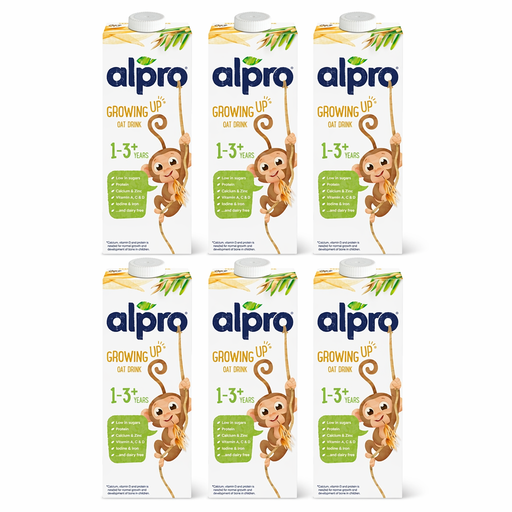
This oat growing-up drink is a plant-based option to examine for a child’s tea time; check its current pack against the child’s age and dietary needs.
 No image available
Alpro Oat Growing Up Drink (6)
An oat growing-up drink to consider for a plant-based tea-time option. Check the current pack for age guidance, added nutrients, unsweetened and vegan status, and milk-allergen warnings—particularly if the child has a milk allergy.
View on Joybuy
Common questions
Is lactose-free cow’s milk vegan?
No. Arla UK describes lactose-free cow’s-milk products as dairy with lactose removed. A family avoiding animal milk needs a plant-based drink instead.
Can a child with cow’s-milk protein allergy have lactose-free dairy milk?
No. Cambridge University Hospitals NHS Foundation Trust explains that lactose-free dairy still contains cow’s-milk protein. If the allergy is diagnosed or suspected, follow the child’s clinical or dietetic advice when choosing a milk-free alternative.
Where should I start when choosing a regular vegan milk drink for a child aged 1 or over?
Compare unsweetened, fortified soya or pea drinks first, as recommended by North West Knowledge Now NHS guidance. Check the exact product’s age guidance, allergens, protein and added nutrients, including calcium, iodine, vitamin D and vitamin B12.
Can an oat drink be used at a child’s tea time?
An oat drink can be considered for a child aged 1 or over if the exact product suits their dietary and allergy needs. If it will also be their regular main milk drink, compare its fortification and protein with other options rather than assuming the drinks are interchangeable.
Is a vegan label enough when a child has a milk allergy?
No. The Food Standards Agency says vegan labelling should not be used instead of allergen labelling. Read the exact pack’s ingredients, allergy statement and precautionary wording before serving it.


