Vegan school-day households
For cereal, porridge, drinks or a packed lunch, choose a plant-based drink rather than assuming a lactose-free dairy drink is vegan. Check the ingredients on the particular pack.


For vegan school-day breakfasts or packed lunches, choose a plant-based drink rather than lactose-free dairy milk: removing lactose does not remove cow's-milk protein. Compare the individual drink's ingredients, allergen information and nutrition per 100 ml, particularly if it will regularly replace dairy milk. For a child with a milk allergy, a vegan label is not a substitute for allergen checks.
The reason for avoiding a drink matters: a vegan requirement, lactose intolerance and milk allergy call for different label checks.
For cereal, porridge, drinks or a packed lunch, choose a plant-based drink rather than assuming a lactose-free dairy drink is vegan. Check the ingredients on the particular pack.
A family that still uses dairy may consider lactose-free dairy milk. It remains a different choice from a vegan or dairy-free drink.
Cambridge University Hospitals NHS Foundation Trust explains that specialised lactose-free dairy products still contain dairy protein. Check the ingredients and allergen information of any alternative; vegan wording alone does not settle allergy suitability.
Choose when: The school-day drink needs to contain no animal-derived milk ingredients.
Bear in mind: Plant drinks differ in nutrients and fortification; a vegan claim does not replace allergen checks.
Choose when: The aim is to avoid lactose while continuing to use cow's-milk-based drinks.
Bear in mind: Lactose-free dairy is neither vegan nor suitable for someone with cow's-milk-protein allergy.
Start with the reason for the switch, then compare the exact pack's allergen information and nutrition for its intended use.
| Priority | What to check | Your needs |
|---|---|---|
| Vegan or lactose-free | Read the ingredients for cow's milk; check whether the drink is described as plant-based or is lactose-free dairy. Lactose removal does not remove dairy protein. | I need a plant-based drink for vegan breakfasts or lunches, rather than a cow's-milk drink with its lactose removed. |
| Allergens | Check the ingredients, highlighted allergens and any precautionary allergen statement on the individual pack. The Food Standards Agency says vegan labelling is not a proxy for allergen labelling. | When choosing for a child with an allergy, I need to check the exact drink, including allergens other than milk. |
| Fortification | Compare listed calcium, iodine and added vitamins, including B2, B12 and D, per 100 ml. The UK SACN and COT assessment notes that plant-drink nutrient content varies considerably. | If this will regularly replace dairy milk at breakfast, I want to see what nutrients the particular drink lists. |
| Protein and sugars | Read protein and sugars per 100 ml; check the product wording if an unsweetened drink is wanted. Do not assume drinks made from different plants have the same nutrition. | For a regular milk alternative, protein content matters to me; I also want to compare the sugars shown on the label. |
| School-day use | Check the pack size, whether the drink suits its intended use and the storage directions before and after opening. | I need something practical for our breakfast routine or packed-lunch plans, with storage instructions we can follow. |
“Lactose-free” describes the lactose, not the absence of milk. Sainsbury's lists cow's milk in the ingredients of its lactose-free skimmed dairy drink.
For a vegan choice, look for a plant-based drink and check the ingredients of the individual product.
The Food Standards Agency advises that vegan labelling should not stand in for allergen labelling; possible cross-contact is a separate consideration.
Read the ingredients, allergen declaration and any precautionary allergen statement on the pack, particularly when switching products.
The UK SACN and COT assessment notes substantial variation in plant-drink nutrient content. A plant base alone does not tell you which nutrients have been added.
If the drink will regularly replace dairy milk, compare its listed fortification, protein and sugars per 100 ml.
Dairy-free does not mean free from every other allergen. Tesco's Mighty pea-drink listing, for example, cautions people with severe legume allergies, including peanut and soya allergy, about introducing pea protein.
Check the particular drink's allergen information against the child's needs rather than choosing by its plant base alone.
These examples illustrate the difference between lactose-free dairy and plant-based drinks; a brand name does not replace checking the individual product.
A lactose-free dairy range, with an Arla Lactofree semi-skimmed milk drink listed by Sainsbury's.
A plant-based range that includes a no-sugars soya drink listed by Waitrose & Partners.
A plant-based pea-drink option, including an unsweetened product listed by Tesco.
These Joybuy options are plant-based drinks for the vegan side of the school-day decision, not lactose-free dairy choices. Compare each pack for its intended use, nutrition and allergens before choosing.
 No image available
A plant-based option to consider for cereal or drinks when the household needs a vegan alternative. The title identifies a no-sugars, long-life soya drink in an 8 x 1 L pack; check the nutrition panel and soya allergen information on the pack.
 No image available
This plant-based oat drink is an option for vegan breakfasts, including cereal. Its title identifies a no-sugars, long-life 8 x 1 L pack; compare protein per 100 ml and check the oat and gluten-containing cereal allergen information if relevant.
 No image available
A plant-based almond option for a vegan breakfast drink or cereal. The title specifies a no-sugars, long-life 8 x 1 L pack; check almond allergen information and compare protein and fortification on the exact pack.
 No image available
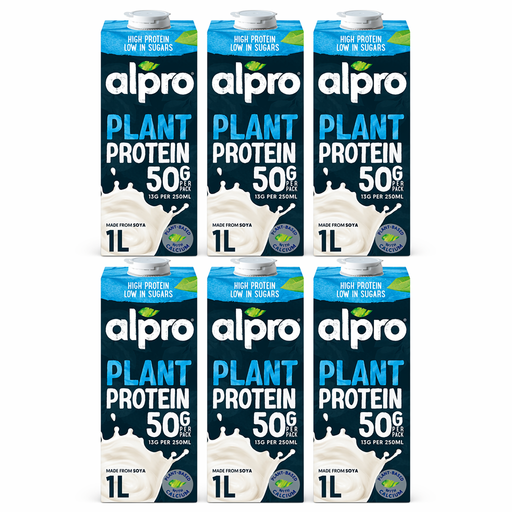
This plant-based drink is positioned for uses including cereal and porridge. If protein matters when comparing a regular milk alternative, read its value per 100 ml alongside the sugars value; check the pack's soya allergen information.
 No image available
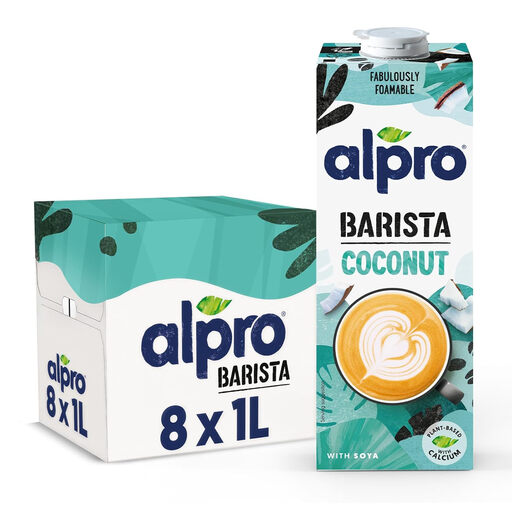
A plant-based barista-style drink to consider for a household routine that includes frothy hot drinks. Its title specifies an 8 x 1 L long-life pack; check the sugars value and soya allergen information rather than assuming a coconut drink contains no soya.
Lactose-free dairy milk is not vegan: it can still be made from cow's milk. Sainsbury's, for example, lists cow's milk in its lactose-free skimmed dairy drink. For a vegan breakfast or lunch, choose a plant-based drink and check its ingredients.
No: removing lactose does not remove the dairy protein. Cambridge University Hospitals NHS Foundation Trust says specialised lactose-free dairy products are unsuitable for people with cow's-milk-protein allergy. Follow the child's existing clinical advice when choosing an alternative.
Not by itself. The Food Standards Agency says vegan labelling should not be used instead of allergen labelling. Check the specific pack's ingredients, allergen declaration and any precautionary allergen statement.
Compare the individual drink's listed calcium, iodine, vitamins, protein and sugars per 100 ml, as well as its allergens. The UK SACN and COT assessment notes that nutrient content varies considerably between plant drinks, so the plant base alone is not enough to judge the label.
Do not assume they have the same ingredients, allergens or nutrition. Compare the exact products' protein and fortification per 100 ml and read their allergen information; a dairy-free drink may still contain an allergen relevant to the child.