Compact-kitchen curry cooks
You want to prepare lamb curry with fewer appliances, but need a cooker whose capacity and storage demands suit the space you have.


If a shorter cooking schedule matters, look for a multicooker with pressure cooking and a sauté or browning function; if you prefer a longer, low-attention curry, a slow-cook-led model is another option. Choose capacity for the portions you actually make, then check the appliance’s full dimensions and lid-opening clearance: bowl volume alone cannot tell you whether it will fit.
You want to prepare lamb curry with fewer appliances, but need a cooker whose capacity and storage demands suit the space you have.
You want to brown the curry base and have the option of pressure cooking rather than planning a long slow cook. Check that both functions are available on the model you choose.
You cook for one or two people, or deliberately make extra portions. The useful bowl size depends on both your serving plans and the space available to cool and store leftovers.
Decide whether you need pressure cooking or prefer a longer slow-cook or simmering schedule; then check whether the cooker accommodates your curry-making steps and fits your kitchen.
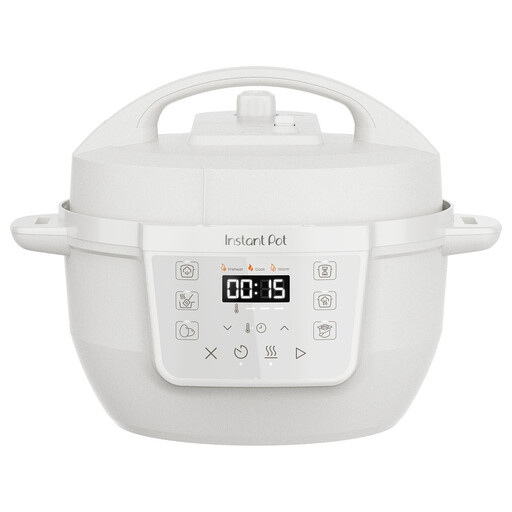
Consider it when: You usually make a few portions and want pressure cooking alongside a way to sauté the curry base. Instant Pot lists those programmes for its Classic Mini 3.8L.
Trade-off: Check that the bowl holds your intended curry quantity and that the appliance, including its open lid, fits your space.
Consider it when: You regularly cook more portions or plan leftovers. Tefal lists pressure and sauté functions for its 4.8L Turbo Cuisine; Crock-Pot lists pressure and brown/sauté functions for its 5.6L Express.
Trade-off: Extra bowl capacity is useful only if you have room for the appliance and a plan for storing the food you make.
Consider it when: A longer cooking schedule suits you and pressure cooking is not a priority. Tefal lists slow cooking for its RK302E15, while Crock-Pot lists sauté and slow cooking for its CSC024.
Trade-off: Check for a browning function if you want to keep that step in one pot; this route does not give you a pressure-cooking option.
| Concern | What to check | Who this matters to |
|---|---|---|
| Space and capacity | Compare external dimensions and lid clearance with your available space; choose bowl capacity for your usual portions. | If cupboard and worktop space are tight, I want a cooker I can place and store without buying more bowl capacity than I use. Around 36% of consumers would put space and right-sized capacity first. |
| One-pot preparation | Look for sauté or brown alongside the cooking programme you want; follow the exact pressure model’s liquid and deglazing instructions. | When making the curry base, I would rather brown ingredients and continue cooking in the same pot than transfer them to another pan. One-pot preparation would be the primary concern for around 29% of consumers. |
| Cooking schedule | Confirm an explicit pressure-cook function if that is the route you want, and consult a suitable recipe for the full timetable. | On a shorter evening schedule, I want the option to pressure-cook lamb instead of committing to a long slow cook. Around 21% of consumers would prioritise that cooking route. |
| Leftovers and cleaning | Check bowl and accessory cleaning instructions, and whether you have fridge space for the portions you plan to keep. | If I make curry for later meals, I need a batch size I can cool and store conveniently, as well as a manageable clean-up. Leftover planning and cleaning would come first for around 14% of consumers. |
Bowl capacity describes how much the vessel holds, not the appliance’s worktop footprint or the room needed to open its lid.
Measure the intended counter or storage spot, including space above it, and compare those measurements with the exact model’s dimensions.
Slow-cook, steam and rice programmes do not establish that a cooker has a pressure-cook function.
If pressure cooking is important to your curry schedule, confirm that programme on the exact model. Otherwise, decide whether a longer slow cook or simmer suits you.
Manufacturer cooking-speed comparisons do not necessarily account for browning, heating, pressurising and pressure release in your lamb-curry recipe.
Plan the full cooking sequence using the exact cooker’s manual and a suitable recipe rather than treating a headline comparison as your serving time.
More bowl capacity can mean more cooked curry to cool and accommodate in the fridge or freezer.
Make portions you can store safely. Food Standards Agency guidance says to eat leftovers within 48 hours or freeze them if that will not be possible.
Its pressure multicooker range includes a 3.8L Classic Mini and a 5.7L Duo, giving you different stated bowl capacities to assess against your portions.
The 5L RK302E15 offers a non-pressure, slow-cook-led route, while the 4.8L Turbo Cuisine adds pressure cooking.
Its 5.6L Express CSC051 offers pressure cooking and brown/sauté, while the 5.6L CSC024 offers sauté and slow cooking without the same pressure-cooking route.
These choices cover smaller pressure cookers, larger multicookers and appliances for a longer slow-cook or simmering route. Compare each model’s stated functions with the way you prepare curry, then check its dimensions before deciding whether it suits your kitchen.
 No image available
For smaller curry batches, compare its 3.8L capacity with the portions you usually make. Confirm the exact model’s pressure and sauté programmes, dimensions, lid clearance and pressure-cooking instructions before use.
 No image available
Consider its 5.7L bowl if you intend to make several curry portions. The product name specifies pressure cooking, sauté, slow cooking and a ceramic non-stick coating; check the appliance’s full footprint and the exact manual’s pressure-cooking instructions.
 No image available
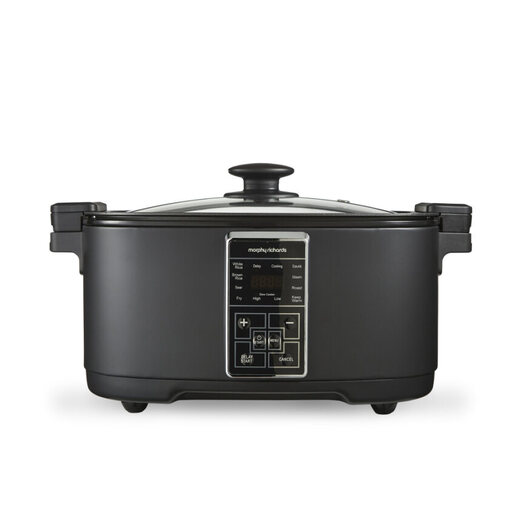
Its 6.5L capacity is worth considering if you deliberately cook larger batches on a longer schedule. The name specifies 1350W and a dishwasher-safe pot and accessories; check that its stated 47.5cm width and the room needed to open the lid suit your space. If pressure cooking matters, confirm that function on the exact model.
 No image available
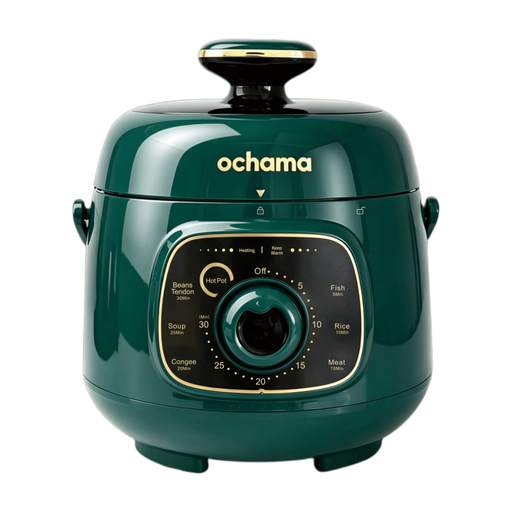
The stated 1.8L capacity makes portion size especially important if you plan to add vegetables or keep leftovers. If browning the curry base in the same appliance matters, check for that function; also confirm the cooker’s dimensions and its manual’s liquid and pressure-release instructions.
 No image available
Consider this 5L pot if a simmered curry suits your schedule rather than assuming it offers pressure cooking. Its name specifies dual power control and fry, steam and stew uses; confirm the exact functions and external dimensions against your cooking steps and available space.
No. Pressure cooking is a route to consider when a shorter cooking schedule matters; a slow-cook-led cooker suits a longer schedule. Check for sauté or browning as a separate function if you want to prepare the curry base in the same pot.
Follow the manual for the exact cooker you buy, particularly its fill, liquid and pressure-release instructions. Instant Pot’s Classic Mini guide specifically requires deglazing and added liquid before pressure cooking; do not assume another model uses identical instructions.
Use the applicable food-safety guidance alongside the recipe and meat-pack instructions. Food Standards Scotland advises checking the thickest part with a thermometer for 75°C or above. Use a clean probe where appropriate rather than judging doneness from the multicooker programme alone.
It can be, if the extra portions suit your meals and you have space to store them safely. Check the cooker’s external size as well as its bowl capacity, and plan how you will cool and store the curry; Food Standards Agency guidance says to eat leftovers within 48 hours or freeze them if needed.