
24/7 Customer Support

Free returns

Same-day & Next-day Delivery

Quality Guaranteed

Unlock Your Welcome Offers: FREE Delivery | Up to 80% OFF | Free 30-day JoyPlus trial
Download the APP
Navigating a foreign country, whether for business or pleasure, often comes with a significant challenge: the language barrier. While translation apps on our phones have been helpful, they can be clumsy to use and dependent on a stable internet connection. The latest generation of dedicated language translator device models offers a more seamless and reliable solution.
As a Joybuy Product Recommendation Officer, my role is to help you understand the market and find products that offer genuine value. This guide will walk you through the key features to consider when choosing a translator and present a few standout options for 2026 to help you communicate with confidence, wherever you are.
Choosing the right device depends on your specific needs. Here are a few practical points to consider before making a decision.
Many devices offer a vast number of languages when connected to the internet. However, for a portable translator for travel, reliable offline capability is crucial. An offline translator device stores language packs directly on the hardware, allowing you to get translations in areas with poor or non-existent Wi-Fi, such as on flights, in remote areas or on the London Underground. Check how many languages are supported offline, as this is often a key differentiator.
The design of the translator should match how you intend to use it.
A versatile device will offer more than just voice-to-voice translation. Look for an AI translator that includes multiple modes. A real time voice translator is essential for conversations, but a photo or camera function is invaluable for translating text on signs, menus and documents. Some devices also support text input for quieter environments.
After analysing the current market, we've selected a few devices that stand out for their unique features and practical applications.

Why It Stands Out: The HTC NE33 earbuds are more than just a translator; they are a complete audio and communication hub. The standout feature is the charging case's LCD full-colour smart touch screen, which allows you to control translation, music and other functions without ever touching your phone. This makes it a highly integrated and convenient instant language translator.
Pros:
Who is it for?: The tech-savvy traveller or professional who values convenience and wants a single, multi-functional device for translation, music and calls.
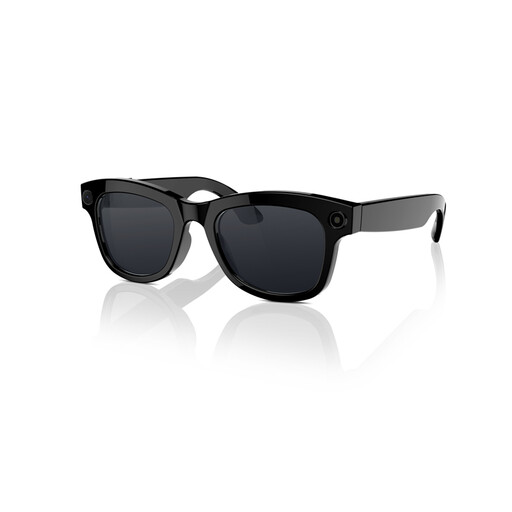
Why It Stands Out: The Verbex T5 represents the next step in wearable technology. These smart glasses provide a truly hands-free translation experience, ideal for dynamic situations where you need to remain fully engaged with your surroundings. Beyond translation, they integrate a camera, music playback and even access to ChatGPT, making them a powerful AI assistant.
Pros:
Who is it for?: Early adopters of new technology and professionals who require a hands-free translation solution for active or fast-paced environments.
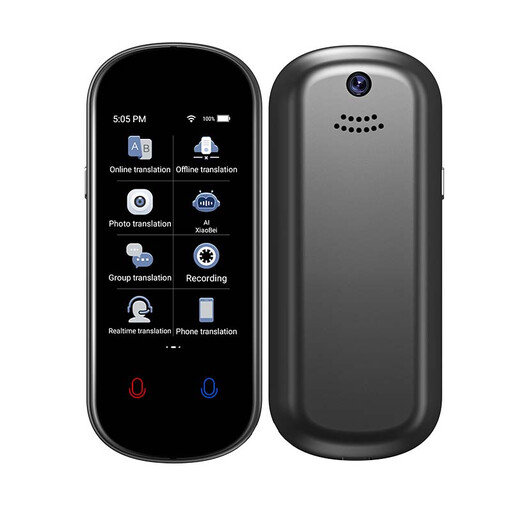
Why It Stands Out: The Rexsun translator is a dedicated workhorse built for reliability. Its primary strength lies in its extensive offline capabilities. While it supports 139 languages online, its ability to handle offline translation in 17 languages makes it an exceptionally dependable companion for international travel, ensuring you're never left without a way to communicate.
Pros:
Who is it for?: Frequent international travellers and business users who prioritise reliable offline performance and a robust, dedicated device over multi-functionality.
The devices highlighted here represent some of the most interesting options available, but the world of translation technology is vast. If you're looking for a different form factor, price point or feature set, there are many other models to consider.
Explore our complete collection of electronic translator devices to find the perfect communication tool for your next adventure.
1. Do language translator devices work without the internet? Yes, many modern devices do. Models like the Rexsun Smart Voice Translator are specifically designed with an offline translator device mode. They store language data internally, allowing for translation without a Wi-Fi or mobile data connection. However, the number of languages available offline is usually less than what is available online.
2. How accurate are real-time voice translators? The accuracy of real time voice translator technology has improved significantly thanks to advancements in AI. For common phrases and clear speech, accuracy is generally very high. However, complex sentences, slang, strong accents or noisy environments can still pose a challenge. For critical conversations, it's always good practice to speak clearly and use simpler sentences.
3. Are translation earbuds better than handheld devices? Neither is definitively "better"; it depends on your use case. Translation earbuds are excellent for discreet, two-way conversations, as they feel more natural and keep your hands free. Handheld devices are often more versatile, featuring screens for clarity and a photo translator function for reading text, which earbuds cannot do. Consider how you will most often use the device to decide which form factor is right for you.