
24/7 Customer Support

Free returns

Same-day & Next-day Delivery

Quality Guaranteed

Unlock Your Welcome Offers: FREE Delivery | Up to 80% OFF | Free 30-day JoyPlus trial
Download the APP
Lantern lights can provide practical illumination during a camping trip, power cut or evening in the garden, but the wrong model may leave you with weak light, unsuitable batteries or a decorative product that cannot handle damp conditions. UK shoppers also need to consider ventilation, fire safety and the difference between atmospheric lighting and genuine area illumination.
Before choosing, watch for three common buying pitfalls:
The right choice depends on where you will use it, how much light you need and whether portability, battery life or decorative appeal matters most.
Brightness is commonly expressed in lumens. Higher lumen figures generally indicate more visible light, although beam direction and diffuser design also affect how useful that light feels.
For comparison:
A dimming function can help balance brightness with battery life. It is useful when you need strong illumination for a short period or a softer setting overnight.
Battery-powered lanterns are convenient because they do not require a mains socket. However, check the battery type, whether batteries are included and the stated runtime at each brightness setting. A lantern that runs for many hours on low may operate for considerably less time at full output.
Lanterns with power banks can also charge compatible devices through a USB output. This is useful during a power cut or remote trip, but charging a phone will draw energy from the lantern’s batteries. Treat this feature as a backup rather than a substitute for a dedicated power bank.
Gas lighting lamps use fuel rather than batteries. They may produce useful outdoor light, but they require stricter handling. They should not be used indoors, near flammable materials or in poorly ventilated spaces.
For outdoor lighting, look for a stated protection rating such as IPX4. This indicates resistance to water splashes from various directions, but it does not mean the lantern is suitable for immersion or prolonged exposure to heavy rain.
Also check:
Decorative lanterns may include glass panels, plastic frames or delicate finishes. These are usually more appropriate for dry indoor use unless the listing specifically states otherwise.
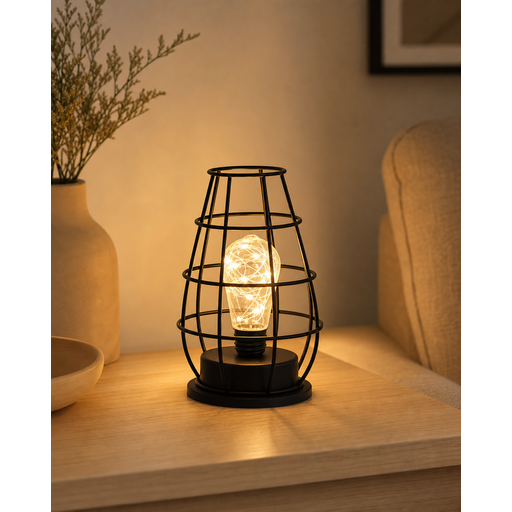
Why This Fits Their Persona: A battery-powered table lantern can suit shoppers wanting a simple decorative light for a bedroom, dining table, birthday setting or small celebration without installing outdoor lighting.
The LED and battery-powered design avoids an open flame, but buyers should still check brightness and battery requirements before treating it as a primary light.
LED light source; iron lantern styling; suitable for table-based decoration.

Why This Fits Their Persona: This is suited to households and campers seeking a multi-purpose lantern for power cuts, outdoor gatherings, garage tasks and device charging.
The stated lumen levels and two runtime figures make it easier to compare high-output use with lower-light operation. It also states that four D batteries are required but not included.
Up to 1,000 lumens; 360-degree light; USB output; dimming and night-light mode; IPX4 rating.

Why This Fits Their Persona: Backpackers, anglers and campers who prioritise compact packing can consider this foldable gas lighting lamp for outdoor use.
Its 4.1-inch folded length is clearly specified, while the instructions identify butane fuel and the need for ventilation. It is not for indoor use.
Heat-resistant toughened glass lampshade; foldable support legs; compact outdoor format.
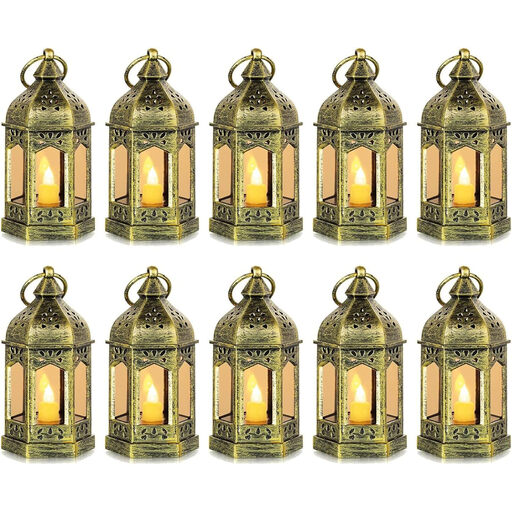
Why This Fits Their Persona: Ten small lanterns with flickering LED candles can be arranged on tables, hung from pendants or used for dry indoor wedding, party and seasonal decorations.
The set uses flameless LED candles, but the listing states that the lanterns are not water-resistant. They should be kept away from moisture and small children because of the coin-cell batteries.
Set of 10; flickering LED effect; tabletop or hanging use; batteries included.
We have compiled a complete, real-time list of products that fully satisfy these strict selection criteria and UK safety regulations.
LED lanterns do not require fuel and can use rechargeable or replaceable batteries, making their running cost easier to track. Actual cost depends on brightness, runtime, battery type and local electricity prices if batteries are recharged. Gas lanterns require a suitable fuel supply and should only be used outdoors in well-ventilated areas.
Only use a lantern outdoors in wet conditions when its product information states an appropriate moisture-resistance rating. An IPX4 lantern can resist water splashes, but it should not be submerged or left exposed indefinitely. Decorative lanterns and lanterns with candles may need to be kept indoors or in a covered, dry location.
Small decorative uses may need only a low-output glow. For a tent or table, a compact camping lantern with adjustable brightness may be sufficient. For a power cut, room lighting or outdoor tasks, consider a higher-output emergency lantern with wide coverage, such as a model specifying 360-degree illumination. Check the low and high runtime figures so the lantern remains useful for the length of time you need.