
24/7 Customer Support

Free returns

Same-day & Next-day Delivery

Quality Guaranteed

Unlock Your Welcome Offers: FREE Delivery | Up to 80% OFF | Free 30-day JoyPlus trial
Download the APP
Choosing a new laptop backpack should be a straightforward task. Yet, many of us have faced the disappointment of a purchase that fails to live up to its promises, whether it's a soaked laptop after a sudden downpour or a strap that gives way during the morning commute. Misleading marketing and hidden design flaws often turn a simple purchase into a frustrating waste of money.
Before you buy, it is helpful to be aware of a few common pitfalls. Many bags suffer from poor construction that only becomes apparent after a few months of use, particularly with weak zips and poorly stitched seams at key stress points. Another frequent issue is the "water-resistant" claim that offers little protection in a typical British shower. Finally, many backpacks boast a large capacity but lack the internal organisation needed to protect your devices and keep your essentials accessible, turning your bag into a chaotic jumble.
To avoid these issues, focusing on a few core parameters can help you make a more informed decision. These are the non-negotiable features that determine a backpack's daily usability and longevity.
A dedicated laptop compartment is standard, but its quality varies significantly. Simply checking if it fits a 15.6 inch laptop rucksack is not enough. A quality compartment should offer a snug fit to prevent the device from shifting around. Look for high-density foam padding on all sides, especially at the bottom. Some designs feature a "suspended" or "false bottom" compartment, where the padded sleeve stops a few centimetres short of the bag's base. This provides crucial protection against impact if you drop the bag or place it down too heavily.
The term "water-resistant" can be ambiguous. For reliable protection against rain, you need to look closer at the materials. Most durable backpacks are made from high-denier fabrics like polyester or nylon (e.g., 600D or 900D). The "D" stands for denier, a measure of thread thickness; a higher number generally indicates a tougher, more abrasion-resistant fabric. For a truly effective waterproof travel daypack, look for materials with a polyurethane (PU) or similar coating and covered or "aqua-guard" style zips, which prevent water from seeping through the teeth.
If you're carrying a laptop, charger, water bottle and other items daily, the bag's ergonomics are critical. A good commuter backpack or business rucksack will feature wide, padded shoulder straps to distribute weight evenly and prevent them from digging into your shoulders. An adjustable sternum strap adds stability, stopping the bag from swaying as you walk. For longer commutes or if you tend to carry heavier loads, a back panel with mesh and air channels is a significant advantage, as it improves ventilation and reduces back sweat.
To help illustrate these points, here are a few options from our selection, matched to different user needs and lifestyles.
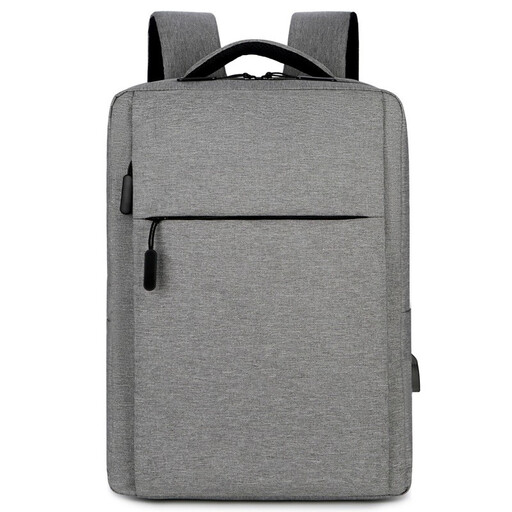
Why This Fits Their Persona: This slim, professional-looking rucksack is designed for the office or university commute. It maintains a sleek profile even when full, making it ideal for use on crowded public transport. The integrated backpack with USB port allows for convenient charging on the go (requires a separate power bank).
It directly counters the "chaotic capacity" problem with multiple, well-defined compartments for a laptop, tablet, documents and smaller items, keeping everything organised and easy to find.
Its water-repellent fabric provides protection during light showers, and its lightweight construction reduces strain during a long day of travel and meetings.
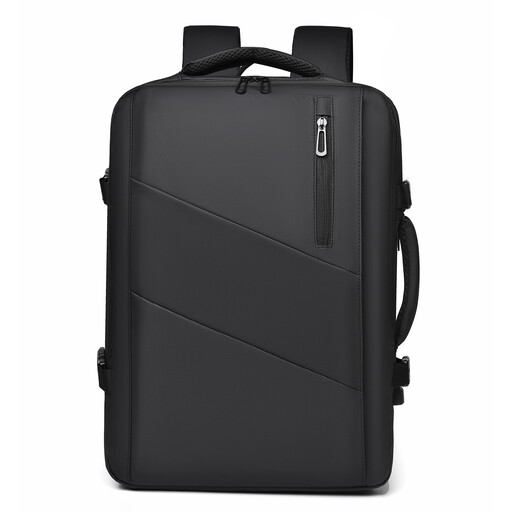
Why This Fits Their Persona: This is a versatile carry on backpack for men and women who need one bag for both daily use and short trips. Its key feature is the expandable main compartment, which increases capacity from a daily 25L to a travel-ready 35L, providing space for a change of clothes for a weekend away.
It is built from high-density, waterproof fabric with reinforced stitching, addressing the "three-month failure" pitfall by focusing on durability for frequent use and heavier loads.
The clamshell-style opening allows it to be packed like a small suitcase, making it easy to organise and access items. It also includes a luggage strap to secure it to a rolling suitcase handle.
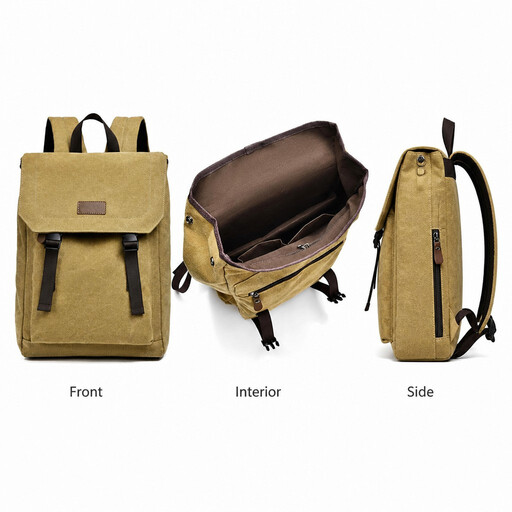
Why This Fits Their Persona: For students, creatives or anyone who prefers a less corporate aesthetic, this canvas rucksack offers a classic, casual look. The flip-top and drawstring closure provide a different style of access and security compared to a standard zip-around backpack.
While stylish, it doesn't sacrifice function. It includes a fully padded internal sleeve for a 15.6-inch laptop, ensuring your tech is protected, and its water-resistant canvas material helps guard against light rain.
The canvas material is lightweight yet durable, offering a comfortable carry. The large main compartment provides ample, flexible space for books, a jacket and other daily essentials.
We have compiled a complete, real-time list of products that fully satisfy these strict selection criteria and UK safety regulations.
For most water-resistant synthetic fabrics like polyester or nylon, spot cleaning is the recommended method. Use a soft cloth or sponge with a small amount of mild soap and cold water to gently scrub the affected area. Avoid using harsh detergents or bleach, as they can damage the fabric's water-resistant coating. Never machine wash or tumble dry a structured backpack, as this can deform the padding and damage the seams. Allow it to air dry completely away from direct heat.
Yes, these are generally safe. The external USB port on a backpack is simply a pass-through cable that connects to your own power bank stored inside the bag. The port itself does not hold any electrical charge. Most are designed with a cover or are recessed to protect them from direct rainfall. As long as your power bank and phone remain in a dry, internal pocket, using the feature is safe.
For most daily commuters carrying a laptop, charger, notebook, lunch and a water bottle, a capacity between 20 and 28 litres is usually sufficient. This provides enough space without the bag becoming overly bulky. If you also need to carry a gym kit or travel frequently for short trips, looking at an expandable model or one in the 30 to 35-litre range might be more suitable.