
24/7 Customer Support

Free returns

Same-day & Next-day Delivery

Quality Guaranteed

Unlock Your Welcome Offers: FREE Delivery | Up to 80% OFF | Free 30-day JoyPlus trial
Download the APP
A laptop backpack needs to do more than look smart. It may carry a computer, charger, notebooks, lunch, gym clothing and personal items through crowded railway stations, wet pavements and busy university campuses. Choosing by appearance alone can lead to uncomfortable straps, poor organisation or inadequate protection.
Before comparing laptop backpacks, watch for these common buying traps:
Measure your laptop, including its thickness and any protective sleeve. Screen size is only one measurement. A suitable compartment should hold the device securely without forcing it into place.
For a 15.6-inch laptop backpack, check:
If your laptop is smaller, a well-designed compartment can still be useful when it includes a securing strap or sufficient padding. Avoid placing chargers, keys or metal bottles directly against the computer.
A lightweight backpack reduces the empty weight you carry each day. However, ultra-light designs may offer fewer protective features, so consider what you actually transport.
Look for compartments that separate cables, stationery and valuables. A hidden or external quick-access pocket can be useful for travel cards, keys or a power bank, while side pockets may hold an umbrella or water bottle.
A water-resistant laptop rucksack is useful in the UK, but inspect the wording carefully. “Water-repellent”, “water-resistant” and “waterproof” describe different levels of protection. Unless a product specifies sealed seams and a waterproof rating, use a rain cover or protective laptop sleeve during sustained rain.
Comfort features worth checking include:
A business travel backpack should balance organisation with a shape that fits beneath a desk or on public transport. For longer journeys, weight distribution is as important as capacity: place heavier items close to your back and avoid carrying unnecessary items.
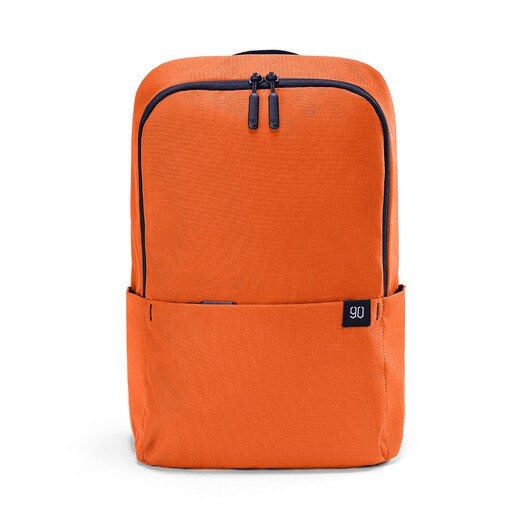
Why This Suits Their Persona: A practical choice for short commutes, weekend walks or students carrying an iPad, books and daily essentials rather than a full-size laptop.
Its 12L capacity and 194g weight make the intended load clear, helping prevent buying an oversized bag and overfilling it.
194g construction, adjustable straps, hidden front pocket and side pockets for an umbrella or bottle.

Why This Suits Their Persona: Suitable for professionals who move between office meetings, rail travel and business trips and want backpack and briefcase carrying options.
The dedicated padded 15.6-inch laptop compartment addresses loose storage, while the trolley strap helps avoid awkward handling with rolling luggage.
Convertible backpack-to-briefcase design, two main compartments, padded back panel and water-resistant recycled fabric.
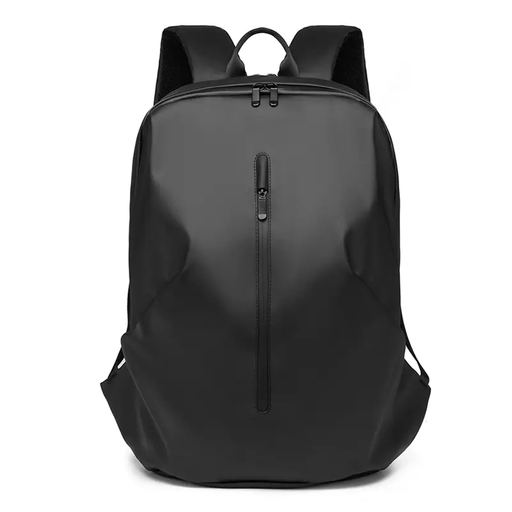
Why This Suits Their Persona: Its larger format suits people combining work or study with gym equipment, books and travel items in one daily carry.
The 23L capacity provides a clearer alternative to compressing several bulky items into a small commuter backpack.
23L interior, padded shoulder straps, breathable back panel and dimensions of 32 × 15 × 48 cm.
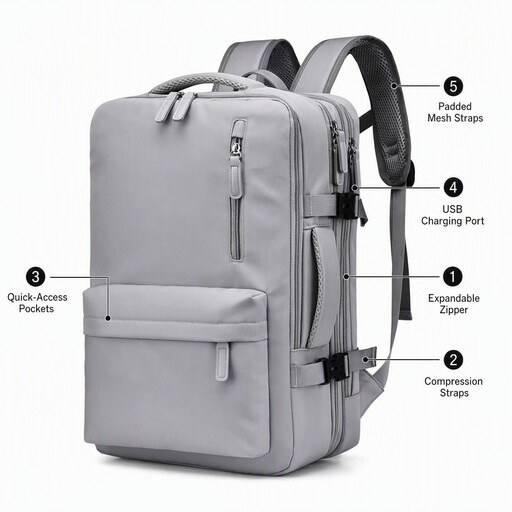
Why This Suits Their Persona: A practical match for rail commuters and travellers who need laptop storage, multiple pockets and flexibility when carrying extra items.
The expandable format helps accommodate changing loads, while the stated water-resistant finish is more transparent than assuming any fabric is fully waterproof.
15.6-inch laptop format, expandable storage, multiple pockets, water-resistant construction and external USB charging port.
We have compiled a complete, real-time list of products that fully satisfy these strict selection criteria and UK safety regulations.
Yes, provided the design matches your equipment and journey. Look for padded compartments, adjustable straps, a breathable back panel and water-resistant fabric. A rain cover or separate laptop sleeve adds protection during prolonged wet weather.
There is no single suitable weight. A 194g lightweight backpack may suit books and smaller devices, while a more structured laptop backpack may weigh more because of padding, compartments and hardware. Check the bag’s empty weight and consider it alongside the weight of your laptop, charger and other daily items.
Usually, no. The external USB port generally passes power from a separately purchased power bank to a compatible cable. It is mainly intended for smaller devices such as phones. Check the product details, connector type and power-bank compatibility before purchase, and keep batteries in line with the carrier’s travel requirements.