If your historical-record work depends on a Windows-only database, scanner utility or plug-in, start with a conventional Windows laptop; consider Windows on Arm or a MacBook Air only after checking your exact software, files and peripherals. Then weigh battery figures against their stated test activities, confirm a suitable charging arrangement, and choose enough screen space and ports for the records you compare.
Who needs which features?
Researchers using older software
If you rely on a particular archive database, scanner utility, plug-in or peripheral, check its operating-system and processor support before comparing battery claims. Microsoft and Apple both advise checking older applications for their respective processor platforms.
Researchers with limited access to sockets
In a reading room, library or shared workspace, the relevant questions are how long the laptop lasts during your work and what charger it requires. A manufacturer's battery figure for web use or video playback is not a promise of the same runtime with your research applications and peripherals.
People comparing documents side by side
If you keep scans, transcriptions, spreadsheets and catalogue pages open together, check whether your usual document pair remains readable on the built-in screen. Also account for the drives, scanners and other accessories you need to connect.
What matters when choosing?
For historical-record work where sockets are scarce, establish what will open your files and run your tools before trading screen size against portability and unplugged use.
Conventional Windows laptop
Consider it when: A required Windows database, scanner utility or organisation-provided tool has not been confirmed on another processor platform.
Trade-off: Windows alone tells you nothing about unplugged runtime; check the exact model's battery conditions and charging requirements.
Windows on Arm
Consider it when: The exact archive programs and connected hardware you need have been checked for Windows on Arm.
Trade-off: Microsoft says Windows 11 on Arm can run unmodified x86 and x64 applications, but that does not establish support for a particular driver, plug-in or specialist utility.
MacBook Air with Apple silicon
Consider it when: Your catalogues, document files and required research tools work on macOS and Apple silicon.
Trade-off: Check older Intel-based Mac components before switching; Apple recommends updated Universal or Apple-silicon versions for future compatibility.
| Concern |
What to check |
Who this matters to |
| Battery and charging |
Compare battery figures for the same activity where possible; confirm charging standard, required wattage and charger compatibility. |
If sockets are scarce, I need to work through a research session without counting on an outlet or an unsuitable charger. Around 36% of consumers put unplugged use and charging first. |
| Software and file access |
Confirm the exact application, file type, driver and plug-in against the chosen operating system and processor. |
An older database or scanner is central to my work, so a laptop that cannot run it would interrupt the task. Around 29% of consumers prioritise compatibility. |
| Document workspace |
Try your usual pair of records at a readable zoom level; consider screen size, aspect ratio and external-display support. |
I regularly compare a scan with a transcription or index and want both readable without relying on a powered monitor. Around 21% of consumers put screen space first. |
| Ports and local files |
Match the available connectors to your devices and check the exact storage configuration; keep separate backups. |
My drives or readers need to connect, and I carry working copies when access is intermittent. Around 14% of consumers make connections and local storage their primary concern. |
Buying pitfalls
-
Treating headline battery hours as comparable working time
Apple's cited MacBook Air figure is for wireless web use, while Microsoft's cited Surface Laptop figure is for video playback. Those activities do not establish which laptop lasts longer during archive work.
Read each model's test conditions and check the charging method and wattage against the power arrangements you can use.
-
Assuming every Windows laptop runs the same specialist tools
Microsoft says Windows 11 on Arm can run unmodified x86 and x64 applications, but compatibility still needs checking for a particular archive application and its drivers or plug-ins.
Confirm the exact versions of your database, scanner software, card reader and other essential tools before choosing an Arm-based model.
An incompatible essential tool could leave you needing another compatible device or replacement software.
-
Forgetting what must connect or charge
Port layouts differ. Apple lists USB-C and Thunderbolt connections for the cited MacBook Air, while Dell says a charger is not included with the cited XPS 13 configuration.
List your charger, drives, scanner, display and readers, then check the exact laptop's connectors and supplied items.
Your setup may require a suitable charger, adapter, dock or display cable.
-
Keeping the only copy of a record on the laptop
More internal storage does not, by itself, protect access to historical files. The National Archives notes that file formats matter to long-term access.
Keep separate backed-up copies, retain useful format information and open representative files before moving your workflow to a new machine.
Brands to consider for this work
Apple
MacBook Air is a macOS route for research workflows confirmed to work on Apple silicon.
- Apple lists USB-C and USB PD charging for the current 13-inch MacBook Air, with a minimum charging requirement of 30W.
- Check adapters for existing USB-A devices and confirm older Intel-based applications or components before changing platforms.
Microsoft
Surface Laptop offers a Windows route with a 3:2 display; check the processor in the exact configuration.
- Microsoft describes the taller 3:2 display as showing more document and web-page content without scrolling.
- For a Snapdragon configuration, verify essential archive applications, drivers and plug-ins on Windows on Arm.
Lenovo
ThinkPad X1 Carbon Gen 13 Aura Edition is a conventional Windows route for researchers prioritising a light laptop.
- Lenovo's UK listing describes the model as under 1kg and shows a configuration with a 65W USB-C UK three-pin adapter.
- Check the selected configuration's battery conditions, ports and software compatibility rather than applying one listing to every variant.
Dell
XPS 13 is a compact Windows option if its exact connections and charging arrangement fit your equipment.
- Dell states a 27–65W charging range for the cited XPS 13 configuration.
- Dell says that configuration does not include a charger; confirm that you have a suitable one.
Joybuy laptops for this task
These models offer built-in screens for comparing records. The Acer and ASUS models represent the conventional Windows route; the MacBook Air is an option only for a workflow confirmed to work on macOS and Apple silicon. Check each model's charging needs and your essential software before choosing.
 Image unavailable
Acer Aspire Go 15 AG15-21P, Ryzen 3 7320U, 8GB, 256GB SSD
Consider the 15.6-inch screen if you want to compare records on the laptop rather than use a separate monitor.
Full HD (1920 × 1080) display; AMD Ryzen 3 7320U, 8GB RAM and 256GB SSD.
Before relying on it where sockets are scarce, confirm working-session battery conditions, charging requirements and your essential archive software.
View on Joybuy
 Image unavailable
Acer Aspire Lite AL15-36P-C29Z, Intel N150, 8GB, 128GB SSD
The 15.6-inch screen suits someone planning to view two records on the built-in display; check whether the stated storage capacity fits your local working files.
Full HD display, Intel N150, 8GB DDR4 RAM, 128GB SSD and Windows 11 Home.
Confirm battery-test conditions, charging requirements and support for the exact archive tools you use.
View on Joybuy
 Image unavailable
ASUS ProArt P16 H7606WW-SE006W, Ryzen AI 9 HX 370, 64GB, 2TB SSD
The 16-inch screen is worth considering if built-in viewing space matters more to you than a compact laptop.
4K OLED touchscreen, NVIDIA GeForce RTX 5080 16GB and Windows 11 Home.
Check expected unplugged runtime and your archive software before choosing it for a location with limited sockets.
View on Joybuy
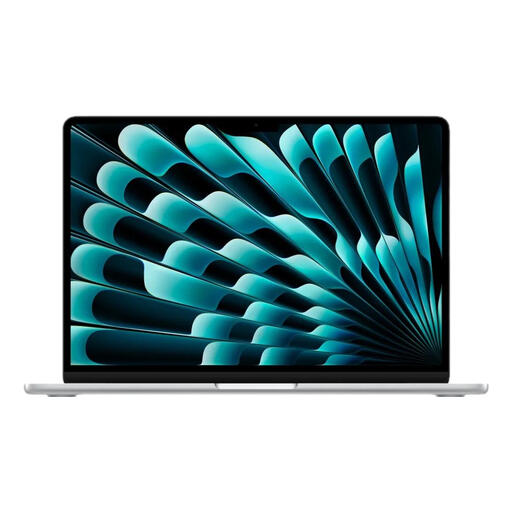 Image unavailable
Apple 13-inch MacBook Air (2026) M5, 16GB, 1TB SSD, Silver
Consider this smaller-screen route for browser, PDF and research applications you have confirmed will work on macOS and Apple silicon.
M5 chip with 10-core CPU and 10-core GPU; 16GB memory and 1TB SSD.
Check older applications, required adapters and battery conditions for your work; a video-streaming figure is not a document-research runtime.
View on Joybuy
 Image unavailable
ASUS Vivobook 15 X1504VA, Core 5 120U, 24GB, 1TB SSD
The 15.6-inch screen and 1TB SSD suit a workflow that needs a larger built-in view and local working copies of records.
Intel Core 5 120U processor and 24GB memory.
Confirm unplugged runtime, charging requirements and compatibility with your archive programs and peripherals.
View on Joybuy
Common questions
Can I connect extension leads together if sockets are scarce?
No. Electrical Safety First advises using only one socket extension device per socket and not plugging an extension lead into another. Keep any extension device within its stated current rating.
Will my existing USB-C charger work with any USB-C laptop?
Not necessarily: check the exact laptop's charging standard and wattage requirements, as well as the charger and cable. Apple states a 30W minimum for USB-C charging of the cited 13-inch MacBook Air; Dell states a 27–65W charging range for the cited XPS 13 configuration.
Will Windows on Arm run my old archive application?
It may, but confirm the exact application and its connected hardware before buying. Microsoft says Windows 11 on Arm can run unmodified x86 and x64 applications; that general capability does not confirm a particular database, scanner driver or plug-in.
Will an Apple-silicon MacBook run my older Mac research tools?
Check each application and component rather than assuming it will. Apple says Intel-based applications or components may not work with a future macOS release and recommends updated Universal or Apple-silicon versions for future compatibility.


