What should you check before choosing?
Start with your application and largest likely project, then decide which parts of the workflow must be portable and which can stay at a desk.
| Priority | What to check | Your needs |
|---|
| Software compatibility |
Check the exact application release, operating system, plug-ins and codecs. Confirm GPU and renderer support where your workflow uses them. |
I need my required software and project files to work on the machine I buy, not merely an operating system that looks suitable. |
| Project capacity |
Compare CPU, RAM and GPU memory with requirements for your largest expected timeline or scene. The Blender Foundation recommends 32 GB RAM and 8 GB VRAM for Blender. |
My larger edits or 3D scenes matter more to this choice than occasional light tasks. Adobe sets out different Premiere guidance for minimum HD use and recommended HD, 4K and higher-resolution work. |
| Storage and connections |
Plan space for applications, active media, cache and backups. Check drive connections, ports and the complete network setup if projects use shared storage. |
I want room for current projects and a workable way to connect the drives and displays my workflow uses. |
| Working location |
Check a laptop’s exact weight, screen, ports and configuration if it must travel. For a fixed setup, check display connections, peripherals and future expansion on the particular desktop or all-in-one. |
If I work away from my desk, portability matters. If the computer stays put, I can give more attention to the full desk setup and expansion options. |
Brand ranges to consider
These ranges illustrate different desktop and portable routes; the suitability of any individual computer depends on its configuration and your software.
Apple
Mac Studio is a desktop route for a macOS workflow that supports the selected Apple silicon configuration.
- Apple’s UK Mac Studio specifications say the M5 Ultra configuration supports up to eight external displays through its Thunderbolt and HDMI ports.
- Check the required applications, plug-ins, codecs and peripherals before choosing a Mac configuration.
Dell
Precision includes fixed workstation options for buyers assessing a configurable desk-based setup.
- Dell UK lists professional graphics and processor options up to a 56-core Intel Xeon for its Precision 7960 Tower.
- That tower’s available options do not describe every Precision model or establish performance in a particular application.
HP
HP Z desktop workstations are a route to examine for a fixed creative or technical workspace.
- HP recommends selected Z desktops for work including 3D design, rendering and HD or 4K video editing.
- Check the exact build against your software; HP’s range-level recommendation does not apply equally to every configuration.
Lenovo
ThinkPad P Series is a mobile-workstation route for work that has to move between locations.
- Lenovo UK describes the range as portable and certified by independent software vendors.
- Check whether the certification covers your application and the precise model and configuration.
ASUS
ProArt is a creator-laptop range to consider when the computer must travel with video, design or animation work.
- ASUS positions ProArt laptops for content creation, animation, graphic design, video editing and photography.
- Check the selected model’s display, GPU, memory, storage and software compatibility rather than relying on the range description.
Joybuy computer options
These options include laptops for work that needs to move and one desktop tower for a fixed workspace. Compare each configuration with your applications and project requirements; the list is not a comparison of every laptop, desktop and all-in-one route.
 No image available
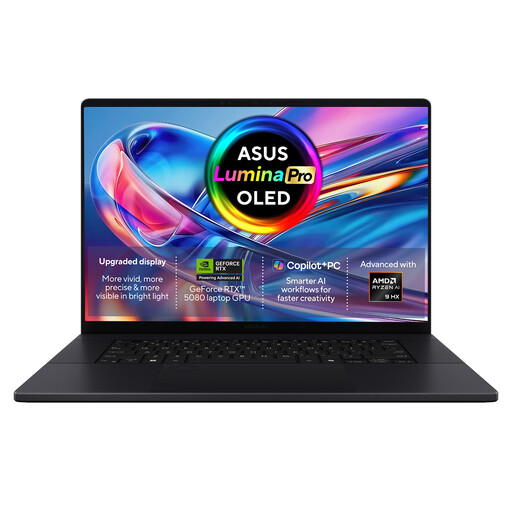
ASUS ProArt P16 H7606WW-SE006W
A laptop option for creative work that must move between locations. Its listed configuration includes an AMD Ryzen AI 9 HX 370, NVIDIA GeForce RTX 5080 with 16 GB graphics memory, 64 GB RAM and a 2 TB SSD, alongside a 16-inch 4K OLED touchscreen and Windows 11 Home. Check your application, codec and plug-in requirements before choosing it; these specifications do not establish performance during long renders.
View on Joybuy
 No image available
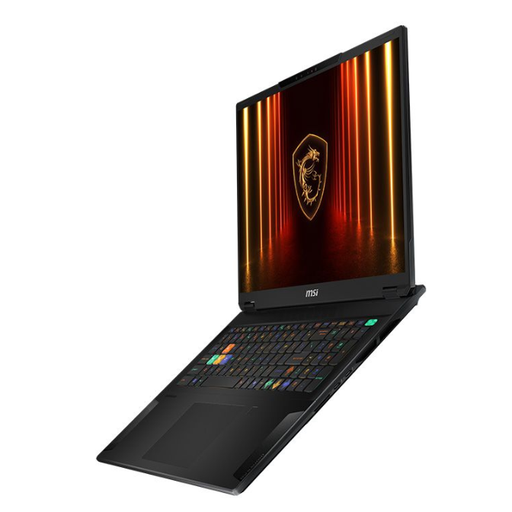
MSI Stealth 18 AI Studio A1VGG-001UK
An 18-inch laptop to assess if you want a larger built-in screen while retaining a movable computer. The listed variant has an Intel Core Ultra 9, 32 GB RAM, a 2 TB SSD and NVIDIA GeForce RTX 4070 graphics. Check its exact software compatibility and whether its stated 2.89 kg weight suits how often you will carry it.
View on Joybuy
 No image available
Lenovo Legion Pro 7 16IAX10H 83F5000UUK
A laptop configuration to compare with memory and graphics requirements for mobile projects. Its title lists an Intel Core Ultra 9, 64 GB RAM, a 2 TB SSD, NVIDIA GeForce RTX 5090 graphics and Windows 11 Home. Confirm application and renderer compatibility, and do not assume the component list predicts sustained render performance.
View on Joybuy
 No image available
Stormforce Cyclone Core i7 desktop
A tower option for projects based at a fixed desk. The listed configuration has an Intel Core i7, 32 GB RAM, a 2 TB SSD, RTX 5080 graphics and Windows 11. Check compatibility with your applications and confirm which monitor and input devices you need for the complete setup; the listed components alone do not establish sustained workload performance.
View on Joybuy
 No image available
Lenovo LOQ Essential 15ARP11
A portable option to assess against the size of your actual projects. Its listed configuration has an AMD Ryzen 7 170, 16 GB RAM, a 1 TB SSD, GeForce RTX 5050 graphics and a 15.6-inch 144 Hz FHD screen. Its 16 GB RAM is below the Blender Foundation’s recommended 32 GB RAM for Blender, so check your software and workload requirements carefully.
View on Joybuy
Common questions
What should I check before choosing the CPU, RAM and GPU?
Start with your exact application versions, operating system, plug-ins, codecs, renderer and largest expected project. Compare a proposed configuration with the software publisher’s recommended requirements, not only its minimum: Adobe distinguishes Premiere’s minimum HD specifications from recommendations covering HD, 4K and higher resolutions.
When does a desktop make more sense than a laptop?
Consider a desktop when work stays at one desk and you need to plan for several displays, expanding storage or other fixed-workstation connections. Dell UK’s Precision 7960 Tower listing, for example, offers professional graphics and processor options up to a 56-core Intel Xeon; that does not mean every desktop outperforms every laptop. Compare exact configurations and account for the complete desk setup.
Can I use a Mac for Blender and video editing?
A Mac is an option if your chosen application versions, plug-ins, codecs and peripherals support its operating system and hardware. Check the current requirements for each named application before selecting a Mac Studio or another Mac; the availability of a hardware configuration alone does not confirm that an entire project workflow will run on it.
Should I plan for storage beyond the computer’s internal drive?
Plan additional storage if your active media and backups will not fit your intended internal arrangement. Check where applications, cache and project files will live, how any external drive connects, and whether a shared-storage workflow also needs changes elsewhere in the network.


