What should you check before choosing?
Decide first whether the accessory needs to stay on your home desk or travel with your laptop. Then check the connections and employer rules that determine whether the setup will work.
Fixed home monitor and dock
Consider it when: One home desk regularly needs a display and several peripherals reconnected.
Trade-off: The equipment stays at the desk, and its display and charging capabilities still depend on the laptop, cable and employer policy.
Portable second screen
Consider it when: You need extra screen space at more than one location.
Trade-off: You must carry and set it up, and its video input must match the laptop’s output.
Call-focused accessories
Consider them when: Your laptop screen is sufficient but your video-call setup needs a different camera or audio device.
Trade-off: They do not add screen space or consolidate desk connections.
| Priority | What to check | Your needs |
|---|
| Desk reconnection |
Count the display and peripheral connections you use at home. Check whether the proposed monitor or dock can carry the required video, data and charging functions with your laptop and cable. |
I regularly move my laptop between work and a home desk and want fewer connections to remake each time. |
| Display and power compatibility |
Check the exact laptop model’s external-display limits, including resolution and refresh rate. Compare its port capabilities and charging requirement with the monitor or dock specifications; Apple notes that supported external displays vary by Mac model and display settings. |
A second screen or dock needs to work at the display settings I plan to use, without assuming that a USB-C connector also provides suitable charging. |
| Employer approval |
Ask IT whether personal USB, Thunderbolt or wireless peripherals are permitted and whether installation requires approval. The National Cyber Security Centre and Microsoft describe organisational controls that can restrict interfaces, devices or drivers. |
I use a managed laptop, so I need to know which accessories I can actually connect and use. |
| Screen and input arrangement |
Consider how often you work at each location and what screen and separate-input arrangement you need. Where display screen equipment rules apply, the Health and Safety Executive says assessment should cover both home and office use. |
My setup should be workable in both places; I do not want to assume a full fixed desk is the right answer before considering my routine. |
| Video calls |
Check the camera’s connection and stated operating-system requirements, then confirm employer permission. Compare those needs with what your current laptop setup already provides. |
If calls are the main difficulty, I would rather address the camera or audio setup than add a screen I do not need. |
Relevant brand references
These model-specific examples illustrate different connection and display choices; a brand’s presence here does not mean every product in its range suits your laptop.
Dell
The Dell Pro Thunderbolt 4 Dock WD25TB4 is a reference point for a fixed desk with multiple connections.
- Dell UK specifies up to 130W power delivery for Dell systems and 96W for non-Dell systems, with configurations up to four 4K displays at 60 Hz.
- Those figures do not establish what another laptop can charge at or display; check the host model and employer approval.
LG
The LG 27U730A-B illustrates a fixed home monitor with a USB-C charging connection.
- LG UK lists a 27-inch 4K IPS display and USB-C power delivery up to 90W.
- A fixed screen does not travel with the laptop; check whether its video connection and charging output suit your device.
ASUS
The ZenScreen MB166C is a portable-display example for a second screen that moves between locations.
- ASUS lists a 15.6-inch 1920 × 1080 IPS panel, 0.78 kg net weight without a stand and USB-C DisplayPort Alt Mode input.
- ASUS lists no HDMI input or built-in speaker for this model; confirm compatible video output on the laptop.
Logitech
The Brio 4K is a webcam reference for a call-focused setup rather than added screen space.
- Logitech lists 4K at 30 fps and 1080p at 60 fps options, alongside selectable fields of view and autofocus.
- Check Logitech’s stated operating-system, RAM and connection requirements, as well as permission to use a webcam on a work laptop.
DisplayLink
DisplayLink is a docking technology to distinguish from a laptop’s native display connection when assessing a dock.
- DisplayLink says enabled docks can connect to USB-C hosts; a suitable USB-C dock can support charging where both dock and host allow it.
- DisplayLink says USB-A/B docking stations are not designed to charge laptops. Check the particular dock’s software and host requirements with your employer.
Joybuy product options
These options cover portable second screens, adapters for a desk display and peripherals, and a call-focused webcam. Choose by the job the accessory needs to do, then confirm laptop compatibility and work-device permission.
 No image available
ASUS ZenScreen MB166C 15.6-inch USB-C monitor
For carrying a second screen between locations. ASUS specifies a 1920 × 1080 IPS panel, 0.78 kg weight without a stand and USB-C DisplayPort Alt Mode input. Check that your laptop provides that video output; this model has no HDMI input or built-in speakers.
View on Joybuy
 No image available
UPERFECT 14-inch 60 Hz portable touchscreen monitor
Another portable second-screen option, with a touchscreen and a 180° adjustable stand named in the product listing. Check its video and power connections against your laptop, and confirm the carrying weight if you plan to take it to work regularly.
View on Joybuy
 No image available
V7 V7UC-U3CRJ45HDVG-BLK USB-C adapter
For connecting a desk display and wired peripherals through an adapter. Its product name specifies 4K HDMI, VGA, Gigabit Ethernet, dual USB 3.0 ports and 100W Power Delivery. Confirm the laptop’s video output and charging requirements before relying on those connections.
View on Joybuy
 No image available
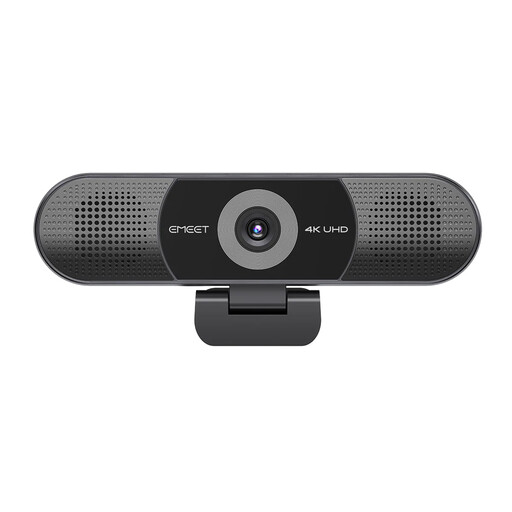
EMEET All-in-One 4K USB webcam
A call-focused option when another display is not the priority. Its product name specifies a four-microphone array, speakers, fixed focus and a 98° adjustable field of view. Check the required USB connection, operating-system compatibility and employer permission.
View on Joybuy
 No image available
MOVESPEED DK5A1 10-in-1 USB-C docking station
For a desk needing a display connection and several peripheral ports. Its product name specifies HDMI up to 4K at 60 Hz, USB-C and USB-A data ports, SD/TF slots and 3.5 mm audio. Check the host laptop’s video support and confirm laptop-charging capability separately.
View on Joybuy
Frequently asked questions
Do I have to buy my own home-work monitor or dock?
Do not assume you must buy equipment before using your employer’s assessment process. The Health and Safety Executive says that where display screen equipment rules apply, assessment should cover relevant home and office use; if an assessment indicates the employer must provide equipment, the worker cannot be charged for it. The equipment needed depends on the individual assessment.
Can any USB-C dock run two displays and charge my laptop?
No: the connector alone does not establish either capability. Check your exact laptop’s supported display count, resolution, refresh rate and charging input, then compare them with the dock and cable requirements. Apple, for example, says external-display capacity varies by Mac model and display settings; DisplayLink notes that USB-A/B docks are not designed to charge laptops.
Can I use my own dock or webcam with a work laptop?
Ask your employer’s IT team before buying one. The National Cyber Security Centre describes organisational controls that can restrict peripheral access, and Microsoft documents device-installation and driver-permission controls on managed Windows computers. The answer depends on your employer’s policy and the particular accessory.
Should I choose a portable screen instead of a fixed home monitor?
Choose a portable screen if you need extra display space at more than one location and can accommodate its connection and carrying requirements. ASUS specifies a 15.6-inch, 0.78 kg ZenScreen MB166C with USB-C DisplayPort Alt Mode input; LG’s fixed 27U730A-B instead offers a 27-inch 4K screen and USB-C power delivery up to 90W. Neither specification establishes compatibility with your laptop, so check that before deciding.
Would a separate webcam address my setup problem?
Consider one if video calls, rather than screen space or desk reconnection, are the reason for changing your setup. Check the camera’s connection and system requirements alongside your employer’s peripheral rules. Logitech, for instance, publishes operating-system, RAM and connection requirements for its Brio 4K.


