Multi-tab tariff researchers
You want to keep supplier pages, bills and notes open together. Prioritise enough memory for your workflow and a screen on which you can read the documents comfortably.


For comparing household energy tariffs, start with an everyday laptop that can display bills and comparison pages clearly and run the browser and documents you use. Microsoft recommends 8GB to 16GB of RAM for multitasking; check the exact laptop configuration and your required websites before paying for capabilities intended for other work. The laptop helps you compare offers, but the tariff decision still depends on your usage, unit rates, standing charges and terms.
You want to keep supplier pages, bills and notes open together. Prioritise enough memory for your workflow and a screen on which you can read the documents comfortably.
You mainly need comparison sites, online accounts and basic documents, rather than a laptop chosen for gaming or creative applications.
You work mainly in a browser and are considering a Chromebook. Check that your particular comparison sites, supplier accounts and document tasks work with it.
Decide which part of the comparison workflow matters most to you, then check the exact laptop’s memory, screen and software against that need.
| Concern | What to check | Who this matters to |
|---|---|---|
| Tabs and documents together | Check the installed RAM and screen resolution. Microsoft recommends 8GB to 16GB of RAM for multitasking and defines Full HD as 1920 × 1080 pixels. | I want bills, tariff documents and several comparison pages open without constantly closing one to read another. Around 50% of consumers put this multi-tab need first. |
| Everyday web use | Confirm the exact model’s operating system, memory and document storage; specifications can differ within one laptop family. | If browsing and household paperwork are my main tasks, I would rather choose for those tasks than for specialist applications I will not use. This is the primary need for around 33% of consumers. |
| Web-first compatibility | Check the browser requirements of your comparison sites and supplier accounts, along with any applications or file formats you need. | I could use a Chromebook if my complete tariff-comparison workflow works in its browser. For around 17% of consumers, that web-first fit is the main concern. |
A headline figure does not replace the unit rates, standing charges and consumption relevant to your household. Ofgem notes that rates and standing charges differ by location.
Have your bill to hand and compare offers using your location, payment method and energy use where requested.
Ofgem’s 2025 Great Britain tariff-choice research identifies annual savings as an important factor, alongside customer service and exit fees. An attractive saving does not settle whether the tariff terms suit you.
Keep the tariff terms and service information visible beside the annual-cost comparison, and check when an exit fee could apply.
Leaving a fixed-rate tariff early may involve an exit fee under its terms.
A result is useful only if you are responsible for the relevant energy contract and the offer applies to your property and supply arrangement.
Confirm who pays the supplier and check your existing contract terms before acting on an offer.
Models within an everyday laptop range can have different memory, screens, storage and operating systems. A family description cannot establish the configuration you will receive.
Check the precise model’s specifications, charger inclusion and warranty before buying.
Lenovo’s IdeaPad range is a reference point for everyday Windows browsing and document use.
Acer positions Aspire laptops for everyday tasks including web browsing.
HP’s everyday-use listings provide Windows laptop and Chromebook options to examine for this task.
These Windows laptops offer configurations to examine for browser-based tariff comparison and household documents. Compare each model’s screen, memory, storage and software restrictions against your own workflow.
 No image available
Consider this configuration if you also keep several documents and browser pages open. Its stated specifications include a 15.3-inch WUXGA display, 24GB DDR5 RAM, a 512GB PCIe SSD and Windows 11 Home. Check battery runtime if you need to work away from a socket.
 No image available
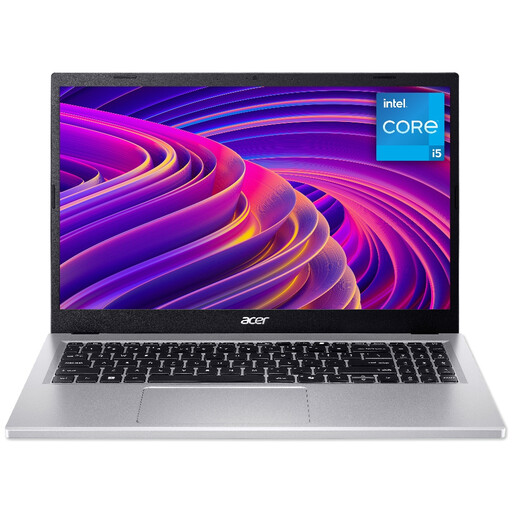
Consider this everyday configuration for comparing pages and reading bills on a 15.6-inch Full HD display. The title specifies 8GB RAM and a 512GB SSD. Confirm the precise model and configuration on the product page before buying.
 No image available
Consider this 14-inch model if you want a smaller laptop for browser pages and household documents. It has 16GB RAM and a 512GB SSD. Check that any applications you rely on work with its Snapdragon X configuration, and that its fixed memory capacity suits you.
 No image available
Consider this model for everyday tariff-site browsing and household documents. Its title states a 15.6-inch Full HD display, 8GB RAM and a 256GB SSD. Confirm the processor and precise configuration before purchase, as the description indicates that the processor or series may vary.
 No image available
Consider this configuration for browser-led comparison if its software and storage suit your other household tasks. It specifies a Full HD display, 8GB RAM and a 128GB SSD. Windows 11 Home in S Mode restricts app installation to Microsoft Store apps; check your required applications before buying, as leaving S Mode is irreversible.
Keep a recent energy bill nearby so you can check your current tariff and energy use. Ofgem advises having details such as your postcode, current supplier, unit rates and annual consumption available when comparing offers.
No: a headline figure is not a calculation of your household bill. For homes in England, Scotland and Wales, Ofgem says unit rates and standing charges vary by location; check the rates that apply to you and compare them using your own consumption.
Check your current terms before committing to a switch, particularly whether an exit fee applies to leaving a fixed-rate tariff early. Also confirm who holds the household energy contract and whether the offer applies to your supply arrangement.
Microsoft recommends 8GB to 16GB of RAM for its multitasking scenario, making that range a useful starting point for tabs and documents. Check the exact model’s installed memory and consider the other applications you expect to run at the same time.