For answering practice exam questions, choose a laptop with a physical keyboard, a screen you can read comfortably and enough memory for your study applications; 8GB RAM is a useful starting point if remote assessment is possible. A 14-inch model is more compact to carry, while a 15.6-inch model gives you a larger physical screen for longer sessions. Before relying on either for an invigilated assessment, check your provider’s operating-system, browser and equipment rules, then run its system test on the laptop and connection you intend to use.
Who needs which setup?
Remote-assessment learners
If practice may lead to a remotely invigilated assessment, start with the named provider’s system test. The Open University and Pearson VUE each set requirements for their own assessment routes, so a laptop that handles ordinary question banks may still need further checks.
Long-answer students
Extended reading and essay-style answers make a physical keyboard and comfortable screen size important. Compare the layout and display of the exact laptop you would use at your desk.
Portable revision learners
For question banks, documents and online lessons across several study locations, a compact laptop may be easier to carry. Check its exact memory, storage and screen configuration rather than relying on the product-family name.
What matters when choosing?
If an assessment may be remotely invigilated, establish its device rules before deciding how much screen space or portability you want.
| Concern |
What to check |
Who this matters to |
| Assessment compatibility |
Check the provider’s supported operating system and browser, then run its system test on your laptop and connection. The Open University specifies at least 8GB RAM for its online-exam setup. |
I might need invigilation software, so I want the laptop to pass my provider’s checks before I depend on it. Around 46% of consumers put assessment compatibility first. |
| Reading and typing comfort |
Compare the exact screen size and resolution, and choose a physical keyboard that suits extended answers. |
Long question sets and written responses keep me at the screen and keyboard for a while; for around 36% of consumers, reading and typing comfort is the primary need. |
| Portability and everyday study |
Check the selected configuration’s memory and storage, and confirm what power accessories come with it. |
I carry my coursework between study locations and want one laptop for documents as well as practice questions. Portability and everyday study are the main concern for around 18% of consumers. |
Buying pitfalls
-
Assuming web access means exam access
A browser-based question bank and a remotely invigilated assessment can have different requirements. Pearson VUE’s OnVUE route, for example, specifies operating-system, connection and single-display conditions.
Get the rules for your named assessment and run its system test on the laptop and network you plan to use.
-
Buying a Chromebook or tablet before checking device support
The Open University says its cited online-invigilation route does not support Chromebooks, tablets, smartphones or Linux machines. Other practice platforms may set different rules.
Confirm your provider’s supported-device list before choosing a device for anything beyond ordinary browser practice.
-
Comparing product families instead of configurations
Memory, storage and displays can change within a family. ASUS lists several Vivobook Go 15 E1504F configurations, and Acer says Aspire Go specifications vary by model and region.
Check the full model number and the selected configuration’s memory, storage, display and operating system.
-
Overlooking the charger
Accessory inclusion can differ by configuration. HP’s UK listing for D68G4EA#ABU says a charger is not included, while ASUS says inclusion varies by country, region and model for the cited Vivobook Go family.
Confirm whether the exact laptop comes with a suitable charger and check your provider’s power guidance before an assessment.
Brands to consider
Lenovo
The specific IdeaPad Slim 3 14 configuration 83K60079UK is a compact Windows option for study across different locations.
- Lenovo UK lists 8GB memory, a 512GB SSD and a 14-inch 1920 × 1200 anti-glare display for this configuration.
- It is listed with Windows 11 Home in S mode; check whether your assessment software can run in the selected setup.
Acer
The Aspire Go 15 AG15-21P-R811 is a 15.6-inch option to compare for desk-based practice; its specifications should not be applied to every Aspire Go model.
- Acer United Kingdom lists Windows 11 Home, 8GB memory and a 1920 × 1080 display for this model.
- Its cited storage is 128GB. Check the full model number if you need more room for local course files.
HP
HP Laptop 14 D68G4EA#ABU is a specific 14-inch configuration for comparing straightforward study requirements.
- HP Store UK lists 8GB RAM and dual-array microphones for this configuration.
- The listing specifies a 1366 × 768 display, 128GB UFS storage and no included charger; it also lists Windows 11 Home in S mode.
ASUS
Vivobook Go 15 E1504F is a configurable product family for learners comparing 15.6-inch study laptops.
- ASUS UK lists E1504F configurations with 8GB or 16GB memory, alongside camera and built-in microphone specifications.
- Other listed variants have 4GB memory or 128GB storage. Confirm the exact configuration and charger inclusion.
Joybuy product choices
These laptops offer different setups for practice questions: compact study, a larger screen for desk-based answers, or more memory and storage for wider coursework. The Chromebook is a choice for compatible browser-based practice, not for the Open University online-invigilation route described above.
 No image available
ASUS Vivobook 14 X1407QA-LY003W Copilot+ PC, Quiet Blue
A compact option to consider if practice questions sit alongside other study applications.
Snapdragon X; 16GB RAM; 512GB SSD. Check that your assessment provider supports this laptop’s operating system and any required software before relying on it.
View on Joybuy
 No image available
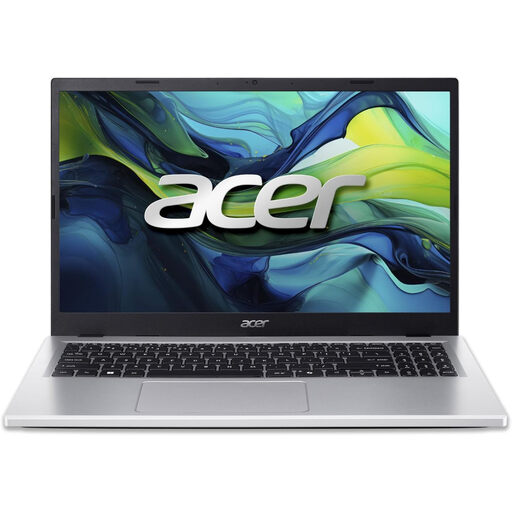
Acer Aspire Go 15 AG15-71P, Silver
Consider this larger-screen Windows laptop for desk-based question practice and typed answers.
Intel Core i5-13420H; 8GB DDR5 RAM; 256GB NVMe SSD; 15.6-inch Full HD screen; Windows 11 Home. Run your assessment provider’s system test before an invigilated session.
View on Joybuy
 No image available
Acer Aspire Go 15 AG15-21P, Silver
Its 15.6-inch screen makes it worth comparing for practice sessions mainly spent at a desk.
AMD Ryzen 3 7320U; 8GB RAM; 256GB SSD; 1920 × 1080 display. If your assessment requires a microphone, confirm the audio setup on this exact laptop before choosing it.
View on Joybuy
 No image available
Acer Chromebook Plus 514 CB514-5H, Iron
Consider this Chromebook for browser-based practice only after checking that your course platform supports ChromeOS.
Intel Core i3-1315U; 8GB RAM; 256GB SSD; 14-inch 1920 × 1200 display. The Open University says Chromebooks are not supported for its cited online-invigilation route.
View on Joybuy
 No image available
Lenovo LOQ Essential 15ARP11 Gaming Laptop
Consider this model if practice questions share a laptop with large course files or other applications, and you mainly study at a desk.
AMD Ryzen 7 170; 16GB RAM; 1TB SSD; GeForce RTX 5050; 15.6-inch 144Hz Full HD display. Its stated 2.30kg weight is worth considering if you carry your laptop regularly; check assessment-platform compatibility separately.
View on Joybuy
Common questions
Is 8GB RAM enough for practice exam questions?
8GB RAM is a sensible starting point for ordinary browser-based practice, but the assessment platform sets the relevant requirement. The Open University specifies a minimum of 8GB for its cited online-exam setup, which also runs exam software, the operating system and a browser.
Can I use a Chromebook for remotely invigilated practice?
Only if your named provider supports it. The Open University says Chromebooks are not supported for its cited online-invigilation route; check a different provider’s device rules rather than applying that restriction to every question bank or exam.
What should I test before using a new laptop for an online assessment?
Run your provider’s system test on the laptop and internet connection you intend to use. Pearson VUE advises candidates to test that same device and network for its OnVUE exams; also check the provider’s camera, audio and browser requirements.
Can I use a second monitor during a remotely invigilated exam?
Check your assessment provider’s rules before connecting one. Pearson VUE specifies a single display for its OnVUE online exams, so an extra monitor would not meet that route’s stated setup requirements.


