What matters when choosing
Check your software and older file formats before deciding between Windows and macOS. Then choose the display, memory and storage for the way you research at your desk.
| Concern |
What to check when buying |
Who this matters to |
| Software and browser compatibility |
Check the operating-system requirements of your genealogy applications and sites, plus the import options for older tree files. |
If I rely on a desktop tree program or older files, I need to know I can use them before choosing a laptop. Around 36% of consumers put compatibility first. |
| Record-viewing workspace |
Compare screen size and resolution for reading scans beside notes; check connections if you plan to use an external monitor. |
When I compare records with my tree at a desk, I want enough room to read both without constantly changing windows. For around 29% of consumers, viewing space is the primary concern. |
| Research multitasking |
Compare the exact processor and RAM configuration. Microsoft's laptop-buying guidance recommends 8GB to 16GB RAM for multitasking. |
I keep browser tabs, documents and a tree application open together, so I care most about a configuration for that workload. Around 21% of consumers prioritise multitasking. |
| Local archive and backups |
Estimate how many scans and photos you will keep locally, compare SSD capacities, and check connections for your backup drive. |
If I retain photographs, downloaded records and tree backups on my laptop, storage and a separate backup matter most to me. Around 14% of consumers make local archive needs their first priority. |
Brands to consider
These particular laptop lines illustrate different ways to set up a home-office research desk; the appropriate configuration depends on your software and workspace.
Dell
Dell UK lists a Pro 16 Plus PB16255 configuration with Windows 11 Pro, 16GB memory, a 512GB SSD and a 16-inch FHD+ anti-glare display.
- The cited configuration offers a larger built-in screen for desk-based work.
- Its 16-inch format takes more space when carried than a 13- or 14-inch laptop; confirm the components of the configuration you select.
Lenovo
Lenovo UK lists the Yoga 7a 2-in-1 Gen 11, part 83TD0088UK, with Windows 11 Home, 16GB RAM, a 512GB SSD and a 14-inch touch display.
- Its convertible design is relevant if touch interaction or occasional annotation matters to you.
- The cited 14-inch screen provides less built-in space for side-by-side documents than the cited 16-inch Dell configuration.
Apple
Apple's MacBook Air range is an option if your exact genealogy applications and file-import workflow support macOS. Software MacKiev and RootsMagic publish macOS support for Family Tree Maker 2024 and RootsMagic 10 respectively.
- Apple lists MacBook Air configurations with 16GB memory and 512GB SSD storage.
- Check the exact model's connections against USB-A drives, HDMI displays and card readers; adapters may be necessary.
Joybuy laptop choices
These laptops include larger-screen Windows options and MacBook Air models for a macOS workflow. Choose by the software, files and desk connections you need, rather than assuming one configuration suits every family-history project.
 No image available
ASUS Vivobook 15 X1504VA, 15.6-inch, 24GB RAM, 1TB SSD
Consider this larger-screen configuration if your desk work involves local records and several documents. Its listed variant has an Intel Core 5 120U processor, 24GB RAM and a 1TB SSD; check the operating system and connections against your software and accessories.
View on Joybuy
 No image available
Lenovo LOQ Essential 15ARP11, Ryzen 7 170, 16GB RAM, 1TB SSD
Consider its 1TB SSD if keeping a local collection of scans is important, but assess the gaming hardware against any other work you intend to do. The listed variant has a 15.6-inch FHD display and GeForce RTX 5050 graphics; gaming features alone do not establish an advantage for genealogy research.
View on Joybuy
 No image available
HP OmniBook X Flip 16-as0004na, 16-inch, 16GB RAM, 512GB SSD
Consider this convertible if you want a larger touchscreen for organising records at your desk. The listed variant has an Intel Core Ultra 5 226V processor and Windows 11 Home; check monitor and drive connections, and confirm the display finish if reflections concern you.
View on Joybuy
 No image available
Apple MacBook Air 15-inch (2026, M5), 16GB, 1TB SSD, Silver
Consider this MacBook Air for a macOS workflow once you have checked your genealogy software and older files. Its listed M5 variant has a 10-core CPU and 10-core GPU; confirm the installed macOS version and connections for your existing accessories.
View on Joybuy
 No image available
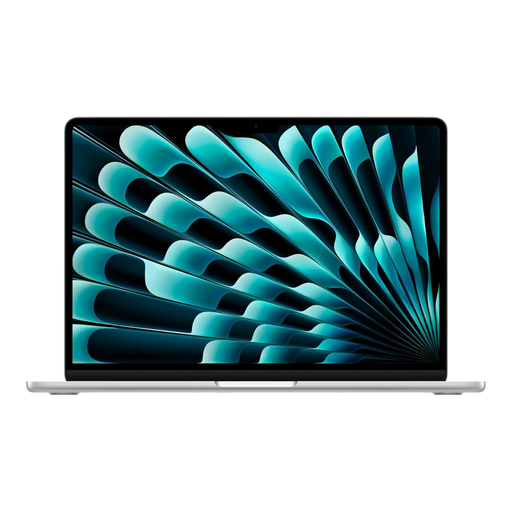
Apple MacBook Air 13-inch (2026, M5), 16GB, 512GB SSD, Silver
Consider this smaller MacBook Air if you expect to move the laptop and have confirmed macOS support for your research tools. Its listed M5 variant has a 10-core CPU and 8-core GPU; the 13-inch format gives you less built-in screen space than the larger options, so check whether you will use an external display.
View on Joybuy
Frequently asked questions
Should I choose Windows or macOS for family-history research?
Choose according to the applications and older files you need to use. Software MacKiev lists Windows 10 x64 or later and macOS Big Sur 11 or later for Family Tree Maker 2024; RootsMagic offers both Windows and macOS editions, but says its 64-bit Windows version cannot import Legacy Family Tree or older Family Tree Maker files. Check your intended import route before buying.
Would a Chromebook work for family-history research?
A Chromebook is worth considering only after confirming a browser-only workflow on the sites you use. Family Tree Maker 2024 publishes Windows and macOS requirements, not ChromeOS requirements, and FamilySearch publishes specific supported operating-system and browser combinations. Check any desktop application, file-import tool and external device you depend on.
Should I buy a laptop running Windows 10?
For a new research laptop, Windows 11 is the more straightforward starting point unless you have a specific reason and support plan for Windows 10. Microsoft says Windows 10 support ended on 14 October 2025; check the operating system supplied with the exact laptop you are considering.
How much storage do I need for scans and family photos?
Choose storage around the files you intend to keep locally, and maintain a separate backup. Microsoft's laptop-buying guidance suggests considering 512GB to 1TB when saving many photos, videos and documents; compare your existing collection and expected scans before selecting a capacity.
Do records about living relatives need special care?
Yes: consider who can access information about living relatives and how you will store or share it. The Information Commissioner's Office explains that electronically processed information identifying a person can be personal data. If you plan to publish or widely share records, seek advice appropriate to what you intend to do.


