Windows GIS coursework users
If an assignment requires ArcGIS Pro, establish the supported Windows setup before comparing laptop size. Esri lists supported 64-bit Windows operating systems for ArcGIS Pro 3.6.


Choose the laptop around your required mapping software before deciding how much built-in screen space you need. For ArcGIS Pro, Esri lists supported 64-bit Windows operating systems; for a confirmed QGIS workflow, a compact MacBook Air is another option because QGIS is available on macOS. A 13- or 14-inch laptop leaves more room on a small desk, while a larger screen or external monitor needs space of its own.
If an assignment requires ArcGIS Pro, establish the supported Windows setup before comparing laptop size. Esri lists supported 64-bit Windows operating systems for ArcGIS Pro 3.6.
If your work uses QGIS or other confirmed macOS-compatible tools, a 13- or 14-inch laptop can leave room for notes and a mouse. QGIS.org lists QGIS as available on macOS as well as Windows.
When coursework combines map files, browser research and documents, compare memory and local storage alongside software compatibility. Check Windows-on-ARM support separately if you are considering a laptop with an ARM-based processor.
Start with the applications your course or project requires. Then weigh the space available for the laptop, map files and any monitor against the configuration you plan to use.
Choose when: ArcGIS Pro is compulsory and the exact laptop configuration meets Esri’s supported Windows requirements.
Trade-off: A compact screen may make an external monitor useful for detailed map layouts, if your desk and connections allow one.
Choose when: Your required work runs in QGIS or other applications confirmed for macOS.
Trade-off: Esri’s supported operating-system list for ArcGIS Pro 3.6 is for Windows, not macOS.
Choose when: You have confirmed that every required mapping application supports the device’s Windows-on-ARM configuration.
Trade-off: A larger-screen model takes more desk space, and Windows software support must be checked application by application.
| Concern | What to check | Who this matters to |
|---|---|---|
| Mapping software | List compulsory applications and confirm their operating-system and processor-architecture requirements. Esri lists supported 64-bit Windows systems for ArcGIS Pro 3.6. | If my coursework requires ArcGIS Pro, I need a laptop that meets its requirements before screen size matters; around 27% of consumers put required-software compatibility first. |
| Screen and desk space | Measure the usable desk area for the laptop and, if needed, a monitor. Check the exact model’s display outputs and your monitor’s inputs. | When maps and notes must share a small desk, I want enough viewing room without crowding my workspace. Desk-efficient viewing comes first for around 33% of consumers. |
| Memory and storage | Compare memory and SSD capacity with your project files, imagery and expected use of large datasets or 3D scenes. Esri notes that GIS processes load datasets, layers and cache into memory. | If I keep imagery and projects locally while working across several applications, capacity is my main concern; around 27% of consumers likewise prioritise room for their work. |
| Carrying and accessories | Check the laptop’s dimensions and what comes with the exact model, including its charger and any connection needed for your monitor. | If I move between a desk and classes, I care most about carrying the laptop and having the accessories I need. Around 13% of consumers place that need first. |
A compact laptop may still be unsuitable for an assignment if the required application does not support its operating system or processor architecture. Esri lists supported Windows systems for ArcGIS Pro 3.6, while QGIS.org lists QGIS for several platforms, including macOS.
Get the application list from your course or project brief, then check each program against the exact laptop configuration.
External-display support and connection standards differ by model. Apple lists Thunderbolt 4 ports and external-display support for the referenced MacBook Air specification; check any alternative on its own terms.
Match the laptop’s stated display output to your monitor’s inputs and the desk space available before choosing a cable, adapter or dock.
Locally stored imagery, downloaded data and project files all need space. The referenced Lenovo IdeaPad Slim 3 15Q8X10 configuration has 256 GB storage, while the referenced ThinkPad and MacBook Air configurations list 512 GB.
Consider the files you expect to keep on the laptop and whether you have a workable external-storage arrangement.
Dell states that a charger is not included with its XPS 13 DX13260 listing. Included accessories can therefore affect whether a laptop is ready for your planned desk setup.
Check the contents of the exact listing and the connections needed for any monitor you already use.
For that Dell XPS 13 listing, you would need to source a compatible charger separately.
The referenced ThinkPad X1 Carbon Gen 13 configuration represents a compact Windows option; the IdeaPad Slim 3 15Q8X10 is a larger Windows-on-ARM option.
The 13-inch MacBook Air is relevant when the required map-design workflow runs on macOS.
The XPS 13 DX13260 is a compact Windows model to assess against the exact configuration needed for your maps.
These laptops offer compact macOS, Windows and Windows-on-ARM options for the map-work scenario. Match the exact device to your required applications and available desk space before choosing between them.
 No image available
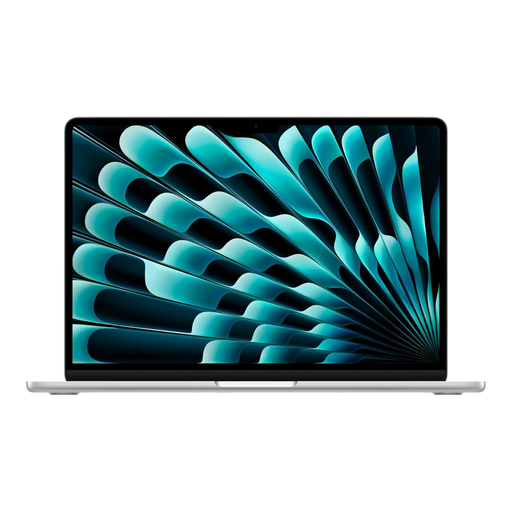
Consider this compact macOS model if your mapping applications are confirmed for macOS; QGIS.org lists QGIS as available on that platform. The title specifies an M5 chip with a 10-core CPU and 8-core GPU, 16 GB memory and a 512 GB SSD. Do not choose it for compulsory desktop ArcGIS Pro work on the assumption that macOS is supported.
 No image available
This is another compact option for mapping work confirmed to run on macOS, with more listed local storage than the 512 GB MacBook Air above. Its title specifies an M5 chip with a 10-core CPU and 10-core GPU, 16 GB memory and a 1 TB SSD. Esri’s supported operating-system list for ArcGIS Pro 3.6 does not include macOS.
 No image available
The 14-inch format is relevant if you want to preserve desk space. The title specifies a Snapdragon X processor, 16 GB memory and a 512 GB SSD. Because this is a Windows-on-ARM option, confirm that each required GIS application supports the exact configuration before buying it.
 No image available
Consider the dual-screen design if you want to arrange map work across two built-in viewing areas and have room to set up the device. Its title specifies an Intel Core Ultra 7 255H processor, 16 GB LPDDR5X memory and a 1 TB SSD. Confirm the exact panel and resolution details, as the listing’s display descriptions conflict, and check support for your required GIS software on this configuration.
 No image available
This 2-in-1 is an option to assess if you want a Windows laptop for map coursework. Its title specifies Windows 11 Home, 16 GB memory and a 1 TB SSD. Confirm the exact display configuration, which is described inconsistently in the listing, and check that the required GIS software supports this Windows configuration.
You need a supported Windows configuration if ArcGIS Pro is compulsory, but not necessarily if your work uses QGIS. Esri lists supported 64-bit Windows operating systems for ArcGIS Pro 3.6; QGIS.org lists QGIS as available on Windows and macOS. Check your course’s exact application list before choosing.
Yes, if its screen gives you enough room for your particular map task or you have space for a suitable external monitor. Map layouts, layers and tables can compete for viewing area, so check both your desk measurements and the exact laptop’s display connections.
Do not assume that it will. Esri’s ArcGIS Pro 3.6 requirements specify a Windows x64 installer for a required component. Before buying a Snapdragon X or other Windows-on-ARM laptop for compulsory ArcGIS Pro work, confirm support for your exact setup with Esri or your institution.
Check the exact listing’s included accessories and manufacturer’s cover separately from the seller’s return terms. The referenced Joybuy Lenovo IdeaPad Slim 3 15Q8X10 listing states a one-year manufacturer’s warranty, while Dell says a charger is not included with its referenced XPS 13 DX13260 listing.