What matters when choosing?
Confirm software and hardware compatibility before comparing configurations. Then judge memory and storage against the size of your projects, not just a DAW’s installation requirements.
| Concern |
What to check |
Who this matters to |
| Memory and processing headroom |
Check installed RAM and the requirements of your DAW and instruments. Spitfire Audio distinguishes 16GB for loading tracks as needed from 32GB or more for large templates. |
If I want many instruments and effects ready at once, I need capacity for the session rather than just enough to open the DAW. Around 33% of consumers put that headroom first. |
| Library storage and streaming |
Check library installation sizes and SSD space. For an external SSD, compare connection requirements and random-read performance where available; Spitfire Audio identifies random access as relevant to sample libraries. |
As my library grows, I need room for its files and a drive suited to streaming them during playback. That is the primary concern for around 27% of consumers. |
| Software and interface compatibility |
Confirm the operating-system support of your DAW, plug-ins and interface driver, then check the interface’s required connection. |
If I rely on existing projects and an audio interface, I need the new laptop to run that setup without changing essential tools. Compatibility comes first for around 20% of consumers. |
| Desk connections and portability |
Count devices used at the same time and inspect the exact model’s ports, installed memory and SSD configuration. |
When I move the laptop but also use it at a desk, I need practical connections for my equipment without losing sight of the configuration inside. Around 20% of consumers prioritise that balance. |
Joybuy laptops for sample-library work
These laptops have listed memory and storage configurations relevant to building a home-office sample library. Check each model against your DAW, instruments and audio interface before deciding whether its configuration suits your projects.
 Image unavailable
Stormforce Exobook 16 QHD+, Ultra 9, 32GB, 4TB, 5080
Consider this configuration if you plan to keep many instruments ready and need substantial internal space for libraries. Its listed specifications include a 16-inch QHD+ display, Ultra 9 processor, 32GB of memory and 4TB of storage; check your software, interface and SSD requirements against the exact model.
View on Joybuy
 Image unavailable
MSI Stealth 18 AI Studio A1VGG-001UK, 18-inch, 32GB, 2TB
The 18-inch display may appeal if you want more screen space for arranging tracks at a desk. The named configuration has an Intel Core Ultra 9 processor, 32GB of memory, a 2TB SSD and NVIDIA GeForce RTX 4070 graphics; confirm your required software, connections and SSD performance.
View on Joybuy
 Image unavailable
Lenovo Legion Pro 7 16IAX10H 83F5000UUK, 64GB, 2TB
The listed 64GB of memory is relevant if your projects keep many instruments loaded at once. This 16-inch Windows 11 Home configuration also names an Intel Core Ultra 9 processor, 2TB SSD and NVIDIA GeForce RTX 5090 graphics; check the SSD type and performance, DAW support and interface drivers for your setup.
View on Joybuy
 Image unavailable
Apple MacBook Pro 16.2-inch M5 Max, 48GB, 2TB, Space Black
Consider this configuration for a larger template if your essential software and audio hardware support it. The named variant has an M5 Max with an 18-core CPU and 40-core GPU, 48GB of unified memory and a 2TB SSD; confirm plug-in and driver compatibility before changing platform.
View on Joybuy
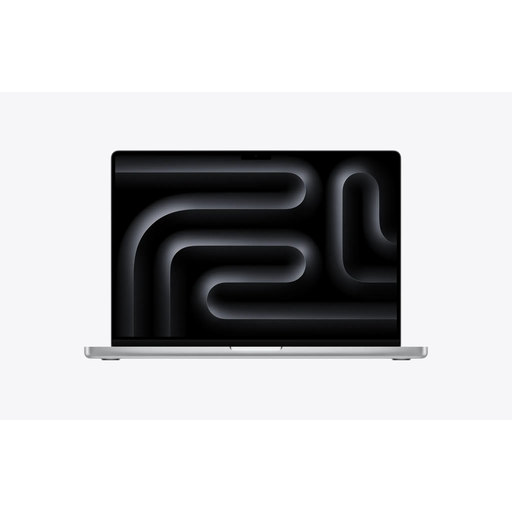 Image unavailable
Apple MacBook Pro 16.2-inch M5 Max, 36GB, 2TB, Silver
The listed 36GB of unified memory is worth considering if you expect to keep a large sample template ready. This variant names an M5 Max with an 18-core CPU and 32-core GPU and a 2TB SSD; check your software and interface compatibility, as well as whether the power adapter you need is included.
View on Joybuy
Frequently asked questions
Is 16GB of memory enough for a sample-library laptop?
It can be enough if you load instruments as needed rather than keeping a large template ready. Spitfire Audio suggests 32GB or more for large templates, so check the requirements of the libraries and sessions you plan to use.
Should I keep sample libraries on an internal or external SSD?
Either can suit a sample-library setup if the drive meets your library’s space and performance needs. Spitfire Audio notes that an external SSD can free internal space; check its connection and random-read performance as well as the capacity you need.
Should I choose macOS or Windows for sample-based production?
Choose the platform supported by your required DAW, plug-ins, licences and audio-interface drivers. Ableton lists compatibility separately for its macOS build and supported Windows versions, but those details do not establish support for every third-party tool in your setup.
Can an audio interface connect through a USB hub?
Check the interface maker’s instructions before relying on a hub. Focusrite advises a dedicated USB port where possible because hubs and adaptors can cause noise or connection problems.
What if a laptop bought in the UK is faulty?
A faulty laptop may qualify for a remedy under the UK Consumer Rights Act 2015, depending on the circumstances. GOV.UK describes repair or replacement as possible remedies; keep your order and fault details and contact the seller rather than relying solely on a manufacturer warranty.


