Frequent field-trip spreadsheet reviewers
If you carry a laptop between locations and regularly check account totals or statements, focus on manageable weight, a readable screen and a keyboard you can use comfortably away from your usual desk.


For regular spreadsheet review away from a desk, start with a compact laptop whose keyboard, screen and carrying weight suit your trips, then confirm that your accounting software works on its operating system. If account files contain personal information, check storage encryption and arrange access to any recovery key separately from the laptop. Touch input and lighter designs are worth prioritising only when they serve the way you work.
If you carry a laptop between locations and regularly check account totals or statements, focus on manageable weight, a readable screen and a keyboard you can use comfortably away from your usual desk.
If statements or account files contain personal information, plan how you will protect stored files and access them if the laptop is lost or its encryption recovery key is needed. The Information Commissioner's Office advises enabling storage encryption on laptops holding personal information.
If trips are infrequent and most work happens in a browser or spreadsheet, establish which software and files you actually need before choosing extras such as touch input or a particularly light chassis.
Start with the work you need to do and where you will do it; then check file protection, software compatibility and support on the exact configuration you intend to buy.
| Concern | What to check | Who this matters to |
|---|---|---|
| Carrying and screen readability | Check the stated weight and the exact panel's size, resolution, anti-glare treatment and brightness. Dell lists both 250-nit and 400-nit anti-glare options for the Latitude 7450. | Carrying a laptop between stops while reading spreadsheets makes weight and changing light central to my choice; around 36% of consumers put portability and readability first. |
| Protection of account files | Check whether storage encryption is available and enabled, and keep any recovery key somewhere accessible without the laptop. Microsoft Support warns that it cannot recreate a lost BitLocker recovery key. | If my files contain personal information, I need to protect them in case the laptop is lost; roughly 29% of consumers make data protection their primary concern. |
| Software and file workflow | Confirm that your accounting application, spreadsheet files and any offline tasks work on the operating system. Check the selected configuration's memory, storage and required connections. | When I have to open existing account files during a trip, software compatibility matters more than an unfamiliar feature; about 21% of consumers put workflow fit first. |
| Support and travel features | Read the exact warranty and service terms. If relevant, check whether the chosen configuration includes a camera shutter or fingerprint reader; neither replaces storage encryption. | Repeated travel makes service arrangements and practical privacy controls important to me; around 14% of consumers prioritise support and travel features. |
Dell lists different brightness options within the Latitude 7450 family. The family name alone therefore does not tell you which display you will receive.
Check the chosen configuration's panel resolution, brightness, surface treatment and touch capability against the lighting you expect on trips.
Microsoft Support says Windows Device Encryption depends on device prerequisites and that it cannot retrieve or recreate a lost BitLocker recovery key.
Check encryption availability during setup, enable it where appropriate and arrange access to the recovery key separately from the laptop.
Without a backed-up recovery key, you could lose access to encrypted files.
A fingerprint reader is a sign-in feature. It does not replace storage encryption for a laptop holding personal information; the Information Commissioner's Office advises enabling that protection.
Assess sign-in and file protection separately, and keep a workable backup and recovery process.
Touch input, a particular display or a lighter design may be useful on some trips, but none establishes that your existing accounting application will run.
List the applications, files, connections and working locations you rely on, then check the exact configuration against them.
These business-laptop lines illustrate different configuration choices for mobile account review; features described here apply to the cited models or configurations, not every laptop from each brand.
The ThinkPad X1 Carbon Gen 13 illustrates a compact, lightweight 14-inch option for frequent carrying.
The Latitude 7450 line offers display, memory and storage choices for a mobile spreadsheet workflow.
The EliteBook 8 G1i illustrates a 14-inch business-laptop configuration with touch input and privacy-oriented features.
These laptops offer different approaches to account review away from a desk, including compact models, a larger-screen option, Chromebooks and a convertible. Check your accounting software and offline-file needs before choosing an operating system; for any laptop storing personal information, check its available file-protection settings.
 Image unavailable
A 14-inch option for carrying account work between locations. The named configuration has a Snapdragon X processor, 16 GB RAM and a 512 GB SSD.
Before buying, confirm that your accounting application and required peripherals work with this Snapdragon X configuration. Check the display against your usual lighting and establish whether device encryption is available and enabled.
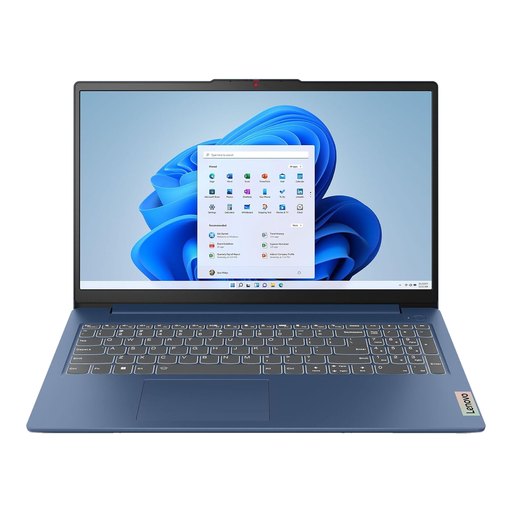 Image unavailable
Consider the 15.6-inch screen if viewing more of a spreadsheet matters more to you than carrying a smaller laptop. This variant names an Intel Core i7 processor, 16 GB RAM and a 512 GB SSD.
Check the exact panel's brightness for your working locations. If account files contain personal information, confirm the device's encryption settings and recovery-key arrangements before travelling.
 Image unavailable
This 14-inch Chromebook is a possibility when your account-review work runs in a browser or compatible ChromeOS apps. The named variant has an Intel Core i3 N305 processor, 8 GB RAM and 256 GB eMMC storage.
Confirm that your accounting application and files work on ChromeOS, including any tasks you must complete offline. Check the exact display specification for the light in which you will work.
 Image unavailable
Consider this Chromebook if the applications and files you use for account review are compatible with ChromeOS. Its named configuration has a 1,920 × 1,200 display, Intel Core i3-1315U processor, 8 GB RAM and a 256 GB SSD.
Check offline access to the files you need on trips and confirm the display brightness for your working conditions.
 Image unavailable
The 2-in-1 design is worth considering if touch or convertible use is part of your account-review workflow. The named configuration has 16 GB RAM, a 1 TB SSD and Windows 11 Home.
Confirm the exact display properties for your working locations and check that device encryption is available and enabled if you will store personal account information.
No: a 14-inch laptop may be easier to carry if you regularly move between locations, while a larger screen may suit you when viewing more of a spreadsheet matters most. Check the exact panel, particularly its resolution and brightness; Dell lists both 250-nit and 400-nit anti-glare options within the Latitude 7450 family.
If the files contain personal information, check that storage encryption is enabled: the Information Commissioner's Office advises enabling it on laptops that store such information. Encryption is one part of protecting the files, so plan secure sign-in and recovery-key access as well.
Check the device's Windows encryption settings and confirm whether encryption is available and enabled before carrying personal account files. Microsoft Support says Device Encryption depends on device prerequisites; if you use BitLocker, back up its recovery key somewhere you can access without the laptop.