Bright-room letter readers
If daylight reflects in the screen while you read small text or a scanned letter, compare the exact panel’s brightness rating and finish, not just the laptop family name.


Choose the screen for the place where you will read the letter: check both its stated brightness and its reflection-control finish rather than choosing by processor name alone. A 13- or 14-inch laptop suits moving between rooms and translating one letter at a time; consider a 15- or 16-inch screen if you regularly want the original, translation and notes visible together. Check the exact configuration before buying, because display panels and included accessories can differ between variants.
If daylight reflects in the screen while you read small text or a scanned letter, compare the exact panel’s brightness rating and finish, not just the laptop family name.
If you translate personal letters in a browser or document app and move between rooms, consider a manageable screen size, a comfortable keyboard and compatibility with the tools you intend to use.
If you keep the original letter, a translation tool and notes open together, a larger screen may matter more to you than a compact laptop.
For translating personal letters beside a bright window, decide whether seeing the text clearly, moving the laptop around the home or viewing several documents together is your primary need. Then check the exact configuration against that priority.
| Concern | What to check | Who this matters to |
|---|---|---|
| Daylight readability | Check the exact panel’s brightness in nits, whether the figure is described as typical or peak, and whether its finish is anti-glare or low-reflection. | If a window reflects across the letter, I need to see the text without relying on a brightness number that describes a different test condition. Around 50% of consumers put daylight readability first. |
| Moving between rooms | Compare 13- and 14-inch options for the space where you will use them, then check the keyboard, memory, storage and included accessories on the chosen configuration. | When I translate one letter at a time, I want a laptop I can set down and move easily, even if that leaves less room for two windows. Around 30% of consumers primarily value portability for this task. |
| Room for documents | Compare 15- and 16-inch screens for side-by-side viewing; check resolution, aspect ratio and panel finish rather than using screen size as a brightness measure. | Keeping the original letter beside my translation and notes matters more to me than carrying a smaller screen. Roughly 20% of consumers make visible document workspace their main priority. |
A peak brightness figure may describe a small bright area rather than the full screen. VESA’s DisplayHDR criteria distinguish between peak and full-screen luminance tests, so differently qualified figures are not automatically comparable.
Check whether each shortlisted panel’s rating is typical, peak or HDR-rated, and compare its finish too.
ASUS UK lists different maximum brightness figures for touchscreen and non-touchscreen Zenbook 14 OLED configurations. A product-family name alone therefore does not identify the panel you will receive.
Match the full model number and display specification to the configuration on the purchase page.
In a window-side position, reflections can still interfere with reading. A high advertised peak figure does not, by itself, establish how clearly a letter will appear in that room.
Check the screen’s reflection-control description and, where possible, position the laptop away from a direct window reflection.
The accessories supplied with a laptop affect what you can use on arrival. If you are replacing an old device, personal data and electrical waste also need attention.
Confirm the included power adapter and the ports you need. Back up and erase the old device before taking it to an appropriate electrical-waste collection point; GOV.UK identifies local household waste recycling centres as one option.
Apple UK says its MacBook Air does not include a power adapter, so check whether you already have a compatible one.
These examples show why the individual panel and configuration matter more than the badge on the lid.
MacBook Air is an option for buyers considering a 13- or 15-inch laptop; check that the macOS applications you need are compatible.
Lenovo has ThinkPad and consumer laptop configurations with differing display specifications.
ASUS OLED models give buyers display options to compare, but their brightness descriptions depend on the model and configuration.
Dell’s 14-inch business-oriented options include configurations worth checking if you want a compact Windows laptop.
HP’s entry-level and business laptop listings cover different memory, storage and screen formats.
These choices include compact laptops for moving between rooms and larger models for keeping a letter beside your translation. Screen size alone does not settle the bright-window question: check the panel specification and the translation tools you need before choosing.
 No image available
Consider this Vivobook 14 for translating one letter at a time and moving between rooms; confirm the fitted screen’s brightness and finish for your window-side position.
The named configuration has a Snapdragon X processor, 16GB RAM and a 512GB SSD. Check that any translation application you require works with this configuration.
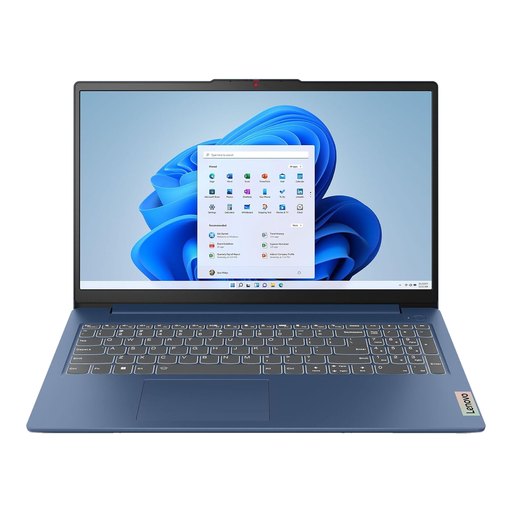 No image available
The 15.6-inch format is worth considering if you want the letter and translation visible together. Confirm this configuration’s brightness and screen finish before relying on it beside a window.
The product name specifies 16GB RAM and a 512GB SSD. Confirm the processor against the seller’s full configuration details before purchase.
 No image available
Its 15.6-inch screen offers a larger format for viewing a letter beside a translation, though the stated 2.30 kg weight is a consideration if you will move the laptop between rooms.
The named variant has a 144Hz FHD display, 16GB RAM and a 1TB SSD. Check the exact panel’s brightness rating and finish for bright-window use; the gaming specification is not, by itself, a reason to choose it for letters.
 No image available
Consider this 14-inch Chromebook if you plan to translate in a compatible browser-based service and move between rooms. Check that any required app works on ChromeOS and confirm the panel’s brightness for your room.
The named configuration has an Intel Core i3 N305 processor, 8GB RAM and 256GB eMMC storage.
 No image available
This 14-inch Chromebook is a compact choice for letter translation if your preferred service works on ChromeOS. Confirm the display’s brightness and finish before choosing it for a bright window.
The product name specifies a WUXGA 1920 × 1200 screen, an Intel Core i3-1315U processor, 8GB RAM and a 256GB SSD.
No: the rating’s measurement basis, the screen finish and reflections in your room all affect the choice. VESA distinguishes peak and full-screen luminance measurements in its DisplayHDR criteria; compare like-for-like ratings where possible and consider changing the screen angle or shading the window.
Choose a 13- or 14-inch format if you will move between rooms and usually translate one letter at a time; consider 15 or 16 inches if you regularly keep the original, translation and notes side by side. Check brightness and finish either way, because screen size does not resolve window glare.
The Consumer Rights Act 2015 provides remedies for faulty goods bought from a trader, including repair or replacement where applicable, as explained by GOV.UK. Keep your order record and contact the seller about the fault; this is distinct from a change-of-mind return.
Back up and erase your personal data before handing it over for reuse or recycling. GOV.UK identifies local household waste recycling centres as a route for waste electrical products; check the arrangements that apply where you live.