What matters when choosing
For mobile-layout debugging in a student room, settle course-software compatibility before committing to Windows or macOS. Then compare the workspace and configuration you will use for both coursework and browser testing.
Windows laptop
Choose when: Your course requires Windows applications alongside browser debugging.
Trade-off: Check the exact processor configuration against specialist software or virtual-machine requirements; a Windows label alone does not settle compatibility.
macOS laptop
Choose when: Your course confirms that its required applications work on macOS and you want that platform for your browser-based workflow.
Trade-off: Imperial College London and Loughborough University caution that some course software may not work on Apple devices; confirm the current programme list before ordering.
| Concern |
What to check |
Who this matters to |
| Responsive debugging |
Check that your browser and developer tools run on the laptop, and plan a final test on a real phone. Chrome for Developers describes Device Mode as an approximation. |
If I need to track down a breakpoint problem quickly, I want to inspect mobile-sized views on the laptop without mistaking emulation for a real-device test. Around 36% of consumers put that debugging workflow first. |
| Coursework multitasking |
Compare memory and SSD capacity against your course requirements. Heriot-Watt University and Loughborough University recommend 16GB of memory and around 500–512GB of storage in their student guidance. |
With an editor, browser tabs and coursework files open together, I need a configuration that fits my working load. That is the primary concern for around 29% of consumers. |
| Course-software compatibility |
Ask your course which operating systems, processor architectures and locally installed tools it supports; do not assume a Chromebook will run required applications. |
I cannot choose by hardware specifications alone if a required course application might not run. Around 14% of consumers make platform compatibility their first priority. |
| Carrying and desk fit |
Compare the exact model’s screen and carrying weight, then confirm that its ports support your intended monitor and peripherals. |
When I move between campus and a small desk, I need a laptop I can carry and a workspace I can use comfortably. For around 21% of consumers, that balance matters most. |
Joybuy laptops for this task
These Windows and Mac laptops offer different ways to set up for browser debugging and coursework. Compare each configuration with your course software, the space on your desk and what you are willing to carry; the lower-memory options call for particular attention to your workload.
 No image available
ASUS Vivobook 14 X1407QA-LY003W Snapdragon X, 16GB RAM, 512GB SSD, Quiet Blue
Consider this 14-inch laptop for browser debugging and coursework if its Snapdragon X Windows-on-Arm configuration supports every application you need.
The named configuration has 16GB RAM and a 512GB SSD. Check course tools and any required virtual machines before choosing it; its 16GB onboard memory is the stated maximum for this configuration.
Joybuy
 No image available
Lenovo LOQ Essential 15ARP11 Ryzen 7 170, RTX 5050, 16GB RAM, 1TB SSD, 15.6-inch 144Hz FHD
This Windows laptop gives you a 15.6-inch screen for browser and coursework windows, but consider its carrying weight if you travel to campus regularly.
Its named configuration includes 16GB RAM, a 1TB SSD and a GeForce RTX 5050. The listed weight is 2.30 kg; do not treat the gaming graphics hardware as a substitute for checking your course software or testing a layout on a real phone.
Joybuy
 No image available
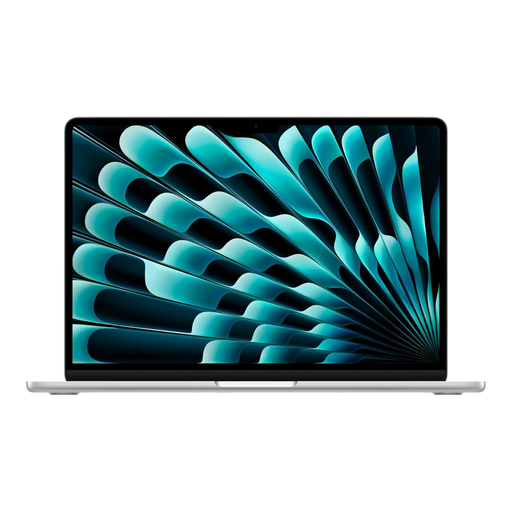
Apple 13-inch MacBook Air (2026) M5, 10-core CPU, 8-core GPU, 16GB, 512GB SSD, Silver
Choose this compact macOS option only after confirming that your programme’s applications work on the MacBook Air configuration.
The product name identifies 16GB unified memory and a 512GB SSD. Apple’s UK M5 MacBook Air specification lists two Thunderbolt 4/USB-C ports with display support; check the connections your monitor and other desk accessories require.
Joybuy
 No image available
Lenovo IdeaPad Slim 3 15IAH8 83ER00G4UK, 15.6-inch, Core i5, 8GB RAM, 512GB SSD
This 15.6-inch Windows laptop may fit a desk-based browser workflow, but compare its memory with the applications you need open together.
Its 512GB SSD matches the storage level in the cited student guidance, while its 8GB RAM is below the 16GB starting point recommended by Heriot-Watt University and Loughborough University. If you work away from power, check expected runtime for your own use.
Joybuy
 No image available
Acer Aspire Lite AL15-36P-C29Z, 15.6-inch FHD, Intel N150, 8GB RAM, 128GB SSD, Silver
For a browser-first workflow, check whether this configuration can also run the development tools your course requires before relying on it for all your work.
Its 8GB RAM and 128GB SSD are below the 16GB and roughly 500–512GB starting configuration in the cited university guidance. Check how the listed Windows 11 Home S Mode affects installation of your required tools.
Joybuy
Common questions
Can browser emulation replace testing on a real phone?
No: Chrome Device Mode is an approximation, not a real mobile device. Chrome for Developers says it can simulate viewport, CPU and network conditions, so use it to investigate layouts quickly, then test on a real target phone when mobile-specific behaviour matters.
Should I choose Windows, macOS or a Chromebook?
Choose the operating system that runs your required course software. Heriot-Watt University, Imperial College London and Loughborough University provide student guidance that supports checking programme requirements: some applications may not work on Apple devices, and a Chromebook may not run or receive support for required software. A web-only course workflow needs confirmation before you rely on a Chromebook.
What specification should I compare first for coding and coursework?
Start by comparing laptops with 16GB of memory and around 500–512GB of SSD storage, then check course compatibility and the exact screen and ports. Heriot-Watt University and Loughborough University recommend those memory and storage levels in student guidance; they are starting points, not requirements for every programme.
What do I need to connect an external monitor at a student-room desk?
Check the exact laptop’s video-output port against the monitor’s input, then see whether your other peripherals need a hub or dock. Imperial College London suggests pairing a laptop with a lightweight external monitor for a flexible setup; Apple specifies display support through the M5 MacBook Air’s Thunderbolt 4/USB-C ports, while other models need their own port check.


