Responsive-layout developers with limited desk depth
If your editor, browser and developer tools need to share a compact workspace, consider both the laptop’s footprint and how readable your usual window arrangement will be.


Choose a compact laptop around the testing tools you must run, not screen size alone: a macOS-centred workflow points towards a MacBook Air, while local Android Studio use calls for particular care over processor architecture because Android Developers does not currently support Windows machines with ARM-based CPUs. On a small desk, balance room for your editor and browser tools against the ports you need. Chrome for Developers describes device emulation as an approximation, so plan to check important behaviour on real mobile devices too.
If your editor, browser and developer tools need to share a compact workspace, consider both the laptop’s footprint and how readable your usual window arrangement will be.
If you use Android Studio, virtual devices or a connected Android phone, establish which tools must run locally before choosing an operating system, memory capacity and storage capacity.
If a phone, monitor, storage device and wired accessories share your desk, count the connections you use simultaneously. The right built-in ports may matter more to you than an especially slim chassis.
Decide whether testing stops at browser tools and a physical phone or requires a local Android emulator; then assess the working area, capacity and connections for that workflow.
| Concern | Buying check | Who this matters to |
|---|---|---|
| Tool compatibility | List your required editor, browsers and local testing tools; check the exact operating system and processor architecture. Android Developers says Windows machines with ARM-based CPUs are not currently supported for Android Studio. | If I need Android Studio locally, I cannot choose a laptop on size alone and discover later that my testing tools will not run. Roughly 36% of consumers put tool compatibility first. |
| Working area | Compare screen size, aspect ratio and your usual display scaling with the space available for an editor and browser tools. If you use a monitor, check the laptop’s display connections. | When desk depth is tight, I need to read code and inspect a narrow viewport without giving too much space to the laptop itself. For roughly 37% of consumers, a usable compact workspace is the primary concern. |
| Local workload capacity | Check configured memory and storage against your projects, SDK images and expected number of virtual devices; find out whether the chosen capacities can be upgraded. | If I keep virtual devices and several development tools open, I need capacity for that workload rather than just a browser session. Local workload capacity comes first for roughly 18% of consumers. |
| Desk connections | Count simultaneous phone, display, charging and accessory connections. Compare that list with the exact model’s ports and any compatible hub you would need. | With several cables on a small desk, I would rather know in advance whether each device can connect without rearranging the setup. Around 9% of consumers make connection convenience their primary concern. |
Chrome for Developers calls Device Mode a first-order approximation. A layout that looks right in an emulated viewport may still behave differently in a target mobile browser or on a physical device.
Use emulation to iterate quickly, then check important flows on the phones and browsers your work targets.
A compact Windows laptop may suit browser work but not a required local Android Studio workflow. Android Developers says Windows machines with ARM-based CPUs are not currently supported.
If Android Studio is essential, confirm the chosen laptop’s architecture and check support for every other required development tool before ordering.
Keeping Android virtual devices, SDK images, projects and other tools locally changes the capacity you need. A fixed configuration gives you less room to change that choice later.
Estimate the tools and virtual devices you expect to keep open or installed, then check the exact laptop’s configured capacities and upgrade options.
Apple, Lenovo and ASUS list different connection arrangements for the compact models discussed here. Dell also states that a charger is not included with its cited XPS 13 configuration.
Check the final configuration against the devices you connect at once, including its charging arrangement and what comes in the box.
A compatible hub, display cable, adapter or charger may need to be obtained separately.
These compact lines illustrate different workflow and connection choices; check the configuration you intend to buy rather than applying a family specification to every variant.
The current 13.6-inch MacBook Air line is relevant when your editor, development tools and browser-testing workflow support macOS.
The 13.3-inch ThinkPad X13 Gen 6 offers a compact route for a Windows-oriented workflow.
The Zenbook S 13 OLED UX5304 is a 13.3-inch option for buyers considering a 16:10 display and built-in desk connections.
The cited XPS 13 DX13260 configuration is a compact Windows option worth assessing against a desk’s connection and charging needs.
The 13-inch Surface Laptop is relevant to a browser-first Windows workflow if its required tools support its processor architecture.
These choices span a 13-inch-class macOS-centred setup and compact alternatives for browser-first work, including 14-inch models. Check your required software before choosing between them; the products do not all suit local Android Studio use.
 Image unavailable
Consider this configuration if your development tools support macOS and you want the listed memory and storage for several local projects. The title specifies a 10-core CPU and 10-core GPU; check the exact ports and any adapters needed for your desk.
 Image unavailable
This configuration is another compact choice for a macOS-compatible workflow, with a different listed memory capacity from the Midnight variant above. Its title specifies a 10-core CPU and 10-core GPU; confirm the display and ports of this exact configuration before planning a monitor or wired accessories.
 Image unavailable
Assess this 14-inch model for browser-first work only after checking your required tools and extensions on Windows on ARM. Android Developers says Windows machines with ARM-based CPUs are not currently supported for Android Studio, so it is not a choice for that required local workflow.
 Image unavailable
If your layout work is browser-first, check that your editor, browser tools and testing process work as needed on ChromeOS. The title specifies an Intel Core i3-1315U and a 1920 × 1200 display; assess the listed memory and storage against the projects you keep locally.
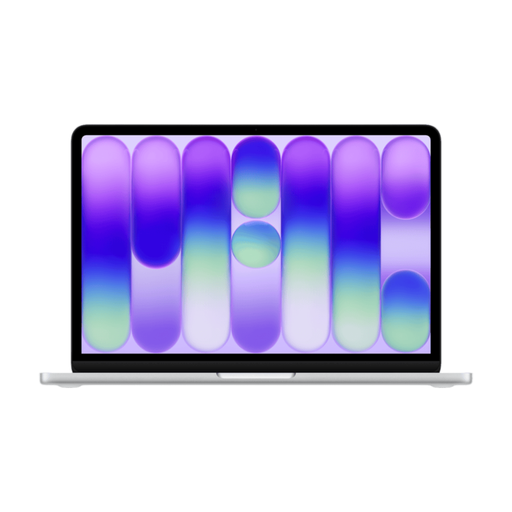 Image unavailable
The 13-inch size is worth considering where desk space is limited, but establish compatibility with your development tools before choosing it. The title specifies a 6-core CPU and 5-core GPU; check whether its listed memory and storage suit your workload, as well as its ports and display shape.
No. Chrome for Developers describes Device Mode as a first-order approximation: use it for quick responsive checks, then test uncertain behaviour and important flows in the target browsers on real mobile devices.
Not necessarily. Chrome Device Mode can help you inspect a responsive viewport, and remote debugging can inspect a page running on a physical phone. Plan for Android Studio or an emulator when your workflow specifically requires Android app or virtual-device testing.
Do not choose one for a required local Android Studio workflow without checking current support. Android Developers says Windows machines with ARM-based CPUs are not currently supported; also confirm compatibility with your other essential tools.