Responsive-menu checker
You resize pages, inspect breakpoints and debug menus in Chrome or Edge, and want a laptop that is practical to use alongside DevTools.


Choose the browser-testing route before comparing processor specifications: a Windows laptop can handle responsive menu checks in Chrome or Edge, while a Mac is the route to consider if Safari Responsive Design Mode is required. Prioritise a screen and connection setup that suits your inspection workflow, but check the finished menu on real target phones too: Chrome for Developers and Microsoft Learn describe device emulation as an approximation.
You resize pages, inspect breakpoints and debug menus in Chrome or Edge, and want a laptop that is practical to use alongside DevTools.
You need to inspect how a menu responds to changes in viewport size and pixel ratio using Safari Responsive Design Mode and Web Inspector, as described by Apple Developer Documentation.
You use laptop emulation for quick checks, then test the finished menu on real target phones. Chrome for Developers and Microsoft Learn caution that emulation does not reproduce every aspect of mobile behaviour.
Start with the browsers your release checks require, then consider how you will validate the menu on phones and whether the laptop works comfortably at your desk or on the move.
| Concern | What to check | Who this matters to |
|---|---|---|
| Browser coverage | List the browsers required for release. If Safari Responsive Design Mode is essential, assess a Mac; for Chrome or Edge inspection, check the intended DevTools workflow. | If Safari must be part of my menu checks, I need the right browser tools before considering other laptop features. Around 36% of consumers put required browser and operating-system coverage first. |
| Real-phone validation | Plan access to representative phones and browsers; if you intend to debug from the laptop, check device, cable and browser compatibility. | I want to catch menu interaction problems before release, rather than relying on a resized browser window. For around 29% of consumers, real-phone validation is the primary concern. |
| Portable workspace | Compare the exact screen size, resolution and memory configuration with the way you arrange browser tabs and DevTools. | When working away from a desk, I need enough screen space to inspect the menu without losing sight of my tools. Around 21% of consumers chiefly prioritise a portable multitasking workspace. |
| Desk connectivity | Match documented display support and ports to your monitor and accessories; confirm the exact configuration’s included charging equipment. | My regular setup uses a monitor and peripherals, so connection choices shape which laptop is convenient to use. Desk connectivity comes first for around 14% of consumers. |
Chrome for Developers and Microsoft Learn describe device emulation as an approximation; Microsoft Learn also notes that browser emulators do not reproduce differences in web API or CSS support.
Use emulation to find layout problems quickly, then check the release version on representative phones and browsers.
A problem discovered only on a phone can mean revisiting a menu after the laptop checks are complete.
Apple Developer Documentation describes a Safari-specific workflow for previewing viewport and pixel-ratio changes. Chrome or Edge checks alone do not establish how a menu behaves in Safari.
Write down the browsers required for release approval before settling on an operating system.
If Safari checks become mandatory later, you may need access to a Mac or another suitable testing arrangement.
Dell UK says a charger is not included with its cited XPS 13 configuration; ASUS UK says charger inclusion varies by country, region and model. Lenovo UK lists a specific adapter and support package for its cited ThinkPad configuration, not every ThinkPad.
Check the exact configuration’s box contents, charging requirements, ports and support terms before ordering.
Your setup may call for a separate compatible charger, adaptor or dock.
A family name does not identify the memory, storage, display or connections of the particular laptop you are considering.
Compare the full model and configuration details against the browser, workspace and monitor setup you intend to use.
MacBook Air is relevant when Safari Responsive Design Mode is part of the required menu-testing workflow.
ThinkPad X1 Carbon Gen 13 is a portable Windows option to assess for Chrome or Edge menu checks.
XPS 13 is a compact Windows line to consider for Chrome or Edge DevTools work.
Zenbook 14 UX3480 is relevant if a portable Windows workspace with several connection types suits your testing setup.
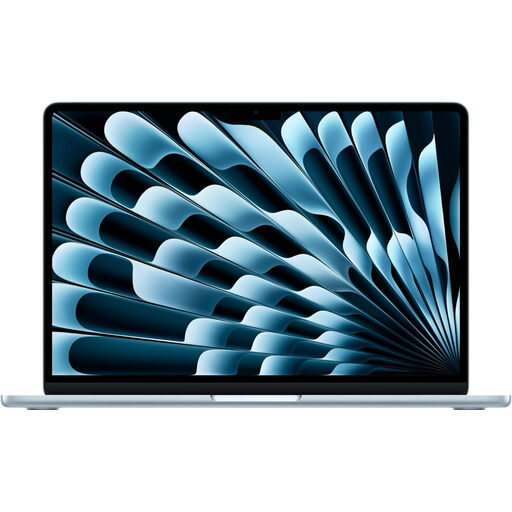
This MacBook Air option is relevant if your mobile-menu workflow requires Safari Responsive Design Mode. Check its connections against any monitor or accessories you plan to use, and retain real-phone checks for the finished menu.
 No image available
Consider this configuration if Safari-focused menu inspection is part of your workflow. Its listed M5 chip has a 10-core CPU and 10-core GPU, alongside 16GB memory and a 1TB SSD. Confirm that its ports and external-display support suit your intended setup; laptop emulation still needs to be followed by checks on real target phones.
No. Chrome for Developers and Microsoft Learn describe device emulation as an approximation, not a test on actual mobile hardware. Use it for quick viewport checks, then test the finished menu on the phones and browsers relevant to your site.
Consider a Mac when Safari Responsive Design Mode is required for your menu checks. Apple Developer Documentation says it previews changes in viewport size and pixel ratio; if your required laptop checks use Chrome or Edge DevTools, a Windows route can serve that workflow.
A gaming GPU is not a stated requirement of the responsive-inspection workflows described by Chrome for Developers, Apple Developer Documentation or Microsoft Learn. Choose the required browser route and a workable screen and multitasking configuration; assess other demanding workloads separately.
Check the exact laptop configuration and seller bundle rather than relying on the family name. Dell UK says its cited XPS 13 configuration excludes a charger, ASUS UK says inclusion varies by region and model, and Lenovo UK lists a 65W USB-C UK adapter for its cited X1 Carbon configuration.