Choose the laptop around your required digital audio workstation (DAW), plug-ins and audio interface before comparing hardware. For a student aligning multitrack takes, Ableton recommends at least 16GB of memory and a high-speed SSD in the 500GB–2TB range; larger, plug-in-heavy sessions place greater demands on processor capacity and cooling. A portable macOS or conventional Windows laptop may suit smaller sessions, while Windows on ARM calls for especially careful checks of drivers and essential software.
Who this setup suits
Student multitrack editors
If you mainly align and edit recorded takes at a small desk, start with software and audio-interface compatibility. Ableton recommends 16GB or more of memory for projects beyond its minimum requirements; gaming-focused graphics need not drive this audio-only choice.
Students working across locations
Moving between classes, rehearsals and your room makes size and connections important together. Check that your interface, storage and charger can fit into the setup you plan to carry and use.
Creators expecting larger sessions
If take alignment will grow into sessions with many plug-ins or software instruments, assess processor capacity, cooling and memory options against those future projects rather than choosing solely for today’s editing task. Ableton identifies these as considerations for demanding sessions.
What to check before buying
Start with the software and interface you must use, then size the memory and storage for your largest likely session. Treat portability and connections as one desk-and-carrying decision: a compact laptop still needs a workable way to connect your equipment.
| Concern |
Buying check |
Who this matters to |
| Software and interface compatibility |
Check the exact DAW version, operating system, processor architecture, interface driver and essential plug-ins. On Windows on ARM, check licence tools too. |
If my course requires a particular DAW and interface, I need both to work on the laptop I choose. Around 31% of consumers put this compatibility need first. |
| Headroom for larger sessions |
Assess memory, processor capacity and cooling against your largest expected project, especially if it uses many plug-ins or instruments. |
When my sessions grow beyond aligning takes, I want enough room to run the tools I use together; roughly 31% of consumers make project headroom their primary concern. |
| Portability and connections |
Count the connections needed at once, including the charger, interface and external storage. Check for a compatible direct interface connection. |
Carrying my laptop between classes is useful only if I can set up my interface at a cramped desk; about 23% of consumers prioritise that combination. |
| Capacity over time |
Confirm the exact memory and SSD configuration, and whether either can be upgraded on that model. |
If I plan to keep sessions and sound content on the laptop throughout my course, I care about its capacity and scope to expand; around 15% of consumers place that need first. |
Mistakes to avoid
-
Buying only to the DAW’s minimum requirements
Ableton lists 8GB of memory as a Live 12 minimum, but recommends 16GB or more and a high-speed SSD for more demanding projects. A small practice session may not reflect the projects you will edit later.
Choose memory, storage and cooling with your largest likely session in mind, not just the first recording you intend to align.
Growing sessions may also mean managing files on external storage or replacing a configuration that cannot be expanded.
-
Assuming a hub will suit any audio interface
Focusrite warns that USB hubs can cause noise and connection problems with audio devices. A laptop’s port count alone does not establish that your interface has a suitable direct connection.
Check the interface connector, laptop port and cable together before choosing a dock or relying on an adapter.
-
Treating Windows on ARM like conventional Windows
Ableton supports Live on Windows ARM through Prism emulation, while Steinberg’s October 2024 announcement described native ARM previews for specified software. Neither establishes support for every third-party driver or plug-in.
Check each essential application, interface driver and licence tool for the intended ARM laptop. If one is indispensable and incompatible, consider a compatible conventional Windows or Mac configuration instead.
-
Matching products by appearance rather than configuration
Laptops with similar names can differ in memory, SSD capacity or included equipment. Those differences matter when you plan to keep multitrack sessions locally and connect an interface at your desk.
Compare the full model identifier, memory, storage, charger inclusion and warranty terms on the particular product page.
Relevant brands to consider
Apple
MacBook Air is a portable macOS option for the editing setup; MacBook Pro offers configurations to consider when projects become more demanding.
- Apple’s UK specifications list a 13-inch MacBook Air configuration with 16GB unified memory and a 512GB SSD.
- That 13-inch configuration has two Thunderbolt 4/USB-C ports and a headphone jack. Plan how you will connect your interface and storage, and check support for the selected macOS version.
ASUS
The Intel-based Zenbook 14 UX3480 line is a compact conventional Windows option.
- ASUS lists UX3480 configurations with 16GB LPDDR5X memory, a 512GB NVMe SSD and several connection types, including USB-A and Thunderbolt 4.
- ASUS lists 16GB as the line’s maximum system memory. Check that this fixed capacity and the exact DAW and interface-driver support suit your expected sessions.
Lenovo
The ThinkPad E14 Gen 6 Intel line is worth considering if you want a conventional Windows laptop with an upgrade-focused ownership plan.
- Lenovo describes memory and storage in this line as upgradeable.
- Configurations vary. Check the exact model’s installed memory and SSD rather than assuming it meets a 16GB and 500GB-or-larger planning target.
Microsoft
Surface Laptop offers a Windows-on-ARM route for consumers prepared to verify their complete audio setup.
- Microsoft lists USB-C, USB-A and a headphone jack on the 13-inch Surface Laptop.
- Check the exact DAW, interface driver, plug-ins and licence tools for its Snapdragon architecture; support for an application does not establish support for every part of a recording setup.
Joybuy laptop options
These laptops cover portable macOS editing, conventional Windows setups and a larger-capacity Windows configuration. Compare each exact model with your required DAW, interface and desk connections before choosing.
 No image available
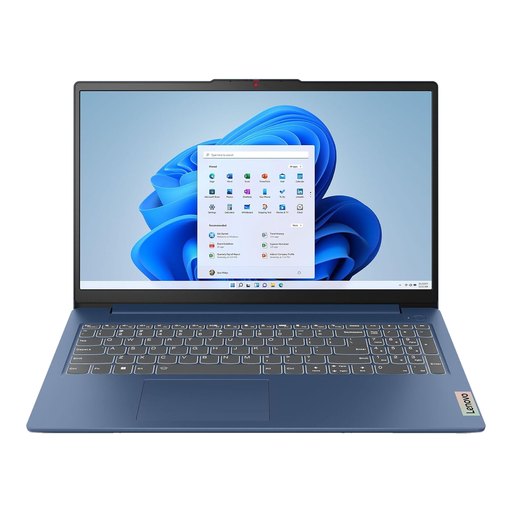
Lenovo IdeaPad 3 15IAU7, 82RK0177UK
Consider this 15.6-inch Windows laptop if you want 16GB RAM and a 512GB SSD for your editing sessions. Its listed Intel Core i7 processor does not replace a check of your exact DAW and interface requirements.
Check that your interface has a suitable direct connection and that the laptop’s size works for the places you carry it.
View on Joybuy
 No image available
MSI Modern C2RMG-282UK, 15-inch FHD
This Intel Core 5 Windows model offers a 15-inch FHD display, 16GB DDR IV RAM and a 512GB SSD for a student editing setup.
Confirm the full processor model against your DAW’s requirements, as well as the interface connector and essential plug-ins.
View on Joybuy
 No image available
Apple 15-inch MacBook Air M5, 16GB/512GB, Starlight
For a portable macOS editing setup, this 2026 MacBook Air pairs an M5 chip with 16GB memory and a 512GB SSD. The listed chip has a 10-core CPU and 10-core GPU.
Confirm your DAW, plug-ins and interface support the macOS version supplied, and plan the connections needed for your interface and any external storage.
View on Joybuy
 No image available
Lenovo Legion Pro 7 16IAX10H, 83F5000UUK
Consider this 16-inch Windows configuration if your work extends to large sessions and you have a reason to choose its 64GB RAM and 2TB SSD. Its title also lists an Intel Core Ultra 9 processor and NVIDIA GeForce RTX 5090 graphics; dedicated graphics are not a core requirement for aligning audio takes.
Check software and interface compatibility, then assess whether the machine is practical to carry between your working locations.
View on Joybuy
 No image available
HP OmniBook X Flip 16-as0004na, 16-inch
This 2-in-1 Windows laptop has a 16-inch touchscreen, an Intel Core Ultra 5 226V processor, 16GB RAM and a 512GB SSD. Consider the larger display if it fits your desk and carrying needs.
Before choosing it for an audio interface, check the available ports and support for your DAW, driver and plug-ins.
View on Joybuy
Common questions
Is 8GB RAM enough to align multitrack takes?
8GB meets Ableton Live 12’s stated minimum, but 16GB is the more useful planning target if you expect larger projects or plug-ins. Ableton recommends 16GB or more; choose against the sessions you expect to run, not the minimum needed to open the software.
Do I need dedicated graphics for audio alignment?
Dedicated graphics are not a core requirement for the stated audio task. Ableton describes a dedicated GPU as optional for video work, while its guidance for demanding audio projects focuses on processor capacity, memory, SSD storage and cooling.
Can I connect my USB audio interface through a hub?
A direct compatible connection is preferable where possible. Focusrite warns that USB hubs can cause noise and connection problems, so check your interface connector against the laptop’s ports before relying on a hub or dock.
Will Ableton or Cubase work on a Windows-on-ARM laptop?
Support depends on the exact software version and the rest of your setup. Ableton supports Live on Windows ARM through Prism emulation; Steinberg’s October 2024 announcement concerned native ARM previews for specified software. Check your intended DAW release, interface driver, plug-ins and licence tools individually before buying.


