For students who need to write coursework, use course software and complete online assessments in different locations, a current Windows or macOS laptop is generally the safer primary-device choice. A tablet with a keyboard can suit reading and notes, but check its compatibility with every required application and assessment tool before relying on it; chargers, adapters and hotspots address specific access problems rather than replacing a suitable device. University of Warwick, Loughborough University and Brunel University London all emphasise the importance of matching a device to study tasks and course requirements.
Who needs what?
Coursework and software users
If your course involves substantial writing, online assessments or specialist applications, establish the required operating system and software before choosing a tablet as your main device. Loughborough University and Brunel University London caution that tablet software can limit coursework and assessment tasks.
Students studying across locations
Moving between home, campus, libraries and work makes carrying weight, charging opportunities and access to course platforms practical buying concerns. University of Warwick recommends a portable laptop for use across study locations; check connectivity where you expect to work.
Students with accessibility requirements
Check that the device works with the assistive software and input methods you need, rather than choosing by general specifications alone. The University of Sussex describes assistive-technology support, while GOV.UK sets out Disabled Students’ Allowance for eligible study-related costs.
What should you check before buying?
Start with your course’s software and assessment requirements, then check whether the device will work where you study and how you use it.
| Concern |
What to check |
Who this matters to |
| Coursework compatibility |
Confirm required applications, assessment tools and operating systems with your department. Check its memory and storage guidance for your course. |
If my coursework needs desktop software or online assessments, I need a device that can run those tools. About 33% of consumers put coursework compatibility first. |
| Portability and connection |
Check carrying weight, charging arrangements and your institution’s network instructions. Consider mobile-data backup only where you need it. |
When I move between study locations, I need to carry my device and stay connected to course work. For about 27% of consumers, mobility and connection are the primary concern. |
| Accessibility fit |
Check assistive-software and peripheral compatibility with your university disability service; ask about a needs assessment where relevant. |
If I use screen reading, speech-to-text or alternative input, those tools must work with my study device. Accessibility fit comes first for about 20% of consumers. |
| Longevity and support |
Check whether an existing or refurbished device receives security updates. For a purchase, check battery condition, warranty coverage and the repair route. |
If I want a device to remain usable throughout my course, updates and practical support matter alongside its specifications. About 20% of consumers prioritise longevity and support. |
Buying pitfalls
-
Assuming a keyboard makes a tablet suitable for every course
A keyboard helps with typing but does not make desktop applications or assessment tools available on a tablet. Loughborough University and Brunel University London warn that tablet use can be limiting for these tasks; check Chromebook compatibility too if you are considering one.
Ask your department for its required software and assessment platforms before choosing your primary device.
-
Reading a battery claim as study-day runtime
A quoted battery figure may not represent a day of video calls, coursework and connected use. A standby figure describes something different from active study.
Check what activity the claim measures and plan how you would charge the device during a long day. Confirm charging compatibility before adding a portable charger.
-
Overlooking updates on an older device
Cardiff University treats devices that cannot receive current security updates as obsolete, and Loughborough University requires a supported, up-to-date operating system for its eduroam connection.
Before buying refurbished equipment, check the exact model’s update support and your own institution’s network and application requirements.
-
Choosing generic specifications over accessibility fit
Memory and storage figures alone do not establish whether assistive software, alternative input or other required equipment will work together.
Speak to your university disability service about your requirements before buying independently. Check the seller’s warranty and repair arrangements for any device you expect to depend on throughout your course.
Relevant brands to consider
Apple
MacBook Air is a macOS laptop route if your course software and assessment tools work on macOS.
- Apple rates its current UK MacBook Air line for up to 18 hours of battery life; that figure is not a promise of runtime for your study workload.
- Confirm any Windows-only course applications before choosing a Mac for its portable design.
Microsoft
Surface Laptop is a Windows laptop line with physical-keyboard and touchscreen configurations.
- Microsoft lists USB-C, USB-A and audio connectivity in its UK Surface Laptop range; check the ports on the particular configuration.
- For an ARM-based configuration, confirm that required course applications and peripherals work before buying.
Lenovo
ThinkPad education models are worth examining if you want a conventional laptop workflow, subject to the exact model’s specification and support.
- Lenovo describes its ThinkPad 11e education line as reinforced for school environments.
- An education label does not establish that a particular model has the updates, software compatibility or battery capability your university work requires.
Joybuy laptop selections
These laptops are options to examine for a primary study device across home and campus. Match the exact configuration to your course requirements before choosing; a laptop’s listed specifications alone do not confirm application or assessment compatibility.
 Image unavailable
ASUS Vivobook 15 X1504VA, Core 5 120U, 24 GB/1 TB SSD
Consider this laptop for coursework if its software configuration meets your department’s requirements. The listed variant has a 15.6-inch display, Intel Core 5 120U, 24 GB memory and a 1 TB SSD.
Check active-use battery runtime if you need to study away from charging points; a standby-time figure does not establish it.
View on Joybuy
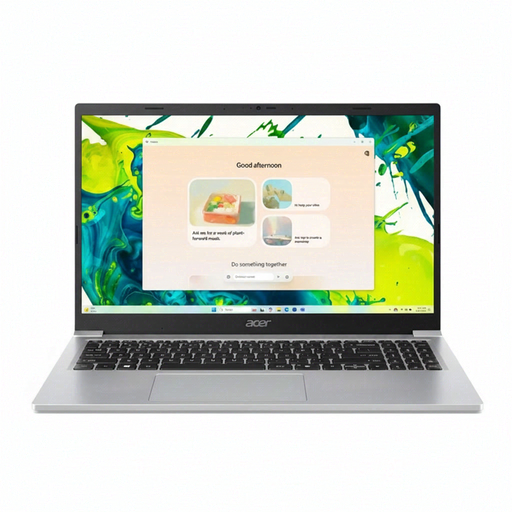 Image unavailable
Acer Aspire Lite AL15-36P-C29Z, Intel N150, 8 GB/128 GB SSD
This 15.6-inch Full HD laptop is an option for students whose required applications fit its configuration. It lists an Intel N150, 8 GB memory and a 128 GB SSD.
Confirm whether its Windows 11 Home configuration is in S Mode before relying on particular course applications. Also check whether 128 GB provides enough space for your work.
View on Joybuy
 Image unavailable
HP OmniBook X Flip 16-as0004na, Core Ultra 5 226V, 16 GB/512 GB SSD
Consider the convertible format if touch interaction would be useful alongside laptop-based coursework. This variant lists a 16-inch touchscreen, Intel Core Ultra 5 226V, 16 GB memory, a 512 GB SSD and Windows 11 Home.
Check its weight and active-use battery runtime before choosing it for frequent carrying, as well as compatibility with your course tools.
View on Joybuy
 Image unavailable
ASUS Vivobook 14 X1407QA-LY003W, Snapdragon X, 16 GB/512 GB SSD
This Vivobook 14 is an option for portable study if your required software works on its Snapdragon X Windows-on-ARM configuration. The variant lists 16 GB memory and a 512 GB SSD.
Check course applications, assessment tools and peripherals against this exact configuration. Confirm carrying weight and active-use battery runtime if either affects your daily travel.
View on Joybuy
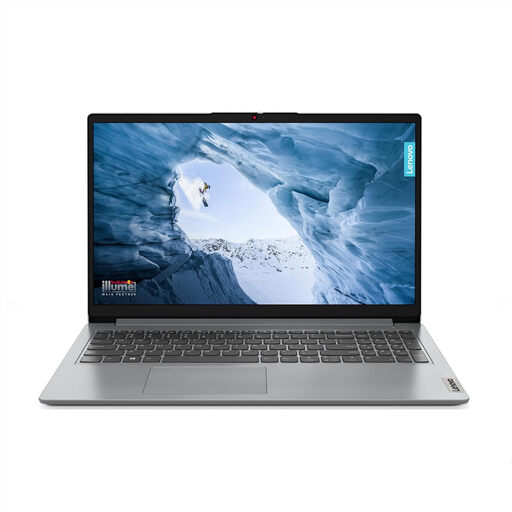 Image unavailable
Lenovo IdeaPad 1, Ryzen 3 7320U, 8 GB/128 GB SSD, S Mode
This 15-inch Full HD laptop is an option for study tasks that fit its Windows 11 Home in S Mode configuration. It lists an AMD Ryzen 3 7320U, 8 GB memory and a 128 GB SSD.
Check required-app and assessment compatibility with S Mode, and whether the storage capacity meets your course needs. Treat the listed battery-life figure as a claim rather than your expected study runtime.
View on Joybuy
Frequently asked questions
When can a tablet with a keyboard be my main study device?
It can be a primary device if your course confirms that its required software, document work and assessment tools run on that tablet. Reading and note-taking alone are not enough to establish suitability for coursework or exams; Loughborough University and Brunel University London both caution about these limits.
Does my personal device need a current operating system for university Wi-Fi?
Check your own institution’s rules before connecting. Loughborough University requires a supported, up-to-date and licensed operating system for eduroam, while Cardiff University considers devices unable to receive current security updates obsolete under its device guidance.
Could Disabled Students’ Allowance help with study technology?
GOV.UK states that Disabled Students’ Allowance can support eligible study-related costs arising from a disability, long-term illness or mental-health condition. Ask the relevant Student Finance body and your university disability service about eligibility and assessment before purchasing equipment independently.
What if a laptop I buy is faulty?
Where the repair-or-replacement remedy under section 23 of the UK Consumer Rights Act 2015 applies, the trader must act within a reasonable time, without significant inconvenience, and bear necessary costs. Keep your purchase record and details of the fault; a seller’s warranty is separate from statutory rights.


