Two-monitor photo cataloguers
If you want folders, ratings or metadata visible beside an image view, decide whether the laptop screen counts as one of your two displays. Then check the connection path for the arrangement you actually want.


Choose the screen layout first: a laptop display plus one monitor is a different requirement from two external monitors. Buy only after checking that the exact laptop, any dock and the cables support your monitors at the intended resolution and refresh rate. If you use Lightroom Classic, Adobe recommends 16 GB or more of memory and a fast SSD; plan storage for the growing archive and its backup separately.
If you want folders, ratings or metadata visible beside an image view, decide whether the laptop screen counts as one of your two displays. Then check the connection path for the arrangement you actually want.
Frequent imports and a substantial local collection make working storage and a separate preservation plan important. If Lightroom Classic is part of your workflow, its memory and SSD recommendations also become relevant.
If you carry the laptop away from your workspace, a compatible dock may make it easier to reconnect displays and peripherals at the desk. The laptop must still support the dock’s video connection and charging arrangement.
Settle the display layout before comparing memory or storage: neither a dock’s port count nor a laptop’s USB-C socket alone establishes that your intended monitors will work.
| Concern | What to check | Who this matters to |
|---|---|---|
| Display compatibility | Confirm whether you need one or two external monitors, then check the exact laptop and any dock against their resolutions, refresh rates and connections. | If I need two external monitors, a dock with two outputs is no use unless my laptop can drive them. Around 36% of consumers put confirmed display compatibility first. |
| Archive storage | Allow for originals, catalogues and exports as the collection grows; plan an additional copy rather than relying on the internal SSD alone. | When my archive keeps growing, I need somewhere to keep the files without making one laptop their only home. Around 29% of consumers make archive capacity and preservation their primary concern. |
| Photo-software workflow | Name the software you will use. For Lightroom Classic, compare configurations with Adobe’s recommended 16 GB or more of memory and fast SSD storage. | If I import and sort photos regularly in Lightroom Classic, meeting its minimum memory requirement is not my preferred starting point. Around 21% of consumers prioritise the catalogue and preview workflow. |
| Portable desk setup | If you want one desk connection, check dock video compatibility and whether its charging output suits the laptop. | I take my laptop away from the desk but want to reconnect my workspace without handling several separate leads. Around 14% of consumers put that desk flexibility first. |
HP says full video capability on its Thunderbolt 4 Ultra 280W G6 Dock requires a suitable host video mode. A dock’s display specification does not establish what every connected laptop can run.
Match the exact laptop and dock models to your monitors’ resolution, refresh rate and cable connections before ordering.
The laptop screen plus one monitor and two external monitors call for different checks. Apple, for example, specifies external-display support by MacBook Air model rather than as a feature of every generation.
Write down your intended layout first, including whether the built-in screen will remain in use.
Adobe lists 8 GB as the minimum for Lightroom Classic but recommends 16 GB or more. That distinction matters if Lightroom Classic will be central to repeated imports and catalogue work.
Compare your intended configuration with Adobe’s recommendations for the features and displays you plan to use.
Space for active files does not provide another copy if the laptop or its storage fails. Canon Europe emphasises reliable storage and transfer for images that cannot be recreated.
Plan for archive growth and keep an additional copy of irreplaceable photos.
A macOS option if you want a MacBook Air configuration with documented external-display support.
A Windows laptop and Thunderbolt dock route for a fixed workspace.
A ThinkPad and dock route for buyers willing to check a documented model combination.
A business-laptop and dock route where the host port’s video mode needs particular attention.
These choices cover two different layouts: the M5 MacBook Air models have Apple-documented support for up to two external displays, while the ASUS Zenbook DUO offers two screens built into the laptop. Check your exact monitor connections before choosing an external-display setup.
 No image available
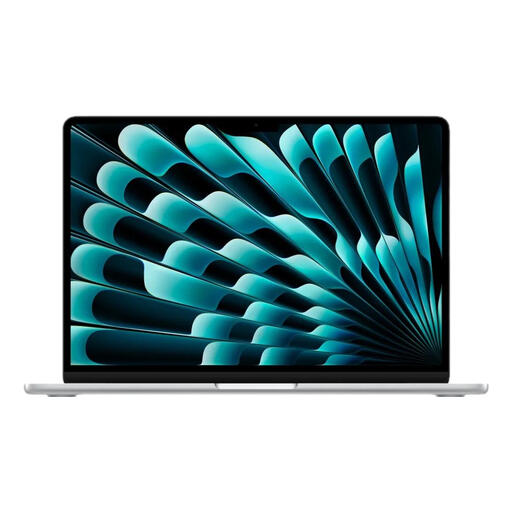
A macOS option for a desk with two external monitors, subject to checking the intended resolutions, refresh rates and connections against Apple’s M5 MacBook Air specification.
This listed variant has an M5 chip with a 10-core CPU and 10-core GPU, 24GB memory and a 1TB SSD. Keep a separate copy of the photo archive.
 No image available
Consider this macOS configuration if you want two external monitors and 16GB memory for a Lightroom Classic-style archive workflow. Confirm your monitors and connections against Apple’s M5 display specification.
The listed variant has an M5 chip with a 10-core CPU and 10-core GPU, plus a 1TB SSD. Internal storage still needs a separate archive backup plan.
 No image available
The 15-inch built-in display may suit you if you also organise photos away from your external-monitor desk. Check your planned external displays against Apple’s M5 MacBook Air specification.
The title lists an M5 chip with a 10-core CPU and 10-core GPU, 16GB memory and a 1TB SSD. Confirm the delivered memory and storage configuration before ordering, and keep a separate archive copy.
 No image available
Its two built-in screens offer a way to organise photos across two displays without relying on an external monitor. If you also want external monitors, check the exact laptop’s output support separately.
The listed configuration includes an Intel Core Ultra 7 255H, 16GB LPDDR5X memory and a 1TB SSD. Check the exact panel resolution before ordering, as the supplied display specifications conflict, and plan a separate archive backup.
No. The laptop’s USB-C port must provide the video mode required by the chosen connection or dock. HP, for example, says full video capability on its Thunderbolt 4 Ultra 280W G6 Dock requires host support for DisplayPort Alt Mode, Thunderbolt 3 Alt Mode or USB4.
Not necessarily: the laptop display plus one external monitor may need only one suitable display connection. A dock can make a fixed desk easier to reconnect, or form part of a two-external-monitor setup, but its video and charging capabilities must match the laptop.
Adobe lists 8 GB as the minimum for Lightroom Classic and recommends 16 GB or more, alongside a fast SSD. If you plan to use higher-resolution displays or accelerated features, check Adobe’s graphics guidance for that workload too.
For a UK online order, GOV.UK says you can notify the seller that you are cancelling within 14 days of receiving the item, then have another 14 days to return it. Faulty or misdescribed goods are a separate matter: remedies depend on the circumstances and should not be treated as merely a retailer’s change-of-mind policy.