Gallery publishers with few free sockets
If you sort, upload and publish albums away from a convenient outlet, charging flexibility and the time you can work unplugged matter alongside the laptop itself.


For photo-gallery work where sockets are scarce, start with a laptop whose charging method and manufacturer-rated battery life suit your time away from a plug, then check its display, storage and software compatibility. A portable USB-C Power Delivery model can simplify charging, while a larger creator laptop may suit demanding local edits but bring a bulkier power setup. Battery ratings for web use do not tell you how long photo editing and uploads will run.
If you sort, upload and publish albums away from a convenient outlet, charging flexibility and the time you can work unplugged matter alongside the laptop itself.
If you select and present photographs, look at the exact display’s stated colour capability and make room for your working files, editing tools and gallery workflow.
If you process large batches or work with demanding desktop tools and high-resolution files, you may accept a larger laptop and a more substantial charging arrangement.
Decide how long you need to work away from a socket before choosing between a portable gallery-workflow laptop and hardware aimed at heavier local editing.
| Concern | What to check | Who this matters to |
|---|---|---|
| Unplugged work and charging | Compare the exact model’s battery-test conditions and charging method. For a USB-C charger, confirm Power Delivery support and the required wattage. | If I am arranging and uploading albums where outlets are occupied, I need a manageable way to keep working. Around 42% of consumers put power access first. |
| Image review and photo storage | Check the exact display variant’s colour specifications and whether its storage accommodates your originals, exports and working files; plan a separate backup. | When I choose which photographs to publish, I want a screen with stated colour capability and space for my library. Image review is the primary need for around 33% of consumers. |
| Software and local editing | Check the requirements for your editor, gallery builder, plug-ins and import tools on the chosen operating system and processor. | If I edit large batches locally, my applications and their supporting tools need to run on the machine I choose. Roughly 25% of consumers prioritise local editing capacity. |
Manufacturer ratings reflect particular tests, not a promise for your editing and upload sessions. Microsoft notes that actual battery life can vary substantially with use, settings and connectivity.
Compare ratings for exact models, but plan where you could charge during a longer session rather than assuming a web-use figure will cover it.
A larger photo-work configuration may need a less convenient power arrangement: Lenovo lists a 245W UK AC adapter for the cited Yoga Pro 9i configuration.
Check the included adapter and supported charging method before choosing demanding local-editing hardware for a socket-limited room.
A USB-C connector alone does not establish the laptop’s charging requirements or the safety of a replacement charger. UK product-safety reporting has identified a laptop charger presenting fire and electric-shock risks.
Use the supplied charger or a suitable replacement that meets the laptop manufacturer’s requirements, and stop using damaged plugs or cables.
A larger panel gives you more viewing space, but its diagonal measurement does not describe its colour capability. Apple and Lenovo state different display characteristics for the specific models cited here.
Check the exact panel specification, then weigh the review workspace against the size and charging arrangement you are willing to carry.
Apple’s 13-inch MacBook Air M5 is a portable macOS route for gallery work where USB-C Power Delivery charging is useful.
Surface Laptop offers a Windows route with USB-C and USB-A connections and 13.8-inch or 15-inch display choices.
The cited Yoga Pro 9i Aura Edition configuration is a route for demanding local photo work and a larger, colour-specified workspace.
These laptops offer different approaches to the same gallery task: portable Mac and Windows configurations for selecting and publishing photos, plus a larger Windows creator model for substantial local editing. Check your software and charging requirements against the exact model you choose.
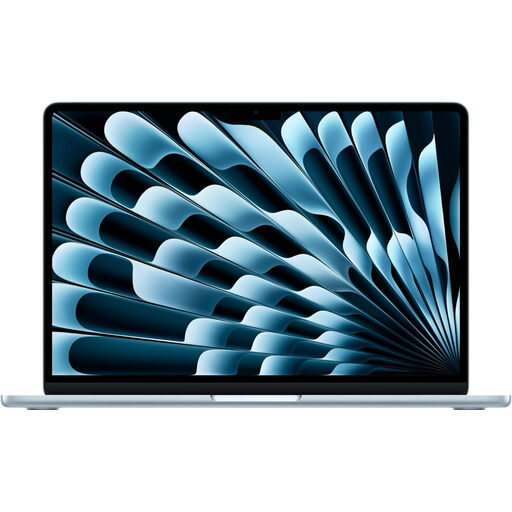 No image available
Consider this 13-inch model for a portable macOS gallery workflow if your photo tools run on macOS. The listed configuration has an M5 chip with a 10-core CPU and 10-core GPU, 16GB memory and a 1TB SSD. Apple specifies USB-C Power Delivery charging for the 13-inch MacBook Air, with a minimum charging requirement of 30W; assess unplugged time against your own editing workload.
 No image available
Consider this Windows 11 Home 2-in-1 if a convertible laptop suits the way you arrange and publish photos. Its title specifies 16GB RAM and a 1TB SSD. Before choosing it for a room with few sockets, check its charging requirements and how long your intended work can run unplugged.
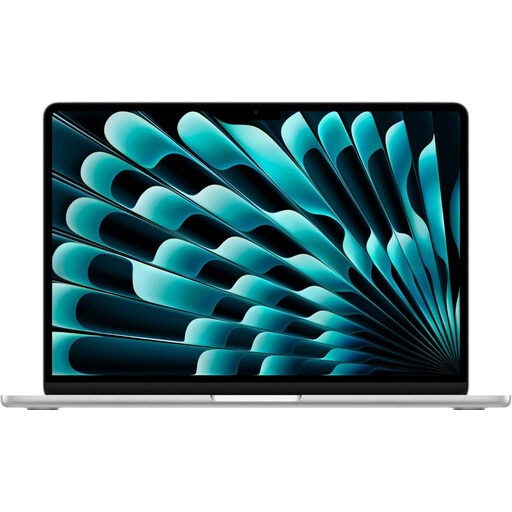 No image available
The 15-inch screen gives you a larger area for arranging photos if macOS suits your workflow. This listed M5 variant has a 10-core CPU, 10-core GPU, 16GB memory and a 1TB SSD. Check the display specification relevant to your image review and plan charging around your actual editing and upload sessions.
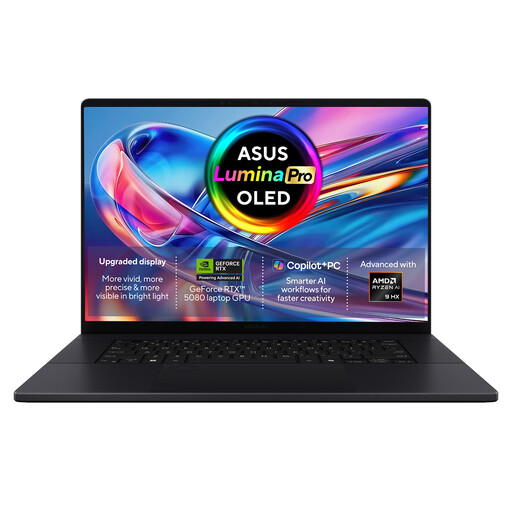 No image available
Consider this Windows 11 Home configuration if demanding local photo work matters more to you than a minimal carrying setup. Its listed hardware includes an AMD Ryzen AI 9 HX 370, NVIDIA GeForce RTX 5080 16GB, 64GB RAM, a 2TB SSD and a 16-inch 4K OLED touchscreen. Confirm the supplied charger and expected unplugged use before choosing it for a socket-limited workspace.
 No image available
Consider this 14-inch Copilot+ PC for a Windows gallery workflow if your required applications work with its Snapdragon X configuration. The listed variant has 16GB RAM and a 512GB SSD. Check editor, plug-in and peripheral compatibility, as well as its charging requirements and expected unplugged runtime.
Only if the exact laptop supports USB-C Power Delivery charging and the charger meets its requirements. Apple specifies a 30W minimum for charging the cited 13-inch MacBook Air; check every other laptop’s own requirements rather than applying that figure across models.
Do not overload or chain extension leads and block adaptors to make extra connections. Electrical Safety First advises checking the rating of the extension lead or adaptor and the combined load of the connected equipment.
No: check both the laptop’s charging requirements and the condition of the charger, plug and cable. A UK Office for Product Safety and Standards report dated 15 September 2026 identified a particular 45W laptop charger presenting a high risk of fire and electric shock; it does not mean every USB-C charger has that fault.
Not necessarily: publishing and demanding local photo editing are different tasks. Adobe documents a Lightroom web-gallery workflow for sharing an album, while a larger creator configuration is more relevant if your own applications and files call for substantial local processing. Check those applications’ requirements before deciding.