For a portfolio homepage built mainly in Figma and a browser, choose a laptop around the software you use and the number of tasks you keep open, rather than assuming you need a dedicated graphics card. If you regularly edit images in Photoshop, Adobe recommends 16 GB or more memory and a fast internal SSD; for colour decisions or an external-monitor setup, check the exact laptop configuration rather than relying on its product-family name.
Who needs which setup?
Browser-first portfolio designers
If most of your work is arranging layouts, writing copy and reviewing pages in Figma and a browser, start by checking browser and operating-system support. Figma describes its graphical requirements as low; a dedicated graphics card is not the starting requirement for this workflow. Allow for the other tabs and collaboration tools you expect to run at the same time.
Designers editing visual assets locally
If you prepare photographs, hero images or graphics in Photoshop alongside the homepage, memory and working storage become more important. Adobe recommends 16 GB or more RAM and a fast internal SSD for Photoshop. Check the exact screen specification too if you will make colour decisions on the laptop itself.
Home-office users building a desk setup
If you plan to connect a monitor, keyboard, webcam, storage or dock, list those connections before choosing a laptop. External-display support and ports can differ between configurations in the same family, so check the particular model you intend to buy.
What matters when choosing?
Start with your required software and everyday workload, then decide how much the built-in display and desk connections matter. macOS and Windows are both possible routes for this task, provided your particular apps, plug-ins and peripherals work on the version you choose.
| Concern |
What to check |
Who this matters to |
| Design workflow and multitasking |
Check Figma browser support and the memory available for concurrent apps. If Photoshop is a regular part of the job, compare configurations against Adobe’s recommendation of 16 GB or more RAM and a fast internal SSD. |
I need a design file, page previews and local apps open together without choosing hardware solely for graphics work. Around 31% of consumers put this workflow need first. |
| Display and visual assets |
Check the exact panel’s resolution, colour-gamut specification and any calibration claim; do not carry a specification across variants. |
When I prepare and approve homepage images on the built-in screen, I need to know which display I am actually buying. For around 31% of consumers, that visual-work requirement comes first. |
| Monitor and desk connections |
Match the laptop’s ports and external-display support to your monitor and peripherals. Check whether your intended dock supports the monitor arrangement you need. |
I want to sit down at my home-office monitor and connect the equipment I already use. That desk-setup need is the priority for around 23% of consumers. |
| Portability and platform fit |
Confirm that your apps and plug-ins work on the intended operating system; compare the exact configuration’s weight, charger and ports if you will carry it. |
If I move between rooms or take the laptop to meetings, carrying it matters—but I still need my software to run. Around 15% of consumers place portability or platform fit first. |
Buying pitfalls
-
Buying 8 GB because it meets an app’s minimum
Adobe lists 8 GB as a Photoshop minimum but recommends 16 GB or more. The minimum alone does not account for keeping Photoshop open alongside browser tabs and other design tasks.
If local image editing is regular work, compare 16 GB or higher configurations and check whether the memory can be upgraded later.
-
Assuming every configuration has the same screen and ports
A laptop family name does not identify its exact panel, storage, connections or external-display support. Manufacturer specifications cited for Apple, ASUS, Dell and Lenovo apply to particular models or options, not every version bearing those names.
Keep the model number or SKU to hand and check its display, memory, storage, ports and monitor support before ordering.
Equipment you already own may also require a compatible dock or adapters.
-
Choosing the operating system before checking your tools
Browser-based Figma work does not establish that every image editor, plug-in, font workflow or client tool will work on the same platform. Figma’s desktop app has its own operating-system requirements.
List the tools you must use to design, build and publish the page, then confirm their compatibility with the intended macOS or Windows version.
-
Discarding the details of the configuration you ordered
The particular options and description matter if the delivered laptop raises a quality or specification concern. Section 9 of the Consumer Rights Act 2015 requires goods supplied under a contract to be of satisfactory quality, taking relevant circumstances into account.
Keep the listing, selected configuration and order confirmation, and compare them with the laptop delivered. Raise a problem with the seller rather than relying solely on a manufacturer warranty.
Relevant brands to consider
These product lines illustrate different configurations to investigate; the brand alone does not tell you whether a particular laptop meets your workflow.
Apple
MacBook Air is a macOS option if your design and publishing tools work on that platform and you want to connect a home-office display.
- Apple lists 16 GB unified memory, a P3 wide-colour display, two Thunderbolt 4 ports and support for up to two external displays for the UK 13-inch MacBook Air M5.
- Those specifications do not apply to every MacBook Air. Check the chosen model and whether your existing connections need a dock or adapters.
ASUS
Zenbook and other ASUS OLED lines are relevant if the built-in display is an important part of preparing portfolio images.
- ASUS describes OLED configurations with 100% DCI-P3 coverage and PANTONE validation.
- These are manufacturer claims for specified displays, not properties of every ASUS laptop. Check the panel and any calibration details for the exact variant.
Dell
XPS offers Windows configurations to consider when memory, storage and screen choices need to fit a compact home-office setup.
- A Dell UK XPS 14 DA14260 configuration lists 16 GB LPDDR5x memory, a 512 GB SSD and a 1920 × 1200 display option.
- Dell notes that changing options can change the specification. Check the processor, memory, storage and panel selected in the final configuration.
Lenovo
ThinkPad X1 Carbon is a Windows line to examine if carrying the laptop, connecting desk equipment and support arrangements are important.
- A Lenovo UK ThinkPad X1 Carbon Gen 14 configuration lists 32 GB memory, a 256 GB SSD, a 14-inch 100% sRGB IPS display, Wi-Fi 7 and three years of support.
- Memory and serviceability depend on the exact model. A 100% sRGB specification is not the same as DCI-P3 coverage.
Joybuy laptop choices
These laptops cover different ways to work on a portfolio homepage, from browser layouts and local image editing to using a larger screen or connecting desk equipment. Compare the exact configuration with the tools and display requirements that matter to you.
 No image available
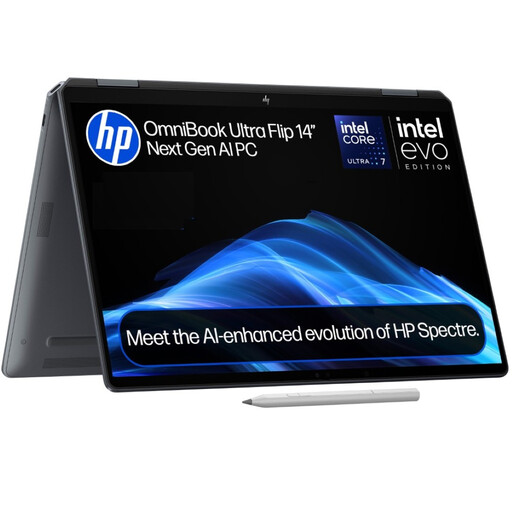
HP OmniBook Ultra Flip 14-fh0006na, 2-in-1, 16 GB RAM, 1 TB SSD
Consider this convertible if you want a laptop for browser design and regular local image work. Its listed 16 GB RAM and 1 TB SSD are relevant to that combination; check your required software and peripherals against the exact Windows 11 Home configuration.
View on Joybuy
 No image available
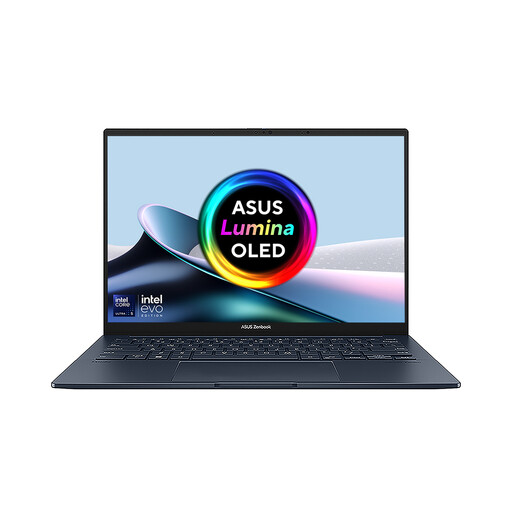
ASUS Zenbook DUO UX8406CA-QL135W, dual OLED, 16 GB RAM, 1 TB SSD
The dual-screen design is worth considering if you want a layout or reference visible beside your main work. The title lists 16 GB memory and a 1 TB SSD. Check the precise panel resolution before buying, as the available descriptions give conflicting figures.
View on Joybuy
 No image available
Lenovo LOQ Essential 15ARP11, Ryzen 7 170, RTX 5050, 16 GB RAM, 1 TB SSD
Consider this 15.6-inch FHD model if the laptop will spend most of its time at a desk and you also have a use for its listed graphics hardware. For portfolio work alone, do not assume a dedicated GPU is necessary. Check whether the exact screen and connections suit your setup.
View on Joybuy
 No image available
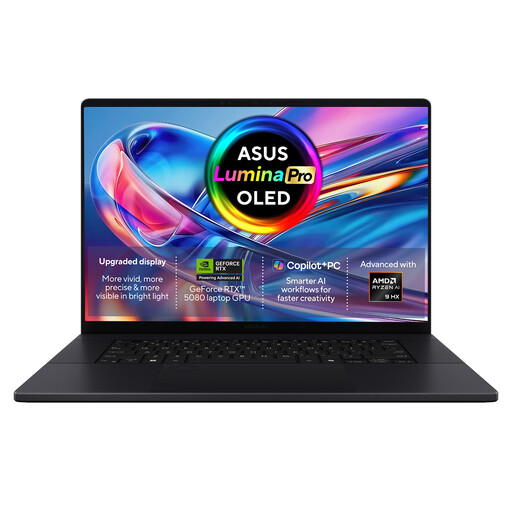
ASUS ProArt P16 H7606WW-SE006W, 4K OLED, 64 GB RAM, 2 TB SSD
The 16-inch touchscreen and listed memory and storage may suit a workflow involving substantial local asset work as well as page design. Its title also specifies a Ryzen AI 9 HX 370 and GeForce RTX 5080 16 GB; check whether your applications would use that hardware. Confirm the exact panel’s colour specification before relying on it for colour-critical decisions.
View on Joybuy
 No image available
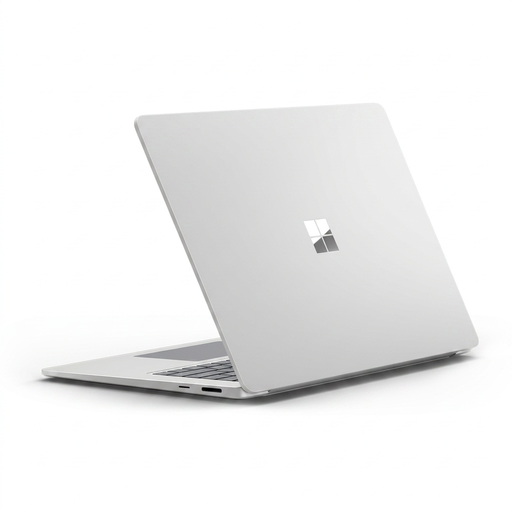
Microsoft Surface Laptop 7, 15-inch, Snapdragon X Elite, 16 GB RAM, 256 GB SSD
This touchscreen model is a possibility for browser-based design if its 256 GB SSD suits the files you keep locally. Before choosing the Snapdragon-based configuration, confirm that your required desktop software, plug-ins and peripherals are compatible; check the exact display gamut if you will make colour-critical decisions on its screen.
View on Joybuy
Frequently asked questions
Do I need a dedicated graphics card for a Figma portfolio homepage?
Usually not for work centred on Figma in a browser: Figma describes its graphical requirements as low. It says a dedicated GPU can improve performance on a dual-GPU laptop but increases battery consumption. Check the requirements separately if your workflow also includes demanding local graphics, video or 3D tools.
Is 8 GB of memory enough if I also use Photoshop?
Although 8 GB meets Adobe’s stated Photoshop minimum, Adobe recommends 16 GB or more. If Photoshop is a regular part of your portfolio workflow alongside browser tabs and other apps, use that recommendation when comparing configurations rather than treating the minimum as a comfort target.
What should I check before using the Figma desktop app?
Check the operating-system version first. Figma states that its desktop app requires macOS 12 or later, or 64-bit Windows 10 or later. If you work in a browser instead, confirm that your installed browser meets Figma’s current requirements.
What if the laptop I receive has a quality problem?
Raise the problem with the seller and keep the order and configuration details. Section 9 of the UK Consumer Rights Act 2015 requires goods supplied under a contract to be of satisfactory quality, assessed in light of their description and other relevant circumstances; a manufacturer warranty does not replace that statutory requirement.


