Choose a laptop around the part of portfolio design that places the greatest demand on your setup: visual review, running your design and development tools together, or moving between work locations. At a standing desk, also plan the whole workstation and check that the exact laptop works with your required software, monitor, dock and charging arrangement.
Who this is for
Standing-desk web builders
If you spend substantial sessions coding, reviewing layouts and communicating at a standing desk, consider how the laptop fits with the screen and input devices you will use. The Health and Safety Executive advises assessing the whole workstation, not just the computer.
Visual portfolio designers
If imagery, typography and colour are central to your homepage, compare the display specifications of the configuration you intend to buy and decide whether you will also review work on an external monitor.
Windows-dependent portfolio creators
If workplace software or managed-device requirements call for Windows, check that fit before choosing a laptop. MDN Web Docs also recommends testing websites across browsers and devices; the development laptop alone is not the whole test environment.
What to prioritise
Start with the software you must run, then decide whether your main constraint is the desk connection, visual review, configured capacity or carrying the laptop between locations.
| Concern |
What to check |
Who this matters to |
| Standing-desk connections |
Check the exact laptop’s external-display limits and whether its ports and charging requirements match your intended monitor or dock. |
If I want a separate screen for previewing layouts, my desk connections need to work without disrupting charging or input devices. Around 31% of consumers put workstation expansion first. |
| Visual review |
Compare the selected panel’s resolution, brightness and stated colour coverage; decide whether an external display is part of your review process. |
When I judge homepage imagery and typography, I need to know what the screen I am buying can show. For around 31% of consumers, visual review is the primary concern. |
| Design and development capacity |
Compare installed memory and SSD capacity with the applications and project files you actually use; check whether memory can be upgraded. |
I may have an editor, browser previews, assets and communication tools open together, so the chosen configuration has to fit that workload. Capacity comes first for around 23% of consumers. |
| Movement between locations |
Check the exact configuration’s weight and screen size, alongside the accessories you would need to carry. |
If I regularly move between desks or locations, carrying the complete setup matters as much as moving the laptop itself. Around 15% of consumers prioritise portability above the other concerns here. |
Buying pitfalls
-
Choosing the lightest laptop before planning the desk
A portable laptop does not, by itself, resolve screen-position or input-device issues during long sessions. The Health and Safety Executive advises considering equipment, furniture and working conditions together.
Plan where the screen, keyboard and pointing device will sit, then choose a laptop that connects to that arrangement.
The setup may also call for a monitor, dock, separate input devices or laptop stand.
-
Assuming every configuration has the same screen and memory
Display and memory specifications can change within a laptop range. Lenovo’s displayed ThinkPad X1 Carbon configurations include soldered memory, so the selected capacity deserves particular attention before purchase.
Check the exact configuration’s panel, installed memory, SSD capacity, ports and upgrade options before checkout.
-
Testing the portfolio in only one browser
A laptop may be suitable for building a site without showing how it behaves for every visitor. MDN Web Docs describes cross-browser testing as checking a website across browsers and devices.
Agree which browsers and devices the portfolio needs to support, then test the published site against that range.
-
Buying a dock on the strength of a USB-C socket alone
A connector’s shape does not establish the laptop’s display output or charging requirements. Check those capabilities for the exact model rather than assuming that any USB-C dock will meet them.
Match the laptop’s documented ports, external-display support and power requirement to the dock and monitor specifications.
An incompatible adapter or dock can mean changing the planned desk arrangement or replacing an accessory.
Brands and laptop ranges to consider
Apple
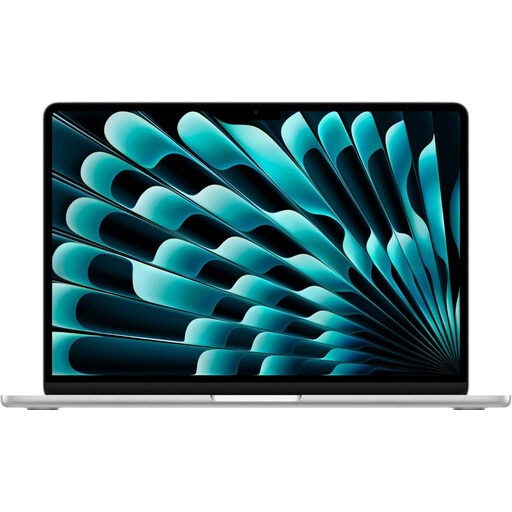
The M5 MacBook Air is a macOS option for visual portfolio work and an external-display desk setup.
- Apple’s UK specification for this range lists a P3 Liquid Retina display, a 16GB starting memory configuration and support for up to two external displays.
- Its two Thunderbolt 4/USB-C ports make dock and peripheral planning important. Check that required applications, plugins and workplace tools support macOS.
Dell
The XPS 13 represents a compact Windows route for buyers who need Windows software and value a smaller laptop.
- Dell’s UK XPS 13 configuration page lists Windows 11 Home.
- Display options, ports, charging equipment and support terms can differ by configuration; check the selected listing rather than relying on the XPS 13 range name.
Lenovo
The ThinkPad X1 Carbon is a business-oriented Windows route for buyers considering portability and wired desk connections.
- Lenovo’s UK X1 Carbon page lists Thunderbolt 4, USB-C and HDMI connectivity. Displayed Gen 14 configurations include a 14-inch, 100% sRGB, 500-nit IPS panel.
- Those panel details and the displayed 32GB soldered-memory configuration should not be assumed for every X1 Carbon; select the configuration needed before buying.
Joybuy laptops for portfolio work
These choices span macOS and Windows laptops with different screen sizes and memory configurations. Compare each one against your design tools and the monitor or dock you intend to use at the standing desk.
 No image available
Apple 15-inch MacBook Air M5, 16GB, 1TB SSD, Silver
Consider this macOS configuration if you want a larger built-in screen for reviewing a portfolio homepage while working with an external display at your desk.
The listed variant has an M5 chip, 16GB memory and a 1TB SSD. Check the selected display specification, compatibility of required macOS tools, and the connection needed for your monitor or dock.
Joybuy
 No image available
Lenovo LOQ Essential 15ARP11, Ryzen 7 170, 16GB, 1TB SSD
This Windows laptop is worth comparing if you plan to do much of your layout review on its built-in screen and use wired connections at the desk.
The listed variant has a 15.6-inch Full HD display, 16GB memory, a 1TB SSD and a GeForce RTX 5050. Check its carrying weight against how often you move the setup, and confirm that the memory capacity fits your applications.
Joybuy
 No image available
ASUS Vivobook 14 X1407QA-LY003W, Snapdragon X, 16GB, 512GB SSD
Consider this 14-inch Windows laptop if you move between desks and plan to check detailed colour work on a suitable external display.
The listed variant has a Snapdragon X processor, 16GB memory and a 512GB SSD. Check your required applications and plugins for processor compatibility, and assess the built-in panel against your visual-review needs.
Joybuy
 No image available
Lenovo Legion Pro 7 16IAX10H, 64GB, 2TB SSD, 83F5000UUK
This configuration is relevant if your design and development workload calls for the listed memory and storage, and you want a 16-inch built-in screen.
It has an Intel Core Ultra 9 processor, 64GB memory, a 2TB SSD and a GeForce RTX 5090. Confirm the panel’s colour specifications and the laptop’s weight, display connections and charging requirements for your desk.
Joybuy
 No image available
HP OmniBook X Flip 16-as0004na, Core Ultra 5 226V, 16GB, 512GB SSD
Consider this convertible Windows laptop if a larger touchscreen and alternative screen positions fit the way you review layouts at the desk.
The listed variant has a 16-inch touchscreen, an Intel Core Ultra 5 226V processor, 16GB memory and a 512GB SSD. Confirm its colour coverage, desk-display connections and weight against your intended setup.
Joybuy
Questions about the setup
Is a standing desk enough for long laptop design sessions?
No: the laptop is only one part of the workstation. For workers using display screen equipment daily for continuous periods of an hour or more, the Health and Safety Executive says employers must assess the workstation and reduce risks; its guidance considers the equipment, furniture, working conditions and task together.
Can I test my portfolio homepage only on the laptop I buy?
No: choose a laptop that runs your development tools, but plan testing across the browsers and devices your visitors need to use. MDN Web Docs describes cross-browser testing as checking that a website works across different browsers and devices.
What should I check before buying a monitor or dock?
Match the exact laptop’s external-display support, port standards and charging requirement to the monitor or dock. Apple’s UK M5 MacBook Air specification, for example, lists Thunderbolt 4/USB-C ports and support for up to two external displays; do not apply those limits to a different laptop or configuration.
Which after-sales terms matter when choosing a laptop?
Compare the seller’s written return process, the warranty and repair route, and what any optional support package includes for the exact configuration. Dell advertises optional support packages for its XPS 13, but an option advertised for a range should not be assumed to come with every listing.


