What to check when buying
Settle software compatibility, then compare the exact display, configured memory and storage, and noise under the workload you expect to use.
| Concern | What to check | Who this matters to |
|---|
| Colour and detail |
Check the exact panel’s resolution, stated gamut and finish. Use appropriate document and display profiles; Adobe explains why profiles matter to colour interpretation. |
I need to judge skin tones and fine edits on screen without treating a gamut label as a promise of matching output; around 36% of consumers put colour confidence first. |
| Memory and working space |
Compare installed RAM and usable SSD capacity with your files and concurrent apps. Adobe recommends at least 16GB RAM, 100GB available disk space and a fast internal SSD for Photoshop. |
When layered portraits and other open apps compete for working space, I want a configuration that fits my routine; roughly 29% of consumers make workflow capacity their primary concern. |
| Cooling noise |
Look for an independent test of the exact model covering everyday use and sustained load, rather than relying on a cooling description. |
I can tolerate a different sound level during an occasional export, but ordinary editing must not distract me or others in the study; around 21% of consumers prioritise low everyday noise. |
| Software compatibility |
Confirm your app version, plugins and essential peripherals work with the chosen operating system and laptop connections. |
If changing computers would disrupt the tools I already use, compatibility has to come before a display or processor upgrade; about 14% of consumers put that fit first. |
Brands to consider
These product lines illustrate different display, operating-system and noise considerations; compare the particular model and configuration rather than treating a brand name as the answer.
Apple
The MacBook Pro line offers a macOS route with a Liquid Retina XDR display and configurable unified memory, according to Apple’s specifications.
- Apple lists a 14.2-inch display for its 14-inch MacBook Pro and memory configurations including 16GB and 24GB.
- Notebookcheck found its tested 14-inch M5 model very quiet in everyday use but loud under load; that observation does not establish the noise of every MacBook Pro configuration.
ASUS
The Zenbook S 16 UM5606 is a Windows option for someone who wants a larger OLED workspace.
- ASUS specifies a 16-inch 2880 × 1800 OLED display with 100% DCI-P3 coverage for UM5606.
- ASUS describes its cooling as quiet, but that description is not a measured result for your workload. Check the exact panel finish and independent noise findings.
Lenovo
The Yoga Pro 7i line is a Windows route worth examining when an explicitly stated wide-gamut panel matters.
- Lenovo specifies 100% P3 and Adobe RGB coverage for the Yoga Pro 7i Gen 10 Aura Edition’s 14.5-inch display.
- Panel and hardware options differ by generation, while Notebookcheck reported loud fans under load in its Gen 10 review. Check the exact configuration against your noise needs.
Joybuy products for this workflow
These Apple and Lenovo laptops offer different screen sizes and configured memory and storage for portrait work. Their presence here does not establish quiet operation or colour suitability for every configuration, so check the particular panel and your expected workload.
 Image unavailable
Apple 13-inch MacBook Air M5, 24GB/1TB, Midnight
Consider this macOS configuration if you want a smaller screen and 24GB memory for your portrait-editing workflow.
The title specifies a 10-core CPU, 10-core GPU and 1TB SSD. Use appropriate colour profiles, and check noise evidence for this exact model and your sustained tasks.
View on Joybuy
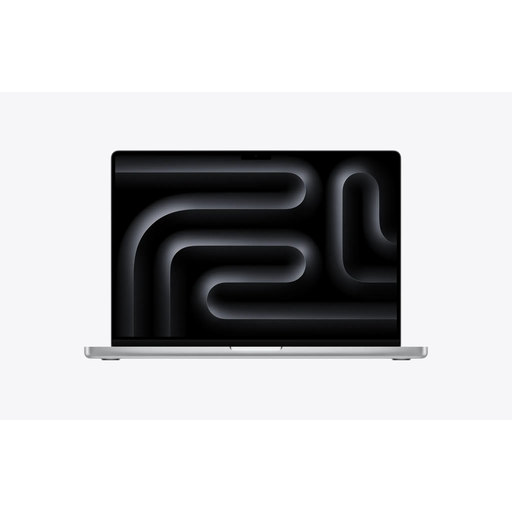 Image unavailable
Apple 16.2-inch MacBook Pro M5 Max, 36GB/2TB, Silver
Consider this larger macOS configuration if screen size and substantial installed memory and storage matter to your projects.
The title specifies an 18-core CPU and 32-core GPU. Check the exact panel’s colour specification and model-specific noise under sustained work, and confirm the compatible power-adapter arrangements before ordering.
View on Joybuy
 Image unavailable
Apple 14.2-inch MacBook Pro M5 Pro, 24GB/2TB, Silver
This is a smaller-screen MacBook Pro configuration to consider if your portrait projects call for 24GB installed memory and 2TB SSD storage.
The title specifies an 18-core CPU and 20-core GPU. Confirm the exact display specification, noise during your heavier tasks and whether you have the compatible power adapter described as separately required.
View on Joybuy
 Image unavailable
Lenovo Legion Pro 7 16IAX10H, 64GB/2TB, 83F5000UUK
Consider this Windows configuration if 64GB installed RAM and a 16-inch screen fit your larger-project workflow, while giving cooling noise particular scrutiny for a quiet study.
The title specifies an Intel Core Ultra 9, NVIDIA GeForce RTX 5090 and Windows 11 Home. Check the exact panel’s colour coverage and independent noise results for this model; keep its ventilation openings unobstructed.
View on Joybuy
 Image unavailable
Apple 15-inch MacBook Air M5, 16GB/1TB, Silver
Consider this larger-screen MacBook Air if its titled 16GB memory configuration fits your files and concurrent apps; Adobe recommends 16GB or more for Photoshop.
The title specifies a 10-core CPU, 10-core GPU and 1TB SSD. Confirm that the delivered configuration matches that title, check the display specification for colour work and assess the seller’s fanless description against your intended workload.
View on Joybuy
Common questions
What specifications should I start with for Photoshop portrait work?
Start by comparing laptops with Adobe’s recommended Photoshop requirements: at least 16GB RAM, a display of 1920 × 1080 or higher, 100GB available disk space, a fast internal SSD for the app and additional high-speed scratch capacity. Meeting those recommendations does not establish how quickly or quietly a particular laptop will handle your files.
Will a wide-gamut screen make my portrait colours look right everywhere?
No: a stated gamut is a display capability, not a guarantee of print or cross-device matching. Adobe explains that Photoshop uses colour profiles to interpret image values, so use suitable document and display profiles and assess important work in its intended output workflow.
Can Windows colour settings help with image work?
Yes, Microsoft’s colour-management settings let you manage display profiles and access calibration. Set up the particular display you use, but do not treat software settings as a substitute for checking the panel’s capabilities.
Will a quiet laptop stay quiet during batch exports?
Not necessarily. Notebookcheck reported very quiet everyday use but a loud fan under load for its tested MacBook Pro M5, and loud fans under load for its tested Yoga Pro 7i Gen 10. Check evidence for the exact laptop you plan to buy and assess a sustained task that resembles your own work.
What if a laptop bought online does not suit my workflow?
For most UK online purchases, GOV.UK says you can cancel within 14 days of receiving an item even if it is not faulty, then have another 14 days to return it. Check the applicable conditions and the retailer’s separate terms; remedies for faulty goods are distinct from a change-of-mind cancellation.


