PowerPoint-first presenters
People who receive .pptx files and need to edit or present them using desktop PowerPoint features. Microsoft documents differences between the desktop, Mac and web versions, so the features used in a supplied deck matter.


Choose the presentation software your files require before comparing laptop specifications. A Windows laptop is a straightforward route for desktop PowerPoint work; a MacBook Air suits an established macOS workflow if its display connections work for your venue, while Google Slides users should prepare offline access before travelling. In every case, check the exact configuration and test a representative deck and display connection.
People who receive .pptx files and need to edit or present them using desktop PowerPoint features. Microsoft documents differences between the desktop, Mac and web versions, so the features used in a supplied deck matter.
People who carry a laptop between work locations and need a dependable way to connect to external screens or projectors. The connector on the laptop must be considered alongside the equipment in each room.
People who create shared decks in Google Slides and sometimes work without dependable internet access. Google requires offline access to be set up in advance.
Start with the application and files you use, then plan the connection to the presentation display. Screen size, carrying needs, memory and storage should be judged against that workflow rather than a processor name alone.
| Concern | What to check | Who this matters to |
|---|---|---|
| Software and file compatibility | Choose the operating system and presentation app your files require; open a representative deck to check its features. | If I receive complex .pptx decks, I need their editing and playback features to work in my chosen app. Around 31% of consumers put software compatibility first. |
| External-display connection | Compare the exact laptop’s video outputs with the venue connector, and test any required cable or adapter. | When I present in unfamiliar rooms, I want a connection plan that works with the available display. Display readiness is the primary concern for around 31% of consumers. |
| Carrying and working space | Check the exact model’s screen size and weight, then consider how you will charge and connect it away from your desk. | I move between locations to prepare slides, so I need a laptop I can carry without giving up too much working space. Around 19% of consumers prioritise portability. |
| Memory and local storage | Confirm the exact configuration’s installed RAM and SSD capacity for your open apps and locally saved files. | If I keep decks and supporting files on the laptop while using other apps, I need enough room for that workload. Multitasking and storage come first for around 19% of consumers. |
A capable laptop can still be unsuitable if a supplied deck needs desktop PowerPoint features that its intended web workflow does not provide. Microsoft documents feature differences between PowerPoint platforms.
Identify the app you must use and try a representative file on the intended operating system before choosing a laptop.
The laptop’s video-output capability, the room connector and the cable all need to work together; the shape of a USB-C socket alone does not establish that setup.
Check the exact port specification and test the connection with the display you intend to use.
A compatible USB-C-to-HDMI adapter or cable may be needed for an HDMI-equipped room.
Memory, storage, ports and included accessories can vary between configurations. HP notes that ProBook 440 G11 components vary by configuration, while Lenovo offers different ThinkPad E14 Gen 6 configurations.
Compare the exact model number and its listed RAM, SSD, operating system, ports and included power adapter.
Google’s offline workflow requires preparation while connected to the internet, including a supported browser and the Google Docs Offline extension.
Make the relevant deck available offline before travelling, then check that it opens with Wi-Fi turned off.
HP’s ProBook 440 G11 range is relevant to buyers considering a 14-inch Windows business laptop for desktop PowerPoint work.
The ThinkPad E14 Gen 6 is a 14-inch business-laptop line to consider if later memory or storage changes matter to you.
MacBook Air is relevant to people already using a macOS presentation workflow, including PowerPoint for Mac, Keynote or browser-based slides.
The Zenbook 14 OLED UX3405 is relevant when a compact Windows laptop with built-in HDMI and USB-C display connections fits the presentation setup.
These laptops offer different ways to prepare slides: Windows models with listed HDMI connections, a MacBook Air for a macOS workflow and a larger convertible Windows model. Choose by your required app and room connection before comparing their screen and storage configurations.
 No image available
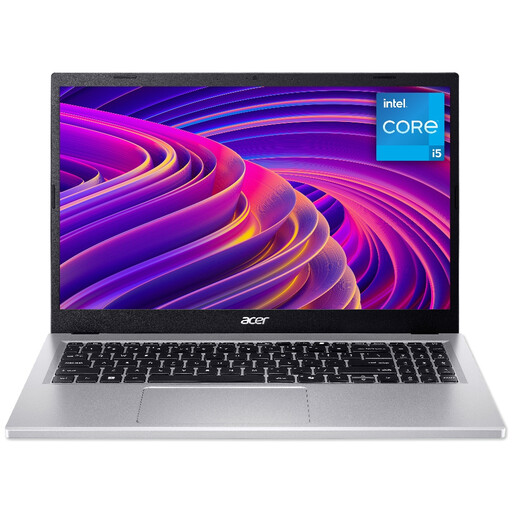
Consider this Windows 11 Home configuration if you prepare slides on a 15.6-inch Full HD screen and need a listed HDMI connection for an HDMI-equipped display.
Its stated configuration includes 24GB RAM and a 1TB SSD. If you intend to connect a display through USB-C instead, confirm whether this SKU’s USB-C ports support video output.
 No image available
This 14-inch Windows 11 Home model is worth considering if you want documented HDMI and USB4 DisplayPort output in a laptop listed at 1.49kg.
The configuration lists a 1920 × 1200 display, 16GB onboard memory and a 512GB SSD; its stated memory maximum is 16GB. Check that your required desktop PowerPoint tools and representative files work on its Snapdragon X platform before buying.
 No image available
This Windows 11 Home model gives slide preparers a listed HDMI 2.1 connection and a 15.6-inch Full HD anti-glare display.
The named configuration has 8GB RAM and a 512GB SSD. Confirm the installed memory and upgrade options for this exact SKU before relying on an upgrade.
 No image available
Consider this model if your slide workflow is already on macOS and you can check that your PowerPoint files work as required in the Mac app.
This Midnight configuration lists a 13.6-inch display, 24GB unified memory, a 1TB SSD and two Thunderbolt 4 ports. Apple documents external-display support for MacBook Air; test a compatible adapter or cable if the presentation room uses HDMI.
 No image available
This Windows 11 Home convertible is an option if you want a 16-inch touchscreen while arranging slides and supporting material.
The listed configuration has a 2K IPS display, 16GB memory and a 512GB SSD. Check its external-display ports and carrying weight against your venue and travel needs, and confirm that its convertible functions work as you expect.
No, provided the laptop and your cable or adapter can connect to the venue’s display. A built-in HDMI port can avoid an adapter in an HDMI-equipped room, while a USB-C or Thunderbolt display connection needs compatible equipment; check the exact port specification and test the setup.
Yes, if you set up offline access before losing your connection. Google specifies an initial internet connection, Chrome or Microsoft Edge, non-private browsing and the Google Docs Offline extension; make the relevant deck available offline and check that it opens before travelling.
Not for every deck. Microsoft documents feature differences between PowerPoint for the web, Windows and Mac, including some audio and Slide Master functions, so open a representative file in the version you intend to use before choosing a laptop around it.