Choose a laptop for editing product photos around the work you do most: check the exact display’s colour specifications, start with Adobe’s recommended 16GB or more memory for Photoshop, and allow SSD space for files and working data. A dedicated GPU deserves closer attention if your applications and editing tasks use graphics acceleration; screen size, connections and carrying comfort matter more when you regularly edit away from a desk.
Who needs which setup?
Colour-critical catalogue editors
If a product’s shade, material or finish needs careful assessment before publication or print preparation, compare documented display gamut and colour-validation information for the exact laptop. Resolution alone cannot establish colour accuracy; a colour-managed workflow also matters.
High-volume RAW and Photoshop editors
Large image sets and layered files make memory and working storage important checks. Adobe recommends 16GB or more memory for Photoshop, alongside a fast internal SSD and sufficient available disk space; assess capacity against the files and applications you keep open.
Mobile seller-photographers and retouchers
If you edit between shoots, studios and offices, weigh screen size and carrying comfort against the connections needed to transfer images. Check the exact laptop’s memory, storage, ports and card-transfer options before choosing a more compact configuration.
What should you check?
For product-photo editing, establish whether colour judgement, large-file responsiveness, graphics-dependent tools or working on the move is your primary need. Then check the exact configuration rather than relying on a processor name or laptop-family label.
| Concern | What to check | Who this matters to |
|---|
| Display and colour |
Compare the exact panel’s published gamut and validation or calibration information; do not treat 4K or OLED as proof of colour accuracy. |
If I judge product shades on the laptop before publication, I need more than a sharp-looking screen. Around 31% of consumers put display and colour judgement first. |
| RAW and layered-file work |
Use Adobe’s Photoshop recommendation of 16GB or more memory as a starting point; allow internal SSD space for applications, images and working files. |
When I work through large RAW sets and layered documents, keeping my editing workflow responsive matters most. Roughly 31% of consumers prioritise this kind of file work. |
| Graphics acceleration |
Check the GPU requirements of the applications and features you use. For Photoshop on Windows with a 4K-or-higher display, Adobe recommends DirectX 12 support and 4GB GPU memory. |
If my regular tools depend on graphics acceleration, I want to assess the GPU rather than buy on a creator label alone. Around 23% of consumers make acceleration their primary concern. |
| Working on the move |
Compare screen size, weight, required ports and card-transfer options; check pen support if direct on-screen input is part of your work. |
Editing between locations means I need a laptop and input setup I can carry and connect to my equipment. About 15% of consumers put that flexibility first. |
Buying pitfalls
-
Choosing 8GB solely because Photoshop can run on it
Adobe lists 8GB as its minimum memory requirement but recommends 16GB or more. The minimum is a poor substitute for considering the image files and other applications you expect to use together.
Start your comparison at 16GB for a new Photoshop-oriented laptop, then consider more memory if your regular files and multitasking call for it.
-
Assuming 4K or OLED proves colour accuracy
Resolution, panel technology and documented colour characteristics answer different questions. A detailed display specification matters when the laptop screen informs product-colour decisions.
Compare the exact panel’s published gamut and validation or calibration information, alongside your intended colour-managed workflow.
-
Treating the whole SSD capacity as working space
The operating system, applications and image library all use storage. Adobe recommends 100GB available disk space for Photoshop and additional high-speed storage for scratch-disk use.
Allow room for current projects and temporary files when choosing capacity, and check the laptop’s storage-upgrade options.
If your files outgrow the internal SSD, your workflow may also need suitable external high-speed storage.
-
Assuming a similar product title means the same configuration
Memory, storage and display options can differ within one laptop family. A model-family name alone may not identify the configuration you intended to buy.
Check the full model identifier and specifications on the product-detail page, together with current availability, before ordering.
Relevant brands and product lines
Apple
MacBook Pro is a macOS route for editors considering a 14-inch or 16-inch laptop with configurable memory and storage.
- Apple’s UK specifications list a 14.2-inch Liquid Retina XDR display and configurations starting at 16GB unified memory.
- Memory, SSD capacity and connections depend on the chosen configuration; check them alongside macOS support for your applications and peripherals.
ASUS
ProArt is a Windows creator-laptop line to examine if a documented display specification and dedicated graphics options matter to your work.
- ASUS lists ProArt P16 configurations with a 16-inch 4K OLED display, RTX graphics options and configurable memory and SSD storage.
- ASUS’s gamut and validation claims must be checked against the exact panel and full model number you intend to buy.
Dell
Dell Pro Precision is a Windows mobile-workstation route for editors who also need workstation-oriented configuration choices.
- Dell’s UK Pro Precision 7 Series 16 listing describes a 16-inch laptop with configurable Intel Core Ultra processors and NVIDIA graphics.
- Check the selected processor, graphics, display and memory configuration against your actual editing workload.
Microsoft
Surface Laptop Studio 2 is a Windows form-factor option when pen-oriented retouching or annotation is central to the workflow.
- Microsoft describes laptop, angled-display and portable-canvas screen positions for this model.
- Confirm the configuration, pen requirements and current availability; the convertible screen arrangement does not by itself establish suitability for large RAW projects.
Laptops to consider on Joybuy
These Windows and macOS laptops offer different memory, storage, display and graphics configurations for product-photo work. Compare each exact model with your editing software and colour workflow; inclusion here does not mean its built-in display has been validated for colour-critical decisions.
 No image available
ASUS ProArt P16 H7606WW-SE006W, 64GB RAM, 2TB SSD
Consider this Windows configuration if your editing applications call for substantial memory and dedicated graphics. It has a 16-inch 4K OLED touchscreen, an AMD Ryzen AI 9 HX 370 processor and an NVIDIA GeForce RTX 5080 with 16GB graphics memory. Check the exact panel’s colour specifications before using it for colour-critical decisions.
View on Joybuy
 No image available
Lenovo LOQ Essential 15ARP11, 16GB RAM, 1TB SSD
This Windows configuration is worth comparing if you want Adobe’s recommended starting memory level for Photoshop and a dedicated GPU. Its title specifies a 15.6-inch FHD 144Hz display, AMD Ryzen 7 170 processor and GeForce RTX 5050. Check the panel’s colour specifications if you will judge product colours on the built-in screen.
View on Joybuy
 No image available
Apple MacBook Pro 16.2-inch M5 Max, 48GB/2TB, Space Black
Consider this macOS configuration if your workflow calls for more memory for large projects and multitasking. The listed M5 Max variant has an 18-core CPU, 40-core GPU, 48GB unified memory and 2TB storage. Confirm software compatibility and the display characteristics needed for your colour workflow.
View on Joybuy
 No image available
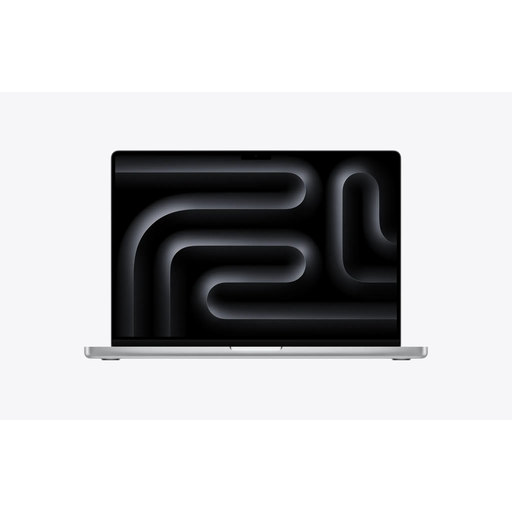
Apple MacBook Pro 16.2-inch M5 Max, 36GB/2TB, Silver
This is another macOS configuration to compare for layered projects and multitasking, with a different memory and GPU specification from the Space Black model above. Its title lists an 18-core CPU, 32-core GPU, 36GB unified memory and 2TB storage. Check your applications and exact display requirements before choosing between configurations.
View on Joybuy
 No image available
Lenovo Legion Pro 7 16IAX10H, 83F5000UUK, 64GB/2TB
Compare this Windows laptop if your editing workload calls for substantial memory and dedicated graphics. The listed configuration has a 16-inch screen, Intel Core Ultra 9 processor and NVIDIA GeForce RTX 5090. Check the exact display’s colour specifications and the machine’s carrying weight against where you edit.
View on Joybuy
Frequently asked questions
Is 16GB memory enough for editing product photos?
It is a sensible starting point for Photoshop-based product-photo work: Adobe recommends 16GB or more, compared with its 8GB minimum. Consider more if you routinely work with large RAW catalogues, complex layered files or several demanding applications at once.
Do I need a dedicated GPU for product-photo editing?
Not for every editing workflow. Check the requirements of the features and applications you actually use; Adobe’s recommended Windows Photoshop guidance specifies DirectX 12 support and 4GB GPU memory for 4K-or-higher displays. A dedicated GPU merits closer comparison when graphics-accelerated work is a regular part of your editing.
Does a 4K laptop display guarantee accurate product colours?
No. Resolution does not establish a panel’s colour characteristics or accuracy. Compare published gamut and validation or calibration information for the exact display, and consider how colour management fits your output workflow.
How much available storage does Photoshop need?
Adobe recommends 100GB of available disk space, a fast internal SSD for installation and additional high-speed storage for scratch-disk use. Choose total SSD capacity with your operating system, applications, local photo library and temporary working files in mind.


