What matters when choosing
Start with software and file access, then decide how much unplugged time, carrying weight and screen space your revision routine requires. Compare battery figures only alongside the activity used to obtain them.
| Concern | What to check | Who this matters to |
|---|
| Unplugged runtime |
Check the exact model’s battery-test activity and whether its charging options suit your study day. Wireless-web and video-playback results are not interchangeable. |
If I need to edit notes through a long session without a socket, I want a battery claim relevant to my usual work. Around 36% of consumers would put uninterrupted revision time first. |
| Carrying burden |
Compare device weight and screen size for the exact configuration; account for the charger and case you plan to carry. |
Moving between study locations, I want a laptop I will be comfortable taking with me without losing the document space I need. Roughly 29% of consumers would prioritise a lighter daily carry. |
| Software and files |
Check your note app, course platform, file types and any required desktop software against the operating system. |
If a required course tool will not run, the laptop cannot take over my revision workflow. Around 21% of consumers would make continuity with their existing tools the main concern. |
| Browser-first offline work |
Check offline editing in your chosen app and prepare the specific files you need before leaving Wi-Fi. |
When my notes live mainly in browser-based services, I want straightforward access to prepared documents without a connection. About 14% of consumers would put that simpler offline workflow first. |
Joybuy laptops for revision notes
These laptops cover Chromebook, macOS and Windows ways of editing revision notes. Match your required apps and offline files to the operating system first, then check the battery-test conditions and charging details for the model you choose.
 Image unavailable
Lenovo IdeaPad Slim 3 Chromebook 14IAN8, 83BN001EUK
Consider this ChromeOS model if your revision notes and required course tools work in a browser or can be prepared for offline use.
14-inch display, Intel Core i3 N305, 8 GB RAM and 256 GB eMMC. Test access to your particular files and apps before relying on them away from Wi-Fi.
View on Joybuy
 Image unavailable
Acer Chromebook Plus 514 CB514-5H, Iron
This ChromeOS option suits browser-first revision if the note app and course platform you use also meet your offline needs.
14-inch WUXGA (1920 × 1200) display, Intel Core i3-1315U, 8 GB RAM and 256 GB SSD. Prepare and test the files you need before disconnecting.
View on Joybuy
 Image unavailable
ASUS Vivobook 14 X1407QA-LY003W Copilot+ PC, Quiet Blue
Consider this Windows model if your study workflow calls for Windows, but confirm that each required application works with this Snapdragon X configuration.
Snapdragon X processor, 16 GB RAM and 512 GB SSD. Check a model-specific battery test before planning a long session away from a socket.
View on Joybuy
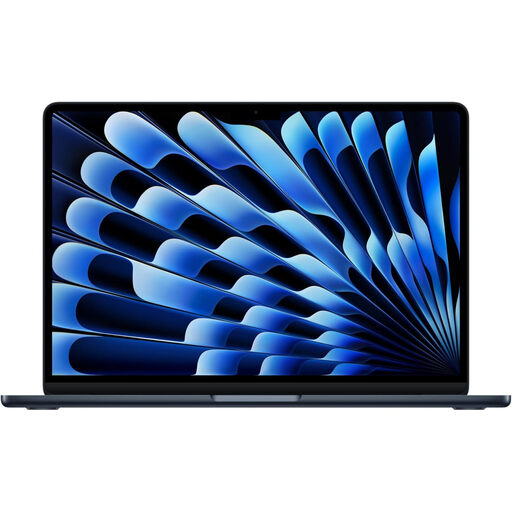 Image unavailable
Apple 13-inch MacBook Air (2026), M5, Midnight
This is a macOS route for revision notes if your course software and services support it.
M5 chip with 10-core CPU and 8-core GPU, 16 GB memory and 512 GB SSD. Apple lists up to 15 hours of wireless-web use for the cited 13-inch M5 configuration; your note-editing runtime will depend on how you use it.
View on Joybuy
 Image unavailable
Lenovo IdeaPad 1 15-inch, Ryzen 3 7320U, Cloud Grey
The larger screen may suit document work, provided your required apps can be installed and used with Windows 11 Home in S Mode.
15-inch Full HD display, 8 GB RAM and 128 GB SSD. Check the battery-test activity and the exact port’s charging support before relying on unplugged use or a spare USB-C charger.
View on Joybuy
Questions about unplugged revision
Will an “up to” battery figure tell me whether a laptop will last through revision?
No: use it to understand a particular model’s stated test, not as a guarantee for your session. Apple separates wireless-web use from video streaming for the cited MacBook Air, Microsoft reports video playback for the cited Surface Laptop, and Google says actual Chromebook battery life varies with settings and use.
Can I edit revision notes offline on a Chromebook?
Yes, if your chosen app supports the work you need and you prepare the relevant files in advance. Google says Drive files can be selected for offline use; check your specific course platform and file formats as well.
Can any USB-C port charge my laptop?
No: the particular port must support battery charging, and the power source must meet the laptop’s requirements. ASUS advises checking the model-specific port information, so confirm that and the required wattage before choosing a spare charger or power bank.
Should I use a charge-limit setting before studying away from a socket?
Check the setting before you leave, because a charge limit reduces the charge available for that unplugged session. ASUS documents supported Battery Health Charging modes with limits above 80% or 60%, but availability depends on the model.
What should I check about electrical-equipment rules and laptop disposal?
For Great Britain, the Office for Product Safety and Standards says the Electrical Equipment (Safety) Regulations 2016 set requirements for electrical equipment placed on that market; Northern Ireland processes can differ. GOV.UK guidance also describes waste electrical and electronic equipment collection and recycling, so check the retailer or local-authority options where you live.


