What should you check first?
Start with software and audio-interface compatibility, then size the laptop for the scoring session and any picture work it will handle. Finally, check the connections and screen arrangement at the shared desk.
| Concern | Buying check | Who this matters to |
|---|
| DAW headroom |
Confirm support for your DAW, plug-ins and interface driver. For demanding Ableton Live projects, Ableton recommends 16GB or more RAM and a 500GB–2TB high-speed SSD alongside a suitable processor. |
When a score relies on large sample libraries and many plug-ins, I need room for the session beyond the software’s installation minimum; around 33% of consumers put DAW headroom first. |
| Local picture work |
Decide whether you will only score to supplied video or also edit and render animation locally. If the latter, check the exact GPU configuration against your visual software. |
If I also edit or render the animation on this laptop, the picture workload shapes my choice; local visual work is the primary concern for around 27% of consumers. |
| Desk connections |
List the display input and the connections needed for your audio interface, drives and media. Check the exact laptop’s ports and any dock’s compatibility. |
Moving into a shared workspace means I need to reconnect my equipment without disrupting a scoring session; around 20% of consumers make desk connectivity their first concern. |
| Screen and portability |
Check whether the desk has an external monitor. Otherwise, compare the laptop’s display size, resolution and finish with the space it takes to carry and put away. |
When I work from the built-in screen but must clear the desk afterwards, usable workspace and portability compete; around 20% of consumers prioritise that balance. |
Laptops for scoring and picture work
These Joybuy laptops offer different macOS and Windows configurations to assess against a scoring session, shared-desk connections and any local picture work. Check software and interface support for the exact system you choose; a graphics-focused configuration is most relevant if your visual workload calls for it.
 No image available
ASUS ProArt P16 H7606WW-SE006W, Ryzen AI 9 HX 370, RTX 5080
Consider this Windows configuration if scoring shares the laptop with demanding local visual work.
The product name specifies a 16-inch 4K OLED touchscreen, GeForce RTX 5080 with 16GB graphics memory, 64GB RAM and a 2TB SSD. Confirm support for your DAW, plug-ins and audio-interface driver on Windows 11 Home, and assess operating noise for your shared workspace.
View on Joybuy
 No image available
Apple MacBook Pro 16.2-inch M5 Max, 48GB/2TB, Space Black
Consider this macOS configuration for substantial scoring sessions once your required software and interface support are confirmed.
Its product name specifies an 18-core CPU, 40-core GPU, 48GB unified memory and a 2TB SSD. Check the required macOS version against your DAW, plug-ins and audio-interface driver before choosing it.
View on Joybuy
 No image available
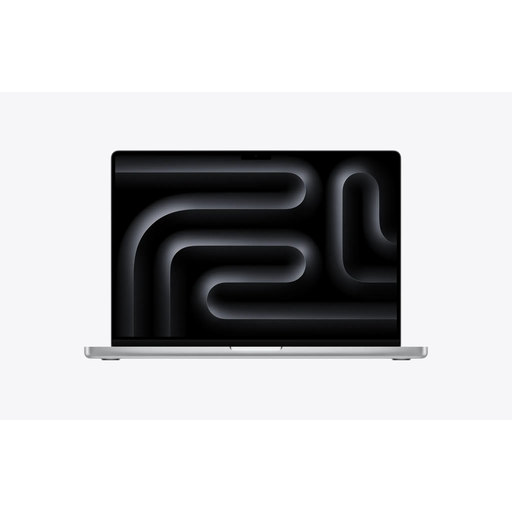
Apple MacBook Pro 16.2-inch M5 Max, 36GB/2TB, Silver
This is another macOS configuration to assess for scoring and local media work, subject to your exact software and interface requirements.
The product name distinguishes it with an 18-core CPU, 32-core GPU, 36GB unified memory and a 2TB SSD. Verify DAW, plug-in and audio-interface driver support for the macOS version you need.
View on Joybuy
 No image available
Lenovo Legion Pro 7 16IAX10H 83F5000UUK, RTX 5090
Assess this Windows laptop if your scoring work also involves local GPU-oriented visual tasks; the graphics specification does not establish DAW suitability.
The product name specifies a 16-inch model with an Intel Core Ultra 9 processor, 64GB RAM, a 2TB SSD and GeForce RTX 5090 graphics. Confirm your software and interface support, along with the desk connections and operating noise your workspace requires.
View on Joybuy
 No image available
Stormforce Exobook 16-inch QHD+ Ultra 9, 32GB/4TB, 5080-labelled
Consider this configuration for scoring sessions that need substantial local storage, while checking its visual-workload requirements separately.
The product name specifies 32GB RAM and a 4TB SSD. Confirm the exact GPU before relying on graphics capability: the accompanying product details describe it as an RTX 5080 or equivalent. Check your DAW, plug-ins and audio interface against the selected system as well.
View on Joybuy
Frequently asked questions
Is 8GB RAM enough for scoring an animation?
It meets Ableton Live 12’s listed minimum, but 16GB or more is Ableton’s recommendation for more demanding projects. If your score uses large sample libraries, many tracks or several apps at once, compare the whole workload—including processor and fast-storage needs—rather than treating the minimum as a buying target.
Should I choose macOS or Windows for animation scoring?
Choose the operating system supported by your specific DAW version, plug-ins and audio-interface driver. Compatibility can depend on versions: Avid’s July 2026 Pro Tools update, for example, added support for M5-powered Macs. Check every essential part of your setup before committing to a laptop.
Do I need a dedicated GPU to compose to picture?
Not necessarily for composing and mixing alone; a dedicated GPU is more relevant if the laptop must also handle demanding local video editing, animation or rendering. ASUS and Lenovo describe GPU-equipped configurations for visual workflows, but you should match the exact GPU to your software and picture workload rather than treating it as a measure of audio performance.
Can I use any music in an animation I distribute?
No—check the rights for the music and the way you intend to distribute the animation. GOV.UK says copying music onto physical products with soundtracks, including films, may require a licence; that guidance does not by itself settle digital distribution, commissions or existing contracts. Confirm uncertain rights with the rights holder or a specialist.


