Choose a laptop that can run the script, its dependencies and the profiler in the operating system and CPU architecture your investigation requires. Then check the exact display configuration for working beside the window and choose memory to suit the script, its data and the tools you will run together. A screen specification cannot compensate for an incompatible development environment.
Who needs to make this choice?
Developers working in bright spaces
If you read code and profiling traces near a window, compare the stated brightness and surface treatment of the exact panel you intend to buy. A laptop family name alone does not identify its display configuration.
Developers matching a target environment
If your script uses native dependencies or containers, establish the required operating system and CPU architecture before choosing hardware. Docker notes that container code must be compatible with the host architecture unless emulation is used.
Developers investigating resource-heavy runs
If the script runs alongside an IDE, browser, local services or trace viewer, consider their combined memory demands. Python's profiling documentation also cautions that deterministic profiling adds overhead, so a profile run is not a straightforward laptop benchmark.
What matters when buying?
Start with the environment the script must reproduce; then compare the screen and memory of specific configurations. If Windows-only diagnostics are required, Microsoft documents Windows tools for recording CPU, disk and memory activity. For containerised work, Docker distinguishes between CPU-platform variants, so check the images and native dependencies you actually use.
| Concern |
What to check |
Who this matters to |
| Screen legibility |
Check the exact panel's brightness in nits and whether it has anti-glare or anti-reflective treatment. |
When I am reading code and traces beside a bright window, reflections could interrupt the work even if the screen looks sharp elsewhere. Around 40% of consumers would put screen legibility first. |
| Environment compatibility |
Identify the required operating system, CPU architecture, runtime, native dependencies and container platforms. |
If my local run does not resemble the target environment, the profile may be less useful for the problem I am investigating. For roughly 40% of consumers, matching that environment would be the primary concern. |
| Profiling headroom |
Compare the stated memory configuration with your data size, concurrent tools and profiler; do not assume every variant has the same RAM. |
I need to keep the script, development tools and analysis views open together without choosing memory by the laptop's family name. That would be the leading concern for approximately 20% of consumers. |
Mistakes to avoid
-
Choosing a processor before checking the target environment
A processor name does not establish whether your runtime, native dependencies and containers will behave as needed. Docker notes that container code must match the host architecture unless emulation is used.
Write down the target operating system, CPU architecture, container platforms and required profiler before narrowing down laptops.
-
Assuming every model in a range has the same display
Brightness, surface treatment and memory can differ between configurations. Lenovo's ThinkPad T14 listings, for example, describe different specifications across the range.
Check the configuration code and its display, memory and operating-system specifications rather than relying on a family description.
-
Treating profiler timings as a laptop benchmark
Python's documentation describes overhead from deterministic profilers, including substantial overhead from its pure-Python profile module. A timing recorded during profiling therefore needs interpretation in the context of the tool used.
Use the profile to locate expensive functions and call patterns, then assess changes with a separate benchmarking approach suited to the workload.
Relevant brands to compare
Apple
MacBook Pro is worth examining when the script and its tools are suited to macOS and Apple silicon.
- Apple lists MacBook Pro unified-memory configurations from 16GB to 128GB, depending on the chip and model.
- Apple specified up to 1,000 nits of SDR brightness and an optional nano-texture display for its 2024 M4 MacBook Pro generation. Check the exact display of any other generation rather than carrying those specifications across. Docker's host-architecture requirements also matter if your target uses different container platforms.
Lenovo
The ThinkPad T14 range provides Windows configurations to examine when your diagnostics require Windows.
- One Lenovo ThinkPad T14 Gen 6 Intel configuration specifies Windows 11, 16GB memory and a 400-nit anti-glare display.
- Lenovo lists differing memory and display specifications across T14 configurations. Treat the 400-nit panel as a configuration-specific reference, not a specification for every T14.
Dell
XPS models merit a configuration-by-configuration look if you need a stated display specification and a particular operating-system option.
- Dell's XPS 9315 specification lists a 500-nit anti-glare display option and Windows and Ubuntu 20.04 LTS options.
- Dell marks that XPS 9315 model unavailable. Use its specifications as points to check on a current model, not as evidence that the same panel or operating-system choice comes with another XPS.
Joybuy laptops to consider
These Windows and Mac laptop configurations give you specific screens, memory capacities and processor platforms to compare. Narrow the list only after checking which environment your script must reproduce and which display specification you need beside the window.
 No image available
Lenovo LOQ Essential 15ARP11, Ryzen 7 170, 16GB, 1TB, RTX 5050
Consider this configuration if its processor platform matches your profiling tools and you want to assess a 15.6-inch screen for your workspace.
The product name specifies a 144Hz FHD display, 16GB RAM and a 1TB SSD. Check the exact panel's brightness and finish, and whether the memory is enough for your script and concurrent tools.
View on Joybuy
 No image available
ASUS Vivobook 14 X1407QA-LY003W, Snapdragon X, 16GB, 512GB, Quiet Blue
Check this model only after confirming that your script, profiler and native dependencies work with its Snapdragon X platform.
The product name specifies 16GB RAM and a 512GB SSD. For the window-side setup, confirm the exact screen's brightness and surface treatment before deciding whether it suits your desk position.
View on Joybuy
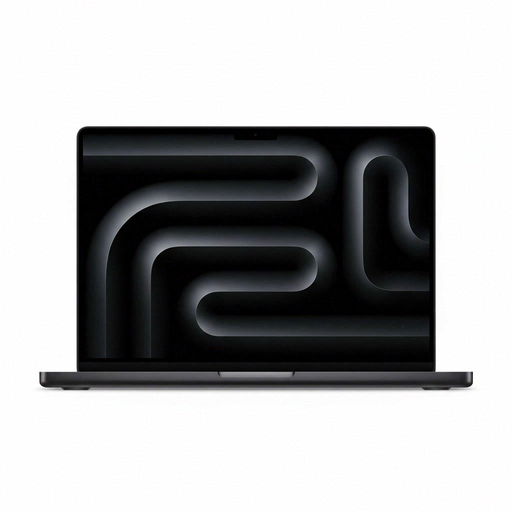 No image available
Apple MacBook Pro 14.2-inch M5 Pro, 24GB, 2TB, Space Black
This model is a candidate if your profiling workflow supports macOS and the processor architecture of the chosen MacBook.
The product name identifies an M5 Pro with a 15-core CPU and 16-core GPU, plus 24GB unified memory and 2TB storage. Check the display finish and the brightness applicable to ordinary work; a peak-brightness claim is not the same specification as SDR brightness.
View on Joybuy
 No image available
Lenovo IdeaPad Slim 3 83K7009MUK, Ryzen 5 7535HS, 24GB, Grey
Consider this Windows configuration if its runtime and dependencies match your workflow and you need to assess 24GB of memory against your concurrent tools.
The product name specifies a 15.3-inch WUXGA display, 24GB DDR5 RAM, a 512GB PCIe SSD and Windows 11 Home. Confirm the exact panel's brightness before choosing it for a desk beside a bright window.
View on Joybuy
 No image available
ASUS ProArt P16 H7606WW-SE006W, Ryzen AI 9 HX 370, 64GB, 2TB
This configuration is worth checking if your script and concurrent tools call for substantial memory, provided its Windows environment fits the investigation.
The product name specifies a 16-inch 4K OLED touchscreen, 64GB RAM, a 2TB SSD and a GeForce RTX 5080 with 16GB graphics memory. Check the panel's brightness and reflection treatment for your window-side position rather than inferring legibility from resolution.
View on Joybuy
Common questions
Should I choose a faster-looking laptop before finding out why the script is slow?
Choose the required runtime and diagnostic environment first, then use profiling to investigate where time is spent. Python's documentation notes that deterministic profilers add overhead, so profiler timings should not be read as a neutral comparison of laptops.
Will a high brightness figure make a screen easy to use beside a window?
A brightness figure alone cannot settle that question: reflections, panel finish and window position also affect what you see. Check the brightness and anti-glare or anti-reflective specification of the exact configured panel, rather than relying on the laptop range's name.
Can an ARM laptop profile an x86-64 Linux container?
It may be possible, but check the container image's platform support and whether emulation would be needed before buying. Docker explains that container code must be compatible with the host architecture unless emulation is used; linux/amd64 and linux/arm64 are distinct image platforms.


