Document-heavy laptop workers
If you compare documents, use spreadsheets or keep messages beside your work, consider whether one external screen would address the cramped view before adding a dock.


Start with the task that limits your laptop workspace: add a monitor for document space, a dock or hub for repeated connections, or separate input and meeting accessories when those are the practical problem. Before choosing a USB-C display or dock, check the laptop’s video output, independent-display limit and charging requirement; the connector shape alone does not establish those capabilities.
The useful addition depends on whether your main constraint is screen space, daily reconnection or calls.
If you compare documents, use spreadsheets or keep messages beside your work, consider whether one external screen would address the cramped view before adding a dock.
If you regularly move your laptop between workplaces, a dock or hub may reduce the connections you make each day. Its video and charging functions still need to match your particular laptop.
If camera placement or call controls are the difficulty, a webcam or headset may be more relevant than display expansion. Check its connection against the ports already in use.
Identify the task you want to improve, then match the proposed accessory to the laptop and the space where you use it.
| Priority | What to check | Your needs |
|---|---|---|
| Screen space | Compare monitor size and resolution with your desk space and viewing distance. Check its inputs against the laptop’s output, along with the positioning options you need. | I want documents and reference material visible together, without repeatedly rearranging windows on the laptop screen. |
| Display compatibility | Confirm video capability for the exact laptop port and the number of independent external displays it supports. VESA explains that DisplayPort video over USB-C uses an Alternate Mode; USB-C shape alone is not confirmation of video output. | A second screen needs to extend my workspace, rather than show a copy of the same image. |
| Daily connections | List the display, USB, Ethernet and audio connections you will actually use. For a dock or hub, compare its video modes with the laptop and check its stated charging output against the laptop’s requirement. | I regularly reconnect a laptop at my desk and want the necessary peripherals and charging connected with fewer cable changes. |
| Typing and pointing | Check whether the keyboard and mouse use Bluetooth, a USB receiver or a wired connection. Account for the ports those devices will occupy and check the keyboard layout. | Separate input devices matter more to my setup than another display or a full dock. |
| Video meetings | Consider webcam placement and connection type, headset microphone controls and the ports left available after other devices are connected. | For frequent calls, I need a camera or audio arrangement that works with where I place my laptop. |
USB-C identifies the connector, while video and power depend on the capabilities of the laptop, cable and connected device. A hub’s display options can also depend on the laptop’s DisplayPort support.
Check the exact laptop model, its video-capable ports, external-display limit and charging specification against the dock or monitor before choosing it.
Microsoft Support explains that a display splitter duplicates a signal rather than creating two independent signals. Mirrored screens will not give you separate areas for different windows.
If you want two extended external displays, confirm that both the laptop and the proposed dock or adaptor support that display count.
The display count, resolution and refresh rate available through a dock can depend on the host connection and laptop. A headline display mode does not establish the combination your setup will provide.
Write down the number of screens and the resolution and refresh rate you want, then check that exact combination for your laptop and dock.
More connections will not, by themselves, create more screen space or change your camera and call-audio arrangement.
Choose the addition around the limiting task: a monitor for visible workspace, docking for repeated reconnection, or input and meeting accessories for those specific needs.
These examples show how features can be combined; check the exact model and your laptop rather than treating a brand name as a compatibility guarantee.
Dell’s Pro Thunderbolt 4 Dock WD25TB4 is a fixed-desk option to examine when laptop charging and display connections are priorities.
The ThinkVision T27h-37 combines a 27-inch QHD monitor with USB-C docking functions for a desk where a screen and peripheral connections are both needed.
The Anker 565 USB-C Hub is an example to consider when several connections need to travel with a laptop rather than remain at one desk.
Logitech’s home-working accessory collection brings together keyboard, mouse, webcam and headset options for typing and calls rather than display expansion.
These options cover adding a screen, connecting desk peripherals, setting up video calls and using separate input devices. Choose the route that addresses your work before comparing individual products.
 No image available
An IPS WUXGA monitor to consider when document work calls for a separate screen. Check the laptop’s display output and the connection you intend to use.
 No image available
For a desk using display and network connections, this model lists 4K HDMI, VGA, Gigabit Ethernet, 100W Power Delivery and dual USB 3.0 ports. Check the laptop’s USB-C video and charging capabilities, and confirm independent-display support if you need more than one external screen.
 No image available
An IPS USB-C monitor to consider when you need another screen in a laptop workspace. Confirm that the laptop’s USB-C port supports video, and check the package contents for the power arrangement you plan to use.
 No image available
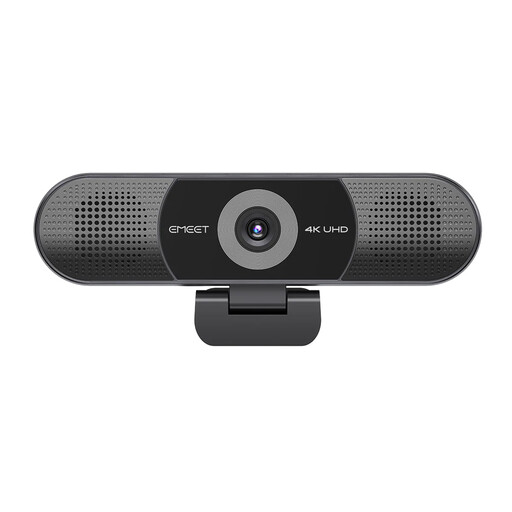
For frequent video calls, this model lists a Sony sensor, fixed focus, a 98° adjustable field of view, a 4-mic array and dual AI speakers. Confirm the USB connector type and compatibility with your computer before choosing it.
 No image available
A separate keyboard and mouse to consider when typing and pointing are the priorities, rather than adding display or docking functions. Check the connection method and keyboard layout against your laptop and preferences.
No. USB-C does not guarantee video output, a particular display count or suitable charging. Check the laptop manufacturer’s port, display and charging specifications against the exact dock; Anker, for example, directs buyers of its 565 hub to check their laptop’s DisplayPort support.
A splitter that duplicates one signal will not create two independent desktops, as Microsoft Support explains. For two extended external screens, check the laptop’s display limit and the chosen dock or adaptor’s supported arrangement.
Consider one when a single screen plus its stated charging and peripheral connections meets your fixed-desk needs. A separate monitor and dock let you change either component independently; whichever route you choose, check video support, power delivery and required ports against the laptop.
No. Compare the dock’s stated power delivery under the conditions for your laptop with the laptop’s charging requirement. Check the charger and cable needed for that rating, including whether they are supplied.